
Introduction
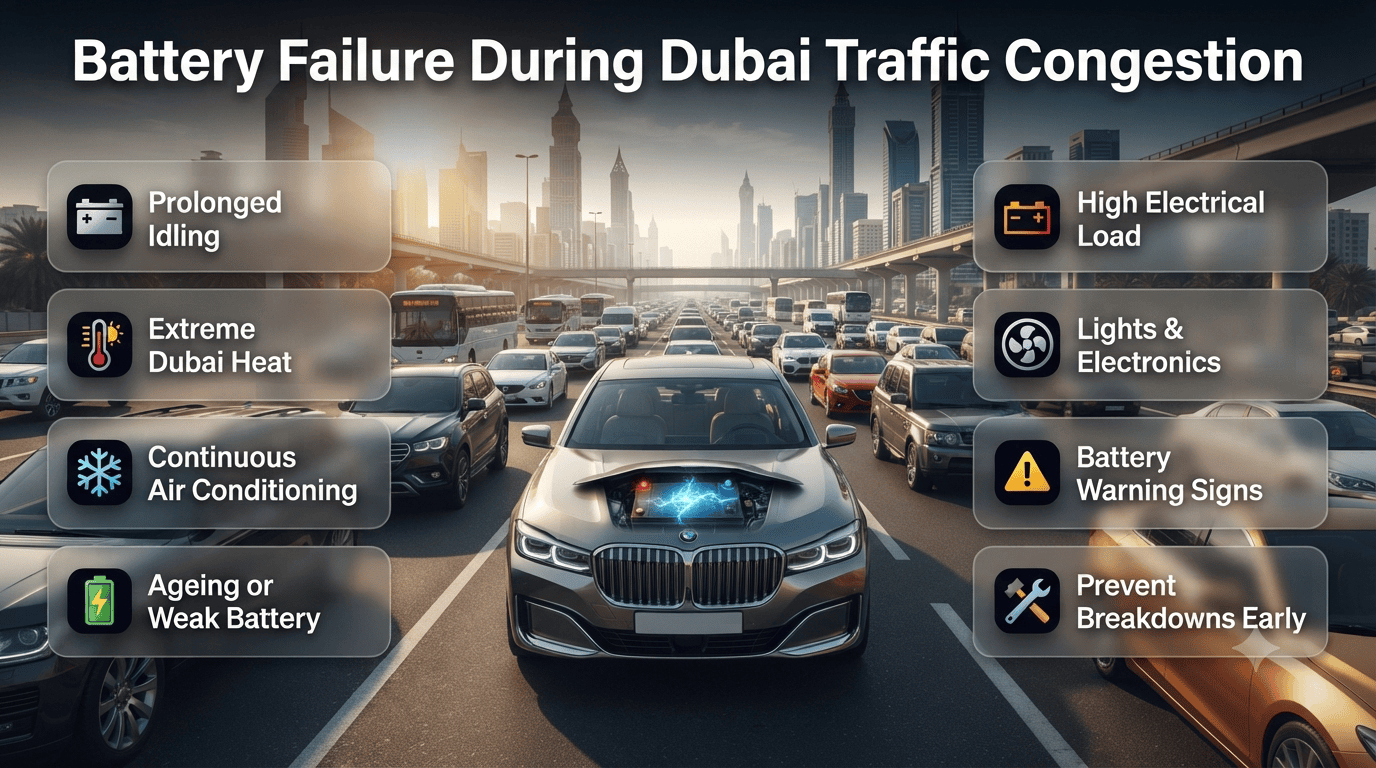
Battery failure during Dubai traffic congestion is more than just an inconvenience—it can quickly become a serious safety concern. Long queues on Sheikh Zayed Road, Al Khail Road, Business Bay, Downtown Dubai, Dubai Marina, and other busy routes place continuous demand on your vehicle’s electrical system. While your engine idles in slow-moving traffic, the battery supports numerous electronic components, including the air conditioning, cooling fans, infotainment system, lights, sensors, and safety features.
Many drivers believe a battery only dies after being parked overnight, but heavy traffic can expose an ageing or weakened battery much sooner. Combined with Dubai’s extreme summer temperatures, prolonged idling and constant electrical loads can reduce battery efficiency, leading to warning lights, sluggish performance, or an unexpected breakdown.
Understanding the causes of battery failure during traffic congestion helps you recognise early warning signs before they become expensive roadside emergencies. Whether you need a professional Battery Replacement, emergency Car Jumpstart, or expert diagnostics from EuroSwift Auto Services, taking preventative action can save valuable time and keep your vehicle reliable in Dubai’s demanding driving conditions.
Why Traffic Congestion Places Extra Stress on Your Car Battery
Unlike highway driving, stop-and-go traffic forces your vehicle to operate under constant electrical demand while producing less charging power. During long periods of idling, the alternator generates less electricity than it does at higher engine speeds, meaning the battery must help supply power to essential systems.
At the same time, Dubai drivers usually keep the air conditioning running at maximum capacity to stay comfortable in the intense heat. Cooling fans, infotainment displays, navigation systems, mobile chargers, and advanced driver assistance systems continue drawing electricity throughout the journey. If the battery is already ageing or the charging system is weak, these combined loads can rapidly expose underlying problems.
Factors That Increase Battery Load During Congestion
- Continuous air-conditioning operation
- Electric radiator cooling fans running frequently
- Stop-start driving with repeated engine cycles
- Brake lights remaining on for extended periods
- Navigation and infotainment systems
- Dash cameras and USB charging devices
- Heated or ventilated seats in luxury vehicles
- Parking sensors and safety cameras
Electrical Systems That Depend on Your Battery
Modern vehicles contain dozens of electronic control units that rely on a healthy battery to operate correctly, even while the engine is running slowly.
These systems include:
| Vehicle Component | Importance During Traffic |
|---|---|
| Engine Control Module | Maintains engine performance |
| Body Control Module | Operates lighting and accessories |
| Electric Power Steering | Provides steering assistance |
| ABS & Stability Control | Improves vehicle safety |
| Parking Sensors | Assists in slow traffic |
| Navigation System | Real-time route guidance |
| Infotainment System | Entertainment and connectivity |
| Cooling Fans | Prevent engine overheating |
Luxury and premium vehicles typically consume considerably more electrical power than older models. When battery testing confirms reduced capacity, choosing a suitable replacement such as a genuine AGM Battery can provide better performance for vehicles equipped with advanced electronics and start-stop technology.
How Dubai’s Climate Reduces Battery Life
Extreme heat is one of the biggest reasons vehicle batteries have a shorter lifespan in Dubai than in many other parts of the world. High temperatures accelerate the chemical reactions inside the battery, causing electrolyte loss, plate corrosion, and faster internal deterioration.
Engine bay temperatures can become significantly hotter than the outside air, particularly during slow-moving traffic where airflow is limited. Over time, this constant heat reduces the battery’s reserve capacity, making it less capable of supporting the vehicle during periods of high electrical demand.
Heat-Related Effects on Car Batteries
| Driving Condition | Impact on Battery |
|---|---|
| High summer temperatures | Faster internal ageing |
| Long engine idling | Reduced charging efficiency |
| Heavy air-conditioning use | Increased electrical demand |
| Daily traffic congestion | Higher battery cycling |
| Parking in direct sunlight | Accelerated electrolyte evaporation |
Common Causes of Battery Failure During Traffic Congestion
Traffic congestion itself rarely damages a battery. Instead, it reveals problems that have gradually developed over time.
Ageing Battery
Every battery loses storage capacity as it ages. After years of exposure to heat and repeated charging cycles, it becomes less capable of supplying the electricity needed during heavy traffic.
If your battery is approaching the end of its service life, replacing it before failure occurs is often the safest option. Drivers looking for dependable performance frequently choose genuine Amaron Battery, Bosch Battery, or Exide Battery options that match their vehicle’s manufacturer specifications.
Weak Alternator Performance
A healthy alternator continually recharges the battery while the engine runs. If the alternator produces insufficient voltage because of worn components, damaged wiring, or a faulty voltage regulator, the battery gradually discharges instead of recharging.
Common warning signs include:
- Battery warning light
- Flickering dashboard illumination
- Dim headlights
- Slow power windows
- Electrical accessories operating inconsistently
- Difficulty restarting after stopping
Professional Engine Diagnostics can accurately determine whether the problem originates from the battery or the charging system.
Corroded Battery Connections
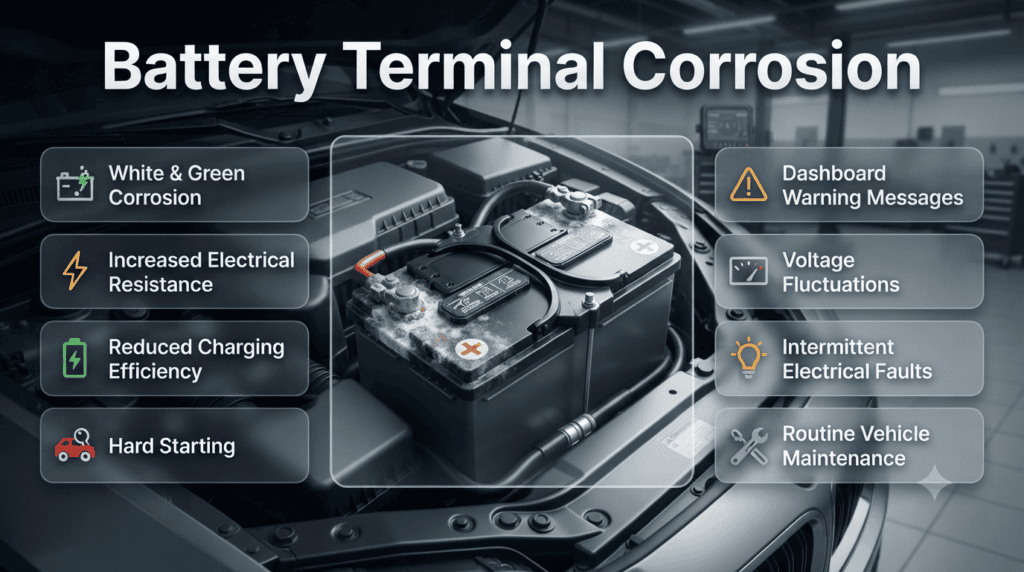
Battery terminals naturally develop corrosion over time, especially in hot and humid environments. Corrosion increases electrical resistance, reducing charging efficiency and causing unstable voltage throughout the vehicle.
Drivers may notice:
- White or green deposits around battery terminals
- Hard starting
- Random warning messages
- Voltage fluctuations
- Intermittent electrical faults
Routine Vehicle Maintenance carried out by EuroSwift Auto Services helps identify these issues before they result in a roadside breakdown.
Early Warning Signs Before Your Battery Fails
Most battery failures provide warning symptoms well before complete failure occurs. Recognising these signs allows you to arrange repairs before becoming stranded in congested Dubai traffic.
Dashboard Warnings
Modern vehicles continuously monitor charging system performance.
Never ignore alerts such as:
- Battery warning light
- Charging system malfunction
- Low voltage notification
- Electrical system warning message
Vehicle Performance Changes
Electrical problems may also appear gradually.
Watch for:
- Slow engine cranking
- Auto Start-Stop system failing to restart
- Flickering interior lights
- Weak air-conditioning blower
- Infotainment system restarting unexpectedly
- Reduced responsiveness from electrical accessories
Expert Insight
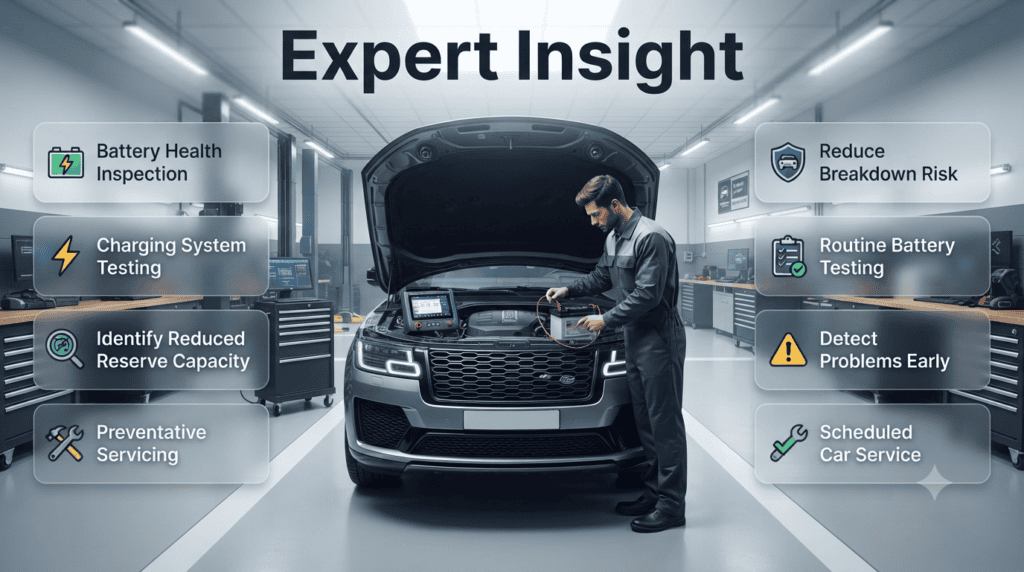
Experienced automotive technicians know that traffic congestion rarely causes battery failure by itself. Instead, it exposes batteries that have already lost reserve capacity or charging systems that are no longer operating efficiently. Regular inspections, charging system tests, and preventative servicing through EuroSwift Auto Services help identify problems early, reducing the risk of unexpected breakdowns during Dubai’s busiest traffic periods.
Routine battery testing during scheduled Car Service appointments is significantly more cost-effective than requiring emergency roadside recovery after a complete electrical failure.
What Happens When Your Battery Starts Failing in Heavy Dubai Traffic
A battery that begins to fail during traffic congestion rarely stops working instantly. Instead, the electrical system becomes unstable, causing multiple vehicle functions to behave unpredictably before the engine eventually stalls. Understanding this sequence helps drivers react safely and minimise further damage.
Stage 1: Electrical Accessories Begin Losing Power
The first signs are often subtle. You may notice the air conditioning blower slowing down, dashboard lights dimming, or the infotainment screen flickering. These symptoms indicate that the battery is no longer maintaining a stable voltage.
If ignored, additional electrical systems may also start malfunctioning.
Typical early symptoms include:
- Flickering headlights
- Slow power window operation
- Touchscreen freezing or restarting
- Dashboard warning messages
- Weak horn sound
- Reduced charging of mobile devices
These symptoms should never be ignored, especially during long periods of stop-and-go traffic.
Stage 2: Warning Lights Appear
As battery voltage continues to drop, the vehicle’s onboard computers begin detecting abnormal electrical conditions.
Common dashboard warnings include:
| Warning Indicator | Possible Meaning |
|---|---|
| Battery Light | Charging system fault |
| Check Engine Light | Voltage affecting engine sensors |
| ABS Warning | Low electrical supply to braking system |
| Steering Warning | Reduced power steering assistance |
| Airbag Warning | Electrical communication fault |
Professional Vehicle Inspection and Engine Diagnostics can determine whether the battery, alternator, or another electrical component is responsible.
Stage 3: Engine May Stall Completely
If the battery and charging system cannot maintain sufficient voltage, essential engine management systems begin shutting down.
The driver may experience:
- Loss of throttle response
- Engine misfiring
- Rough idling
- Engine stopping unexpectedly
- Failure to restart
When this happens in busy Dubai traffic, requesting immediate Roadside Assistance is the safest option rather than repeatedly attempting to restart the vehicle.
What To Do If Your Battery Fails During Traffic Congestion
Remaining calm and following the correct steps helps protect both your safety and your vehicle.
Step 1: Move to a Safe Location
If the vehicle is still moving, carefully steer towards:
- Road shoulder
- Emergency lane
- Petrol station
- Safe parking area
Avoid stopping in the middle of active traffic whenever possible.
Step 2: Turn On Hazard Warning Lights
Hazard lights alert approaching drivers that your vehicle has developed a problem.
If battery power is extremely low, use them only as long as necessary to preserve remaining electrical power.
Step 3: Switch Off Non-Essential Electrical Equipment
Reducing electrical load may provide enough remaining battery power for emergency communication.
Turn off:
- Air conditioning
- Seat ventilation
- Infotainment system
- Phone chargers
- Interior lights
- Heated seats
Step 4: Avoid Repeated Engine Start Attempts
Many drivers repeatedly crank the engine hoping it will restart.
This often makes the situation worse because every attempt drains the remaining battery capacity.
Instead, arrange professional diagnosis before additional damage occurs.
Step 5: Call Professional Assistance
If the battery has completely discharged, professional technicians can quickly determine whether you need:
- Car Battery Replacement
- Emergency Car Jumpstart
- Alternator inspection
- Charging system repair
- Complete electrical diagnostics
Technicians from EuroSwift Auto Services can perform these checks on-site, reducing unnecessary towing whenever possible.
Battery Failure vs Alternator Failure
Many drivers assume every flat battery means the battery itself is defective. In reality, a failing alternator often causes identical symptoms.
| Feature | Weak Battery | Faulty Alternator |
|---|---|---|
| Engine starts slowly | ✔ | Sometimes |
| Battery warning light | Sometimes | ✔ |
| Vehicle dies while driving | Rare | Common |
| Needs jump start | ✔ | ✔ |
| Battery repeatedly goes flat | Sometimes | ✔ |
| Charging voltage low | No | ✔ |
Replacing a healthy battery without diagnosing the charging system often leads to the same problem returning within days.
Professional Battery Inspection Process
A proper battery inspection involves much more than checking voltage.
Experienced technicians perform several tests to identify the root cause.
Visual Inspection
The battery housing is examined for:
- Swelling
- Cracks
- Electrolyte leakage
- Loose mounting brackets
- Corroded terminals
Battery Load Test
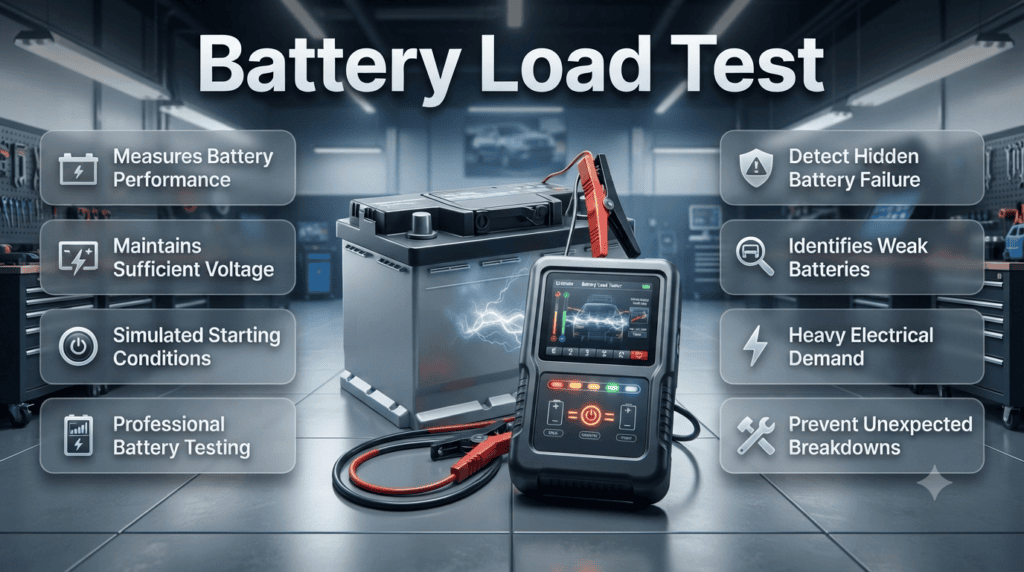
A load tester measures whether the battery can maintain sufficient voltage under simulated starting conditions.
This identifies batteries that appear normal but fail under heavy electrical demand.
Alternator Charging Test
Technicians verify:
- Charging voltage
- Charging current
- Voltage regulator operation
- Drive belt condition
This ensures the new battery will receive correct charging after installation.
Electrical System Scan
Modern vehicles contain numerous electronic control modules.
Using professional diagnostic equipment allows technicians to:
✔ Read fault codes
✔ Detect charging system errors
✔ Identify voltage irregularities
✔ Verify battery monitoring system operation
✔ Confirm proper communication between control modules
Common Mistakes Drivers Make During Battery Problems
Avoiding these mistakes can reduce repair costs and prevent additional damage.
Ignoring Early Symptoms
Small electrical issues often develop weeks before complete battery failure.
Delaying inspection increases the likelihood of a roadside breakdown.
Installing the Wrong Battery
Modern vehicles require batteries with specific:
- Capacity (Ah)
- Cold Cranking Amps (CCA)
- Battery technology (AGM, EFB, Flooded)
Choosing the wrong battery may affect charging efficiency and electronic systems. Drivers of premium vehicles often benefit from manufacturer-approved solutions such as Panasonic Battery, FIAMM Battery, AC Delco Battery, or Tuflong Battery where appropriate.
Skipping Battery Registration
Many luxury and European vehicles require electronic battery registration after replacement.
Without this procedure:
- Charging performance may be incorrect.
- Battery life may be reduced.
- Warning lights may remain active.
- Energy management systems may malfunction.
Professional Luxury Car Service technicians use manufacturer-compatible diagnostic tools to complete this process correctly.
Professional Recommendation
If your vehicle regularly encounters heavy traffic in Dubai, schedule a battery health inspection at least twice a year. Preventative testing is far less expensive than emergency breakdown recovery, especially for vehicles equipped with advanced electronics, start-stop technology, or high electrical loads. Reviewing the Dubai Car Battery Prices Guide before replacement also helps you choose the right battery based on your vehicle’s requirements and budget.
Preventing Battery Failure During Dubai Traffic Congestion
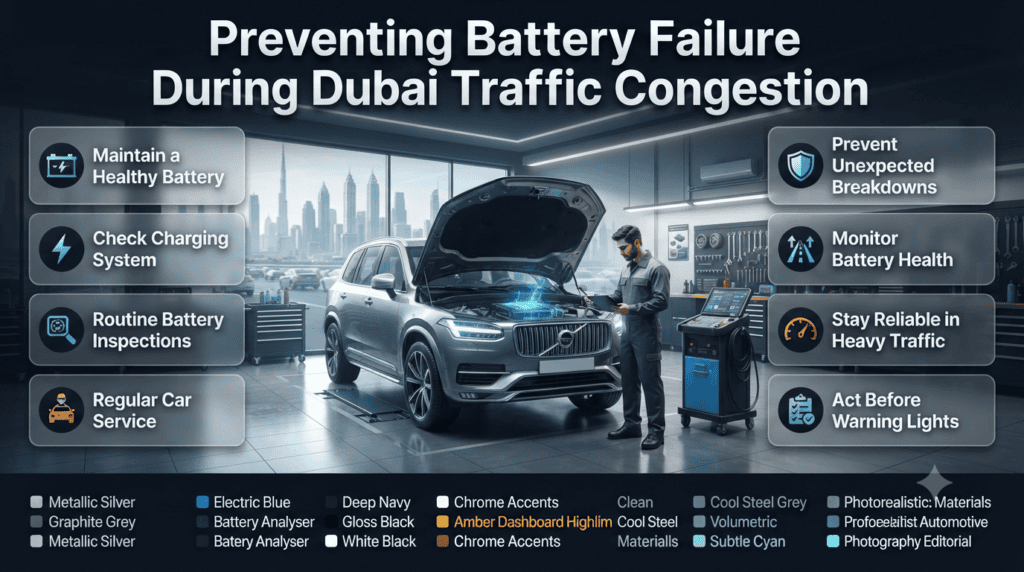
Preventative maintenance is the most effective way to avoid unexpected battery failure in Dubai’s busy traffic. A healthy battery, properly functioning charging system, and routine inspections significantly reduce the risk of becoming stranded during peak commuting hours.
Rather than waiting for warning lights to appear, drivers should monitor battery health as part of their regular Car Service schedule.
Follow a Preventive Battery Maintenance Schedule
Routine inspections help identify declining battery performance before it leads to a breakdown.
| Maintenance Task | Recommended Interval |
|---|---|
| Battery health test | Every 6 months |
| Terminal cleaning | Every service |
| Charging system inspection | Every 12 months |
| Alternator output test | Annually or when symptoms appear |
| Battery replacement assessment | After 24 months in Dubai conditions |
| Complete electrical inspection | Before long-distance travel |
Keeping up with these inspections through EuroSwift Auto Services can greatly improve vehicle reliability.
How to Extend Your Car Battery’s Lifespan
Although Dubai’s climate naturally shortens battery life, proper driving habits can slow battery deterioration.
Drive Long Enough to Recharge the Battery
Frequent short journeys may not provide sufficient time for the alternator to fully recharge the battery.
Whenever possible:
- Combine short trips into one journey.
- Drive continuously for at least 20–30 minutes occasionally.
- Avoid excessive engine idling after short drives.
Reduce Unnecessary Electrical Load
Every electrical accessory increases battery demand.
Simple habits include:
✔ Disconnect unnecessary phone chargers.
✔ Turn off lights when parked.
✔ Avoid leaving accessories running with the engine switched off.
✔ Use high-power accessories only when required.
Keep Battery Terminals Clean
Corroded terminals reduce charging efficiency.
Regular inspection should include:
- Cleaning corrosion deposits
- Checking cable tightness
- Inspecting battery clamps
- Applying terminal protection when necessary
This small maintenance task can significantly improve charging performance.
Park in Shaded Areas Whenever Possible
Direct sunlight dramatically increases battery temperature.
Parking in:
- Covered parking
- Underground car parks
- Shaded areas
helps reduce heat exposure and slows internal battery deterioration.
Choosing the Right Replacement Battery
Not every battery suits every vehicle. Selecting the correct specification improves starting reliability, charging performance, and battery lifespan.
Important factors include:
- Correct battery size
- Manufacturer-recommended capacity
- Cold Cranking Amps (CCA)
- Reserve Capacity (RC)
- AGM or conventional technology
- Vehicle electrical requirements
Installing an incorrect battery can lead to charging problems and reduced service life.
Popular Battery Options for Dubai Drivers
Different vehicles require different battery technologies depending on their electrical demands.
| Battery Type | Best For |
|---|---|
| Amaron Battery | Daily commuters and family cars |
| Bosch Battery | Premium European vehicles |
| Exide Battery | Reliable everyday driving |
| Panasonic Battery | Japanese vehicles |
| FIAMM Battery | High-performance applications |
| AC Delco Battery | American vehicles |
| Tuflong Battery | Budget-conscious drivers |
| AGM Battery | Luxury and start-stop vehicles |
A professional technician can recommend the most suitable battery based on your vehicle’s electrical system and driving habits.
Emergency Roadside Battery Replacement Process
When a battery fails in heavy traffic, a structured replacement process helps restore the vehicle safely and efficiently.
Step 1 – Initial Diagnosis
Technicians inspect:
- Battery voltage
- Starting performance
- Charging system
- Visible battery condition
Step 2 – Battery Compatibility Check
The replacement battery is selected according to:
- Vehicle model
- Engine size
- Manufacturer specifications
- Electrical system requirements
Step 3 – Safe Battery Installation
Professional installation includes:
- Safe battery removal
- Terminal cleaning
- Cable inspection
- Secure battery mounting
- Electrical system testing
Step 4 – Charging System Verification
After installation, technicians verify:
- Alternator output
- Charging voltage
- Starting performance
- Battery condition
- Electrical stability
Step 5 – Final Quality Inspection
Before returning the vehicle to service, technicians confirm:
✔ Reliable engine starting
✔ Stable charging voltage
✔ No warning lights
✔ Correct battery installation
✔ Proper operation of electrical accessories
Latest Automotive Technology Reducing Battery Problems
Vehicle manufacturers continue developing technologies that improve battery reliability and charging efficiency.
Recent innovations include:
- Intelligent battery monitoring systems
- Smart alternator charging control
- Energy management modules
- Enhanced start-stop battery technology
- Lithium auxiliary batteries
- Predictive battery health monitoring
These systems help detect battery deterioration earlier than traditional warning lights, allowing preventive maintenance before complete failure occurs.
Future Trends in Vehicle Battery Management
As vehicles become increasingly connected and electrified, battery management systems continue evolving.
Future developments are expected to include:
- Artificial intelligence predicting battery failure
- Remote battery health monitoring through smartphone apps
- Cloud-based vehicle diagnostics
- Improved heat-resistant battery materials
- More efficient charging systems
- Longer-lasting AGM and next-generation battery technologies
These advancements will improve vehicle reliability, particularly in challenging climates such as Dubai.
Expert Recommendations for Dubai Drivers
Experienced technicians recommend several best practices for avoiding battery failure during traffic congestion.
Best Practices Checklist
✔ Test the battery every six months.
✔ Replace ageing batteries before they fail.
✔ Have the charging system inspected annually.
✔ Keep battery terminals clean and secure.
✔ Avoid unnecessary electrical loads.
✔ Park in shaded areas whenever possible.
✔ Schedule routine Vehicle Maintenance instead of waiting for warning lights.
✔ Choose genuine replacement batteries supplied by EuroSwift Auto Services for compatibility and dependable performance.
Industry Best Practice
Modern battery replacement is no longer limited to installing a new unit. Professional workshops now assess the entire charging system, battery monitoring software, alternator performance, and electrical communication between control modules. This comprehensive approach helps prevent repeat failures and ensures long-term reliability, particularly for luxury and technology-rich vehicles operating in Dubai’s demanding traffic conditions.
What should I do if my car battery dies in the middle of Dubai traffic?
If your battery fails while you’re stuck in traffic, stay calm and switch on your hazard lights immediately. If the vehicle is still moving, carefully steer it to the roadside or an emergency lane whenever it is safe to do so. Turn off unnecessary electrical accessories to preserve any remaining battery power and avoid repeatedly trying to restart the engine, as this can completely drain the battery.
If the vehicle won’t restart, contact a professional Car Battery Replacement service or roadside assistance provider for on-site diagnostics and support.
Can a car battery die while driving in traffic?
Yes. Although the alternator normally charges the battery while the engine is running, a weak battery or faulty charging system may not keep up with the high electrical demand created by heavy traffic. Continuous air conditioning, cooling fans, headlights, infotainment systems, and other electronics can expose an ageing battery and eventually cause the vehicle to stall.
Why does my battery keep dying in Dubai traffic?
Repeated battery failure usually indicates an underlying problem rather than normal battery wear.
Common causes include:
An ageing battery
Faulty alternator
Corroded battery terminals
Loose battery connections
Parasitic electrical drain
Extreme Dubai temperatures
Incorrect battery specification
A complete electrical inspection helps identify the actual cause before replacing the battery.
How long should a car battery last in Dubai?
Most vehicle batteries in Dubai last between 18 and 30 months, depending on driving habits, vehicle type, and exposure to extreme heat. Vehicles used daily in heavy traffic or parked outdoors throughout the summer may require replacement sooner than those kept in covered parking.
Regular battery testing every six months helps detect declining performance before failure occurs.
What are the warning signs of a failing car battery?
Several warning signs may appear before complete battery failure, including:
Slow engine cranking
Battery warning light
Flickering headlights
Weak air conditioning blower
Dashboard warning messages
Electrical accessories operating slowly
Clicking sound when starting
Auto Start-Stop system not working correctly
If you notice any of these symptoms, schedule a battery inspection as soon as possible.
Conclusion
Battery failure during Dubai traffic congestion is a problem that often develops gradually but can lead to sudden and stressful breakdowns when you least expect it. Long periods of idling, extreme temperatures, heavy electrical loads, and ageing batteries all place significant pressure on your vehicle’s charging system. Recognising early warning signs—such as slow engine cranking, dashboard battery warnings, flickering lights, or electrical malfunctions—allows you to address minor issues before they become major roadside emergencies.
Routine battery testing, charging system inspections, and preventative Vehicle Maintenance are the most effective ways to reduce the risk of unexpected failures. Choosing the correct replacement battery, ensuring proper installation, and verifying alternator performance are equally important for maintaining long-term reliability. Whether your vehicle requires a standard replacement battery or a premium AGM Battery, selecting a battery that matches your vehicle’s specifications will improve both performance and lifespan.
For drivers facing an unexpected battery problem during heavy traffic, professional assistance is the safest and fastest solution. EuroSwift Auto Services provides expert Battery Replacement, Car Jumpstart, roadside diagnostics, and complete charging system inspections across Dubai. By investing in preventative maintenance and timely battery replacement, you can minimise the risk of breakdowns, improve vehicle reliability, and drive with greater confidence in Dubai’s demanding traffic conditions.

Leave a Reply