
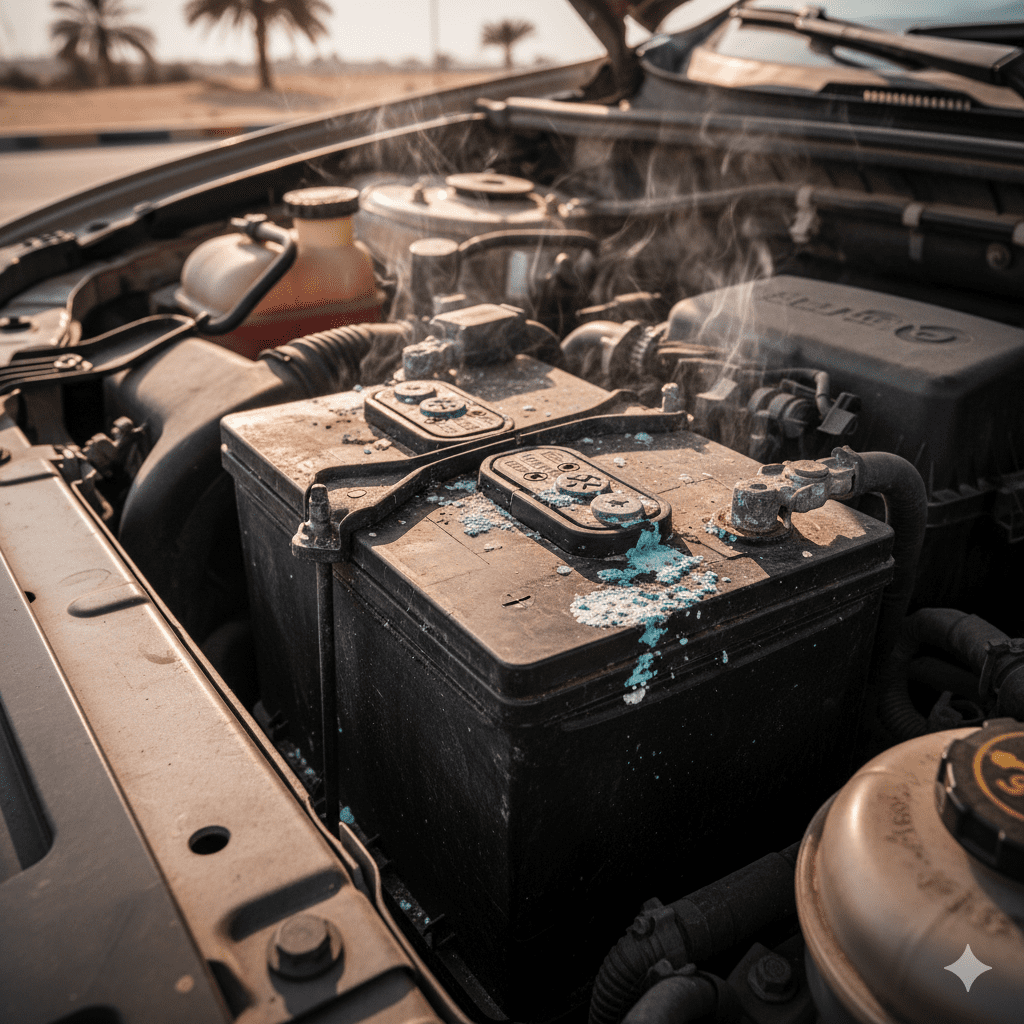
Battery electrolyte evaporation is one of the most common and most dangerous car battery issues in the UAE due to extreme heat. When temperatures rise beyond 45–50°C, the liquid electrolyte inside a lead–acid battery starts evaporating rapidly, leading to low fluid levels, plate exposure, overheating, and sudden breakdowns.
This article explains all major signs, early symptoms, causes, inspection methods, and real UAE case studies, along with expert recommendations from EuroSwift Auto Services.
What Is Battery Electrolyte Evaporation? (UAE-Focused Definition)
Battery electrolyte evaporation occurs when extreme temperature causes the sulfuric acid–water mixture inside the battery to evaporate faster than normal. This makes the electrolyte level drop below recommended height and exposes battery plates — which leads to:
- Heat-triggered cell failure
- Weak voltage
- Poor cranking power
- Overcharging-induced boiling
- Permanent battery damage
This issue is especially common in the UAE due to harsh sunlight, long idling with AC, and dense traffic.
Top Signs of Battery Electrolyte Evaporation in UAE Heat
1. Low Battery Fluid Level
The most direct sign. When the electrolyte evaporates, plates become partially visible.
Symptoms:
- Dry cells
- Discolored liquid
- Uneven fluid height
2. Battery Overheating During UAE Afternoon Drives
Evaporation reduces cooling efficiency, causing cell temperature to rise dangerously.
Semantic keywords used:
battery heat stress, thermal runaway, hot battery case, boiling battery water.
3. Swollen Battery Case (Heat-Expansion Sign)
Evaporation increases internal pressure, forcing the casing to bulge outward.
This is extremely common in Dubai, Sharjah, Abu Dhabi, Ajman and RAK summer months.
4. Burning Smell or Acid Odor From the Battery Area
When the electrolyte boils, sulfur smell becomes noticeable.
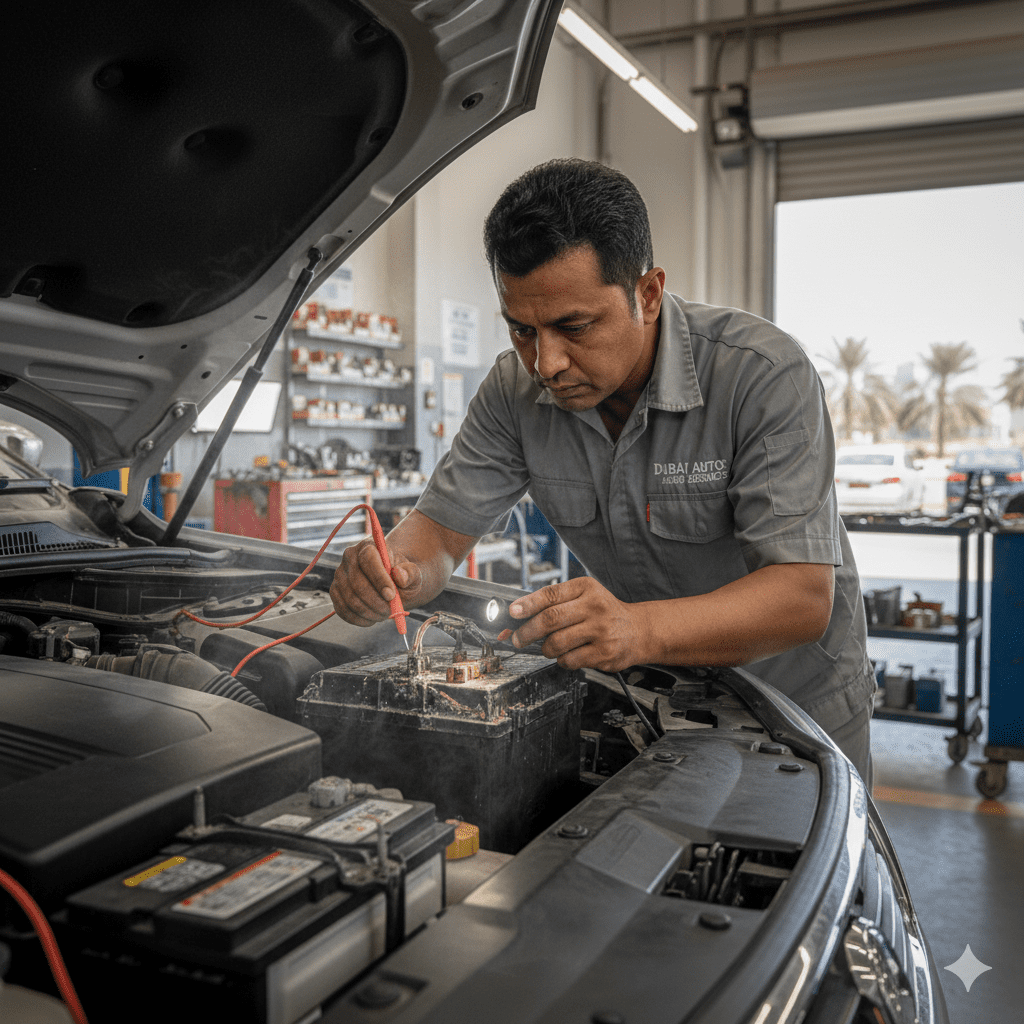
5. Slow Engine Crank After Parking in Direct Sunlight
Evaporated electrolyte lowers charge acceptance, resulting in delayed start.
Situation example:
You park at Dubai Mall rooftop, return after 3 hours, and engine struggles during ignition.
6. Frequent Need for Jump-Starts
Low electrolyte affects voltage stability, leading to random no-start situations.
7. White Crust or Corrosion Around Terminals
Evaporation releases acidic fumes that settle on terminals and corrode them.
This corrosion reduces conductivity and stresses the starter motor.
8. Alternator Working Harder Than Normal
A low-electrolyte battery forces the alternator to overcharge, causing:
- High load
- Extra heat
- Faster alternator wear
Why Electrolyte Evaporation Happens Faster in UAE Heat
• Ambient temperature above 45°C
UAE summers push engine bay temperature to 70–110°C, evaporating electrolyte at double the normal speed.
• Long idle AC usage
Peak AC load increases alternator output → more heat → faster battery fluid loss.
• High-speed + low-speed mixed driving
Dubai’s stop-and-go traffic plus highway heat cycles stress battery chemistry.
• Engine bay compactness
Modern cars have limited airflow near the battery, causing heat accumulation.
Real UAE Case Study: Battery Electrolyte Evaporation Failure
| Vehicle | Location | Temperature | Symptom | Diagnosis | Outcome |
|---|---|---|---|---|---|
| Nissan Altima 2019 | Business Bay Dubai | 46°C | Slow crank, sulfur smell | Two dry cells + warped plates | Battery replaced |
| Toyota Prado 2018 | Sharjah Ring Road | 44°C | Battery hot to touch | Electrolyte boiled due to alternator overcharging | Alternator + battery replaced |
| Honda Civic 2020 | Al Ain | 47°C | Repeated jump-starts | Electrolyte level extremely low | Fluid top-up impossible → new battery installed |
| Range Rover Sport | Abu Dhabi Corniche | 45°C | Swollen casing | Heat-induced vapor pressure | AGM battery replacement |
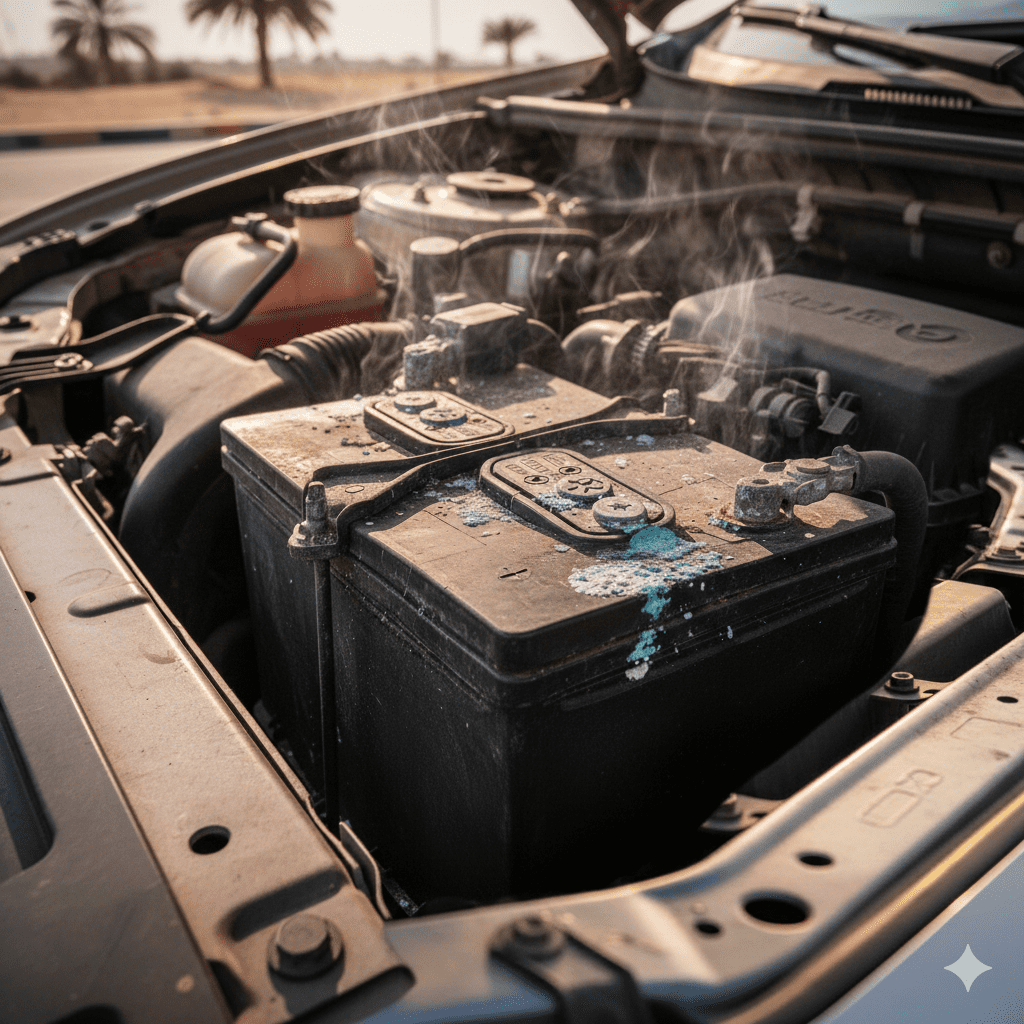
How To Prevent Electrolyte Evaporation in UAE Heat
1. Choose a Heat-Resistant Battery
Brands designed for desert climates have slower evaporation rates.
✔ Recommended Dubai options:
2. Regular Battery Testing Every 3–4 Months
Dubai climate demands more frequent checks.
Use professional testing from:
👉 Car Battery Replacement Near Me Dubai
3. Keep the Engine Bay Clean
Dust blocks airflow, increasing heat build-up.
4. Avoid Parking in Direct Sun
Even one hour in UAE sunlight can heat the battery to 70°C.
5. Monitor Battery Case for Swelling
Swelling = emergency sign → immediate replacement required.
6. Follow Dubai-Specific Battery Lifespan Guide
UAE batteries last 18–26 months.
👉 Check latest Car Battery Price Guide
What are the first signs of battery electrolyte evaporation in UAE heat?
Early signs include low fluid level, exposed battery plates, and a noticeably warm battery case after parking in direct sunlight.
Why does electrolyte evaporate faster in UAE weather?
Because UAE temperatures often exceed 45–50°C, causing internal battery heat to rise and forcing the electrolyte to evaporate rapidly.
How do I know if my battery fluid level is low?
Open the battery caps and check if the plates are visible. If they are not covered by liquid, electrolyte evaporation has occurred.
Conclusion
Battery electrolyte evaporation is one of the biggest reasons behind premature battery failure in UAE. The combination of desert heat, heavy AC load, slow traffic, and high alternator strain causes fluid to evaporate much faster than in cooler countries.
Recognizing early signs — low fluid, overheating, sulfur smell, swelling, corrosion — can save your battery and prevent roadside breakdowns. For reliable diagnosis, heat-resistant battery installation, and emergency replacement, EuroSwift Auto Services is one of Dubai’s top trusted providers.
Leave a Reply