
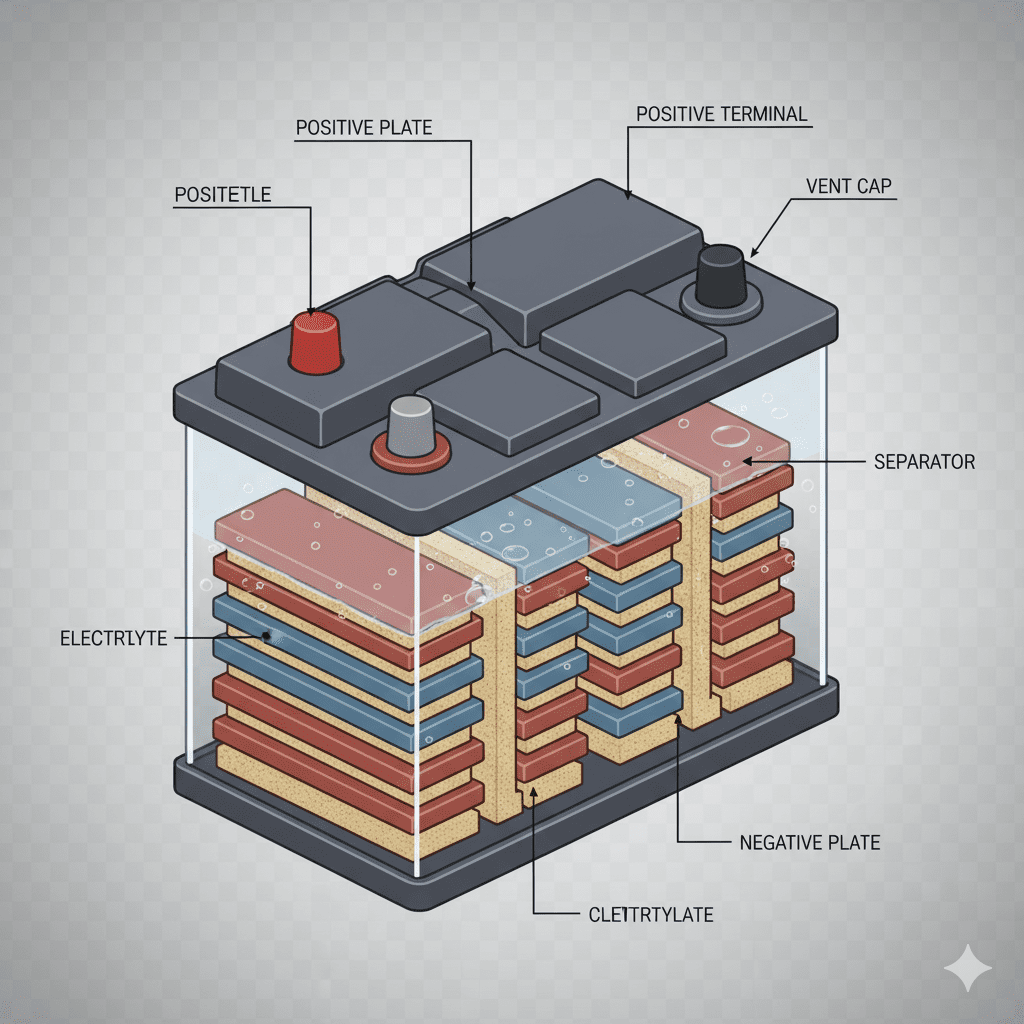
Understanding the components of a car battery is essential for anyone who wants to ensure reliable vehicle performance. Each component plays a vital role in storing and delivering electrical energy efficiently. In this guide, we will break down every part of a car battery, their function, and how they work together to keep your car running smoothly.
Main Components of a Car Battery
A standard car battery, usually 12 volts, consists of several key components:
| Component | Function | Notes |
|---|---|---|
| Positive Plate (Anode) | Releases electrons during the chemical reaction | Usually made of lead dioxide (PbO2) |
| Negative Plate (Cathode) | Accepts electrons and completes the circuit | Made of sponge lead |
| Electrolyte | Solution that facilitates chemical reaction | Mix of sulfuric acid and water |
| Separator | Prevents short circuits between plates | Made of insulating material |
| Battery Case | Protects internal components and holds electrolyte | Durable plastic casing |
| Terminals | Connects battery to vehicle electrical system | Usually marked positive (+) and negative (–) |
| Vents | Releases gas safely during charging | Prevents pressure buildup |
| Cell | Individual unit producing ~2 volts | 6 cells in a 12V car battery |
Each of these components must work in harmony to maintain consistent voltage, optimal Cold Cranking Amps (CCA), and battery life.
How Each Component Works
Positive and Negative Plates
These plates are the core of the electrochemical reaction. During discharge, lead dioxide (positive) reacts with sulfuric acid to release electrons while the negative sponge lead plate accepts electrons, creating a flow of electricity to power the vehicle.
Electrolyte
The sulfuric acid solution conducts ions between the plates, enabling the chemical reaction. Maintaining the correct electrolyte level is essential for battery health.
Separator
The separator keeps plates from touching and causing a short circuit, while still allowing ionic movement.
Battery Case and Terminals
The case ensures safety by containing acids and gases, while terminals provide a secure connection to the car’s electrical system.
Common Battery Problems Linked to Components
| Problem | Affected Component | Symptoms |
|---|---|---|
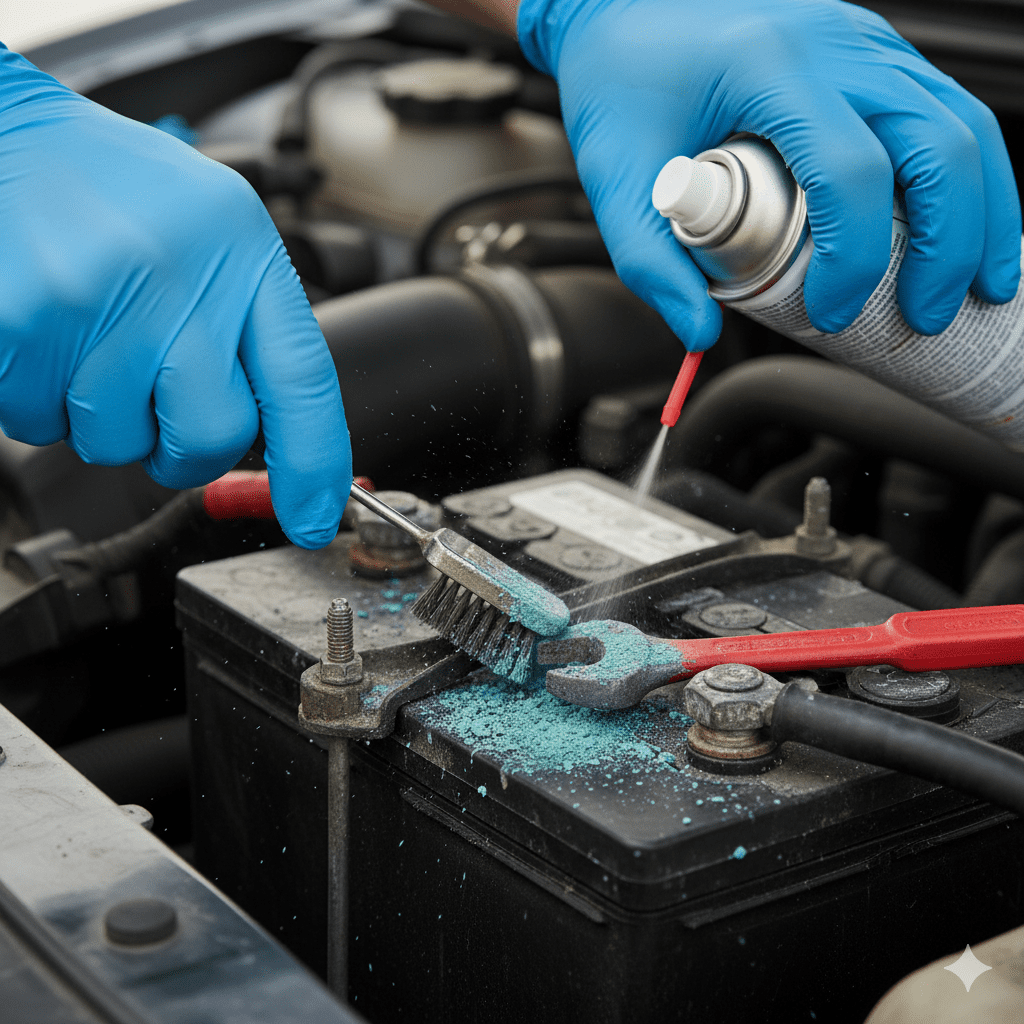
| Corrosion | Terminals | Difficulty starting car, poor current flow |
| Sulfation | Plates | Reduced battery capacity, slower cranking |
| Low Electrolyte | Electrolyte | Decreased performance, premature failure |
| Short Circuit | Separator | Battery won’t hold charge, swelling |
Regular inspection and maintenance of these components can prevent unexpected breakdowns. For professional maintenance and component replacement, visit Car Battery Replacement Near Me Dubai.
Case Study – Battery Component Performance in Dubai
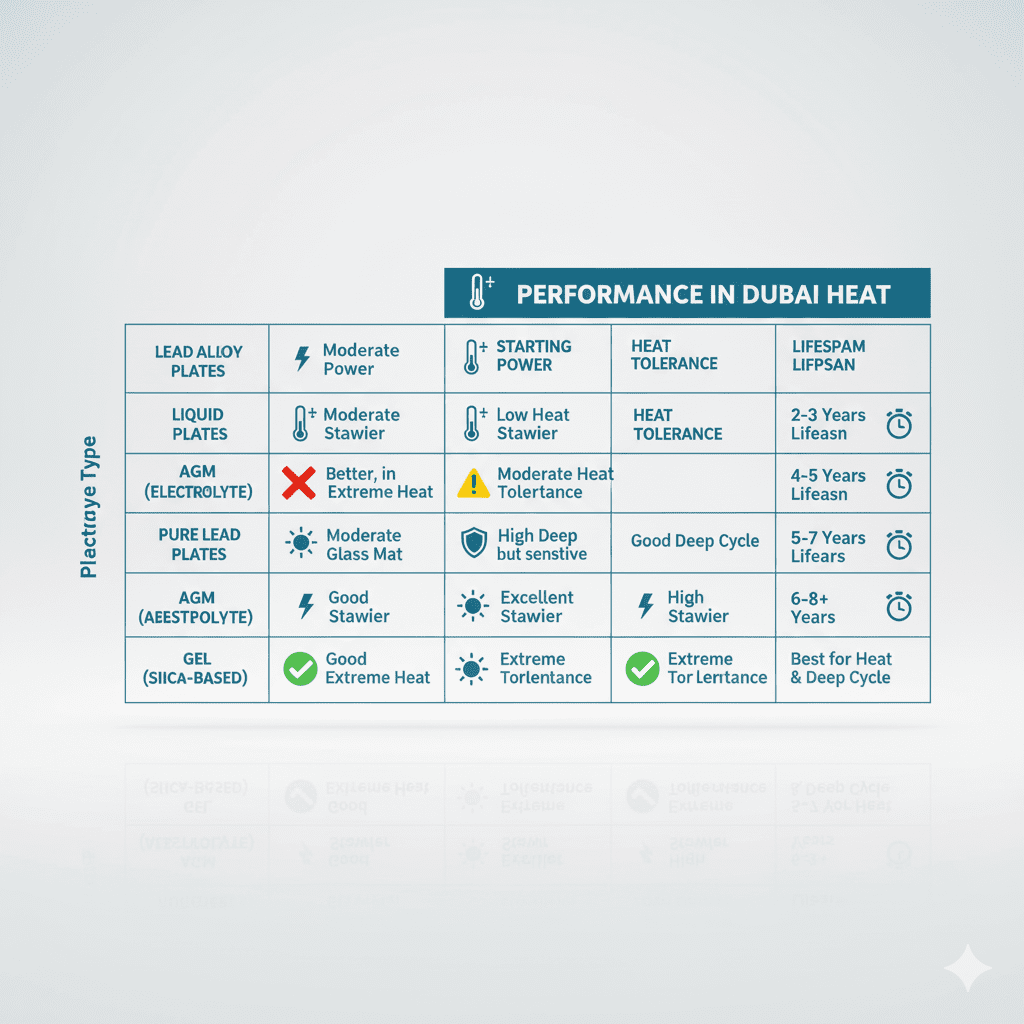
Scenario: Testing 120 batteries under Dubai summer conditions (avg. 45°C)
| Battery Brand | Plate Material | Electrolyte Type | Average Lifespan | Notes |
|---|---|---|---|---|
| Amaron | Lead Alloy | Liquid | 4.5 years | Maintains performance in heat |
| Bosch | Pure Lead | AGM | 5.2 years | Resistant to sulfation |
| Tuflong | Lead-Calcium | Gel | 5 years | Spill-proof, vibration-resistant |
Insight: Batteries with AGM or Gel electrolytes and high-quality plate materials outperform standard lead-acid in extreme temperatures. Explore Amaron Battery Replacement Dubai and Bosch Car Battery Replacement Dubai for durable options.
How Component Quality Affects Car Battery Performance
- Plate Composition: High-quality lead or alloy plates resist corrosion and improve lifespan.
- Electrolyte Type: AGM and Gel electrolytes reduce maintenance and tolerate heat better.
- Separator Material: Advanced separators prevent shorts and improve safety.
- Terminals: Strong connections ensure consistent current flow.
For pricing and options, see our Complete Guide to Car Battery Prices in Dubai 2025.
What are the main components of a car battery?
The main components of a car battery include positive and negative plates, electrolyte, separator, battery case, and terminals. Each part plays a crucial role in producing electrical energy and ensuring reliable engine starting. For professional inspection or replacement of car battery components, visit Car Battery Replacement Near Me Dubai.
How do battery plates and electrolyte affect car battery performance?
Battery plates (lead or alloy) and the electrolyte type (liquid, AGM, Gel) directly influence a battery’s lifespan, Cold Cranking Amps (CCA), and reliability. High-quality plates and advanced electrolytes perform better in extreme climates like Dubai, reducing failure risks. Learn more about premium options at Amaron Battery Replacement Dubai.
How can I maintain my car battery components for long-lasting performance?
Regular maintenance includes cleaning battery terminals, checking electrolyte levels, inspecting plates for corrosion, and ensuring separators are intact. Proper care prevents voltage drops and prolongs battery life. For expert maintenance and replacement, visit Bosch Car Battery Replacement Dubai
Conclusion
Understanding the components of a car battery is essential for ensuring your vehicle’s reliability and performance. Each part—from the positive and negative plates to the electrolyte, separator, terminals, and casing—plays a critical role in producing and delivering electrical energy. High-quality components, such as AGM or Gel electrolytes and premium plate materials, significantly enhance battery life, especially in extreme climates like Dubai.
For professional inspection, maintenance, and replacement of car batteries, trust EuroSwift Auto Services. Their expert team ensures optimal battery performance and prevents unexpected breakdowns. For the best options, consider Amaron, Bosch, or Tuflong batteries. Always check the 2025 Car Battery Price Guide before purchase to get the best value and performance for your vehicle.
Leave a Reply