How Supporting Power Systems Have Transformed
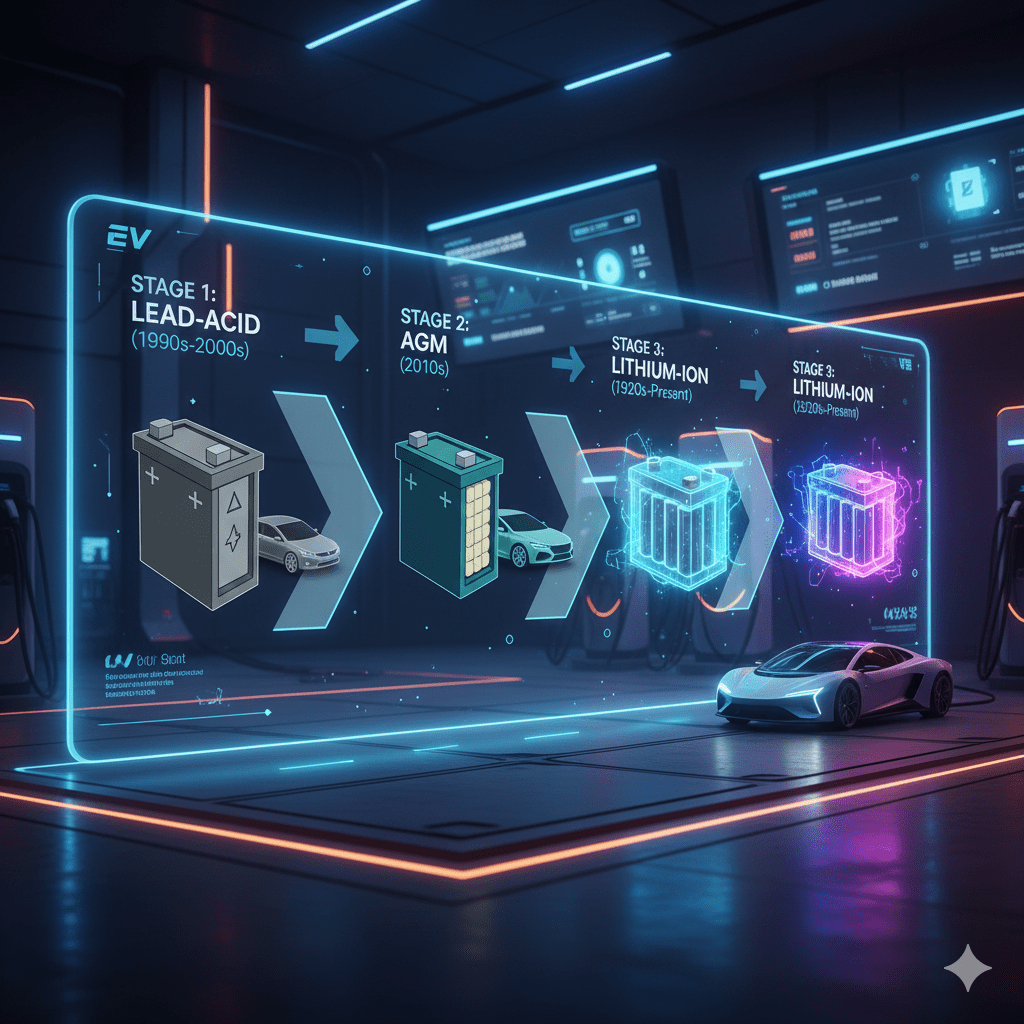
The EV auxiliary battery evolution represents a critical shift in how electric vehicles manage low-voltage power needs. While traction systems drive mobility, auxiliary batteries silently support essential electronics, safety systems, and vehicle readiness. Over time, this evolution has reshaped reliability, efficiency, and system integration in modern EVs.
Understanding EV Auxiliary Battery Evolution
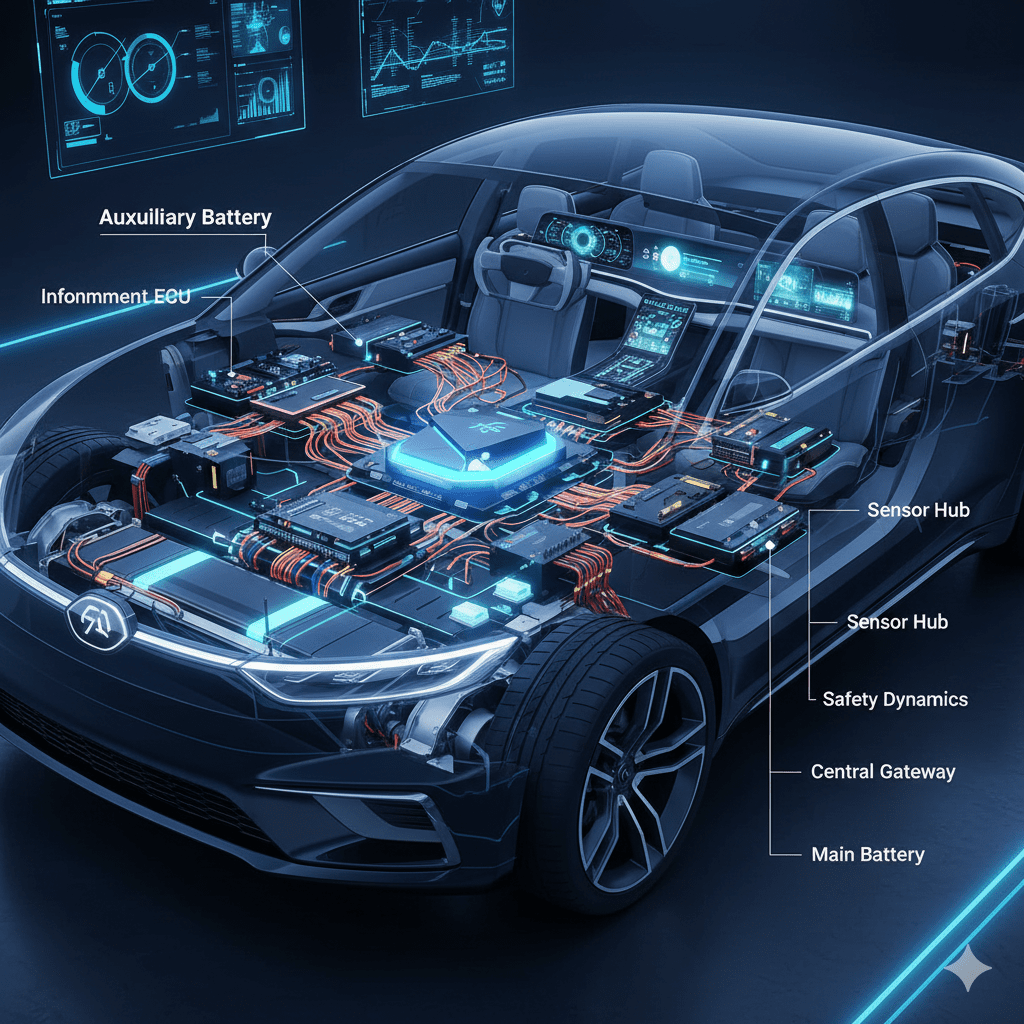
EV auxiliary battery evolution refers to the progression of low-voltage power units used alongside high-voltage traction systems. These auxiliary units power control modules, infotainment, lighting, sensors, and startup logic. As EV architectures advanced, auxiliary energy systems evolved to meet higher electronic demands with better thermal stability and longer service life.
Timeline of EV Auxiliary Battery Evolution
| Phase | Auxiliary Technology | Key Evolutionary Shift |
|---|---|---|
| Early EVs | Lead-acid auxiliary units | Basic electronics support |
| Mid-generation EVs | Enhanced AGM systems | Improved vibration & load handling |
| Modern EVs | Lithium-based auxiliary units | Weight reduction & smart power control |
| Latest EVs | Integrated energy management | Optimized efficiency & diagnostics |
This timeline shows how EV auxiliary battery evolution closely follows advancements in onboard electronics and vehicle intelligence.
Why EV Auxiliary Battery Evolution Became Necessary
As EVs introduced advanced driver assistance, connected systems, and digital dashboards, traditional auxiliary setups struggled. The EV auxiliary battery evolution addressed:
- Increased electronic load
- Constant standby power requirements
- Thermal stress in compact compartments
- Integration with smart energy controllers
These demands accelerated innovation beyond conventional auxiliary solutions.
Technology Shifts in EV Auxiliary Battery Evolution
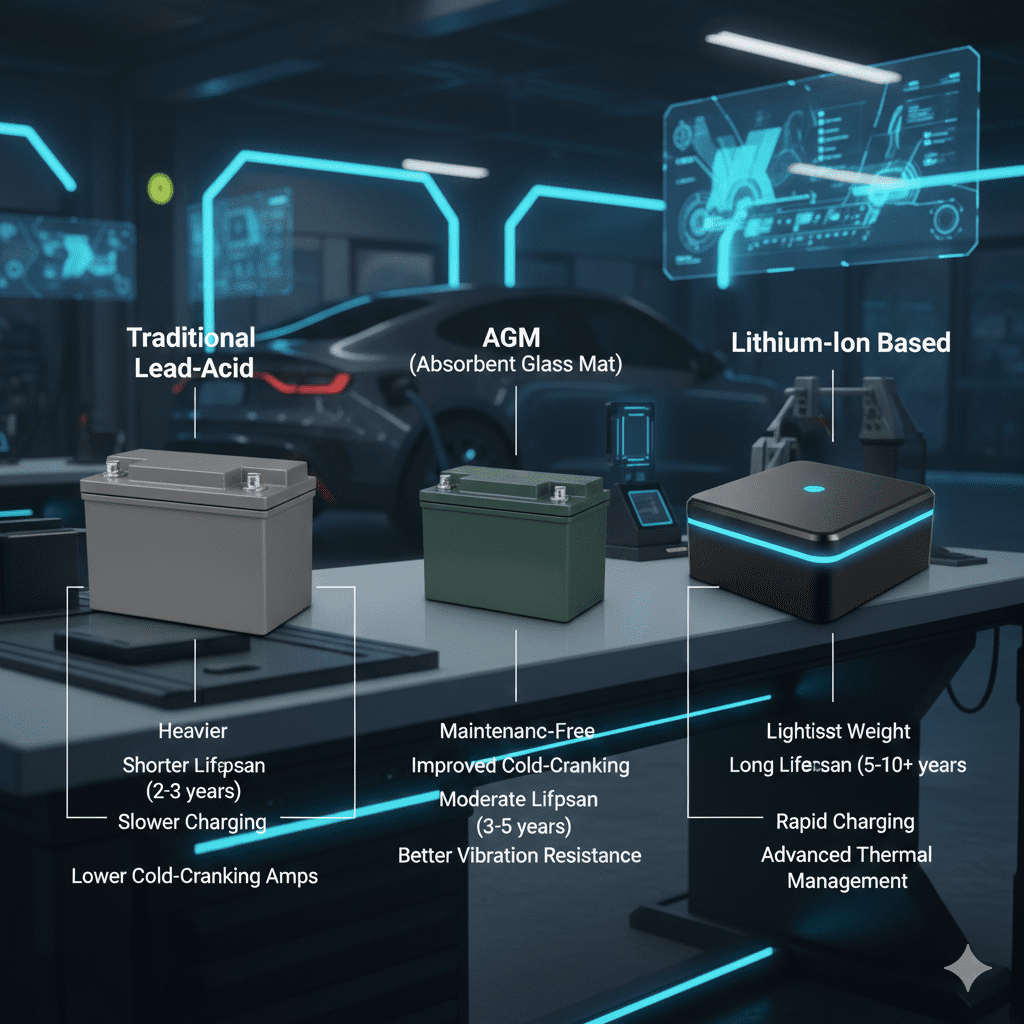
From Lead-Acid to AGM
AGM technology marked a key step in EV auxiliary battery evolution, offering sealed construction, better vibration resistance, and stable voltage output.
Transition to Lithium-Based Auxiliary Systems
Lithium auxiliary units reduced weight, improved cycle efficiency, and enabled advanced monitoring—another milestone in EV auxiliary battery evolution.
Smart Energy Management Integration
Modern EVs integrate auxiliary units with vehicle management software, allowing predictive diagnostics and load balancing—defining the current phase of EV auxiliary battery evolution.
EV Auxiliary Battery Evolution vs Traditional Automotive Systems
| Aspect | Traditional Vehicles | Modern EV Auxiliary Systems |
|---|---|---|
| Power role | Engine startup support | Electronics & system control |
| Energy management | Alternator-based | Software-controlled |
| Heat tolerance | Moderate | High-temperature optimized |
| Diagnostics | Manual | Real-time monitoring |
This comparison highlights why EV auxiliary battery evolution is fundamentally different from legacy automotive designs.
Case Study: Auxiliary Power Demand Growth in EV Platforms
A 2024 EV platform analysis showed that auxiliary power consumption increased by 38% over five years due to connected services, sensors, and always-on modules. Vehicles using advanced auxiliary technologies experienced lower system errors and improved cold-start readiness, validating the importance of EV auxiliary battery evolution.
Impact of EV Auxiliary Battery Evolution on Reliability
The evolution improved:
- System wake-up reliability
- Voltage stability during software updates
- Emergency system readiness
- Overall electronic uptime
These benefits make EV auxiliary battery evolution essential for modern electric mobility.
Industry Adoption & Support Ecosystem
Specialized service providers now support evolving auxiliary systems. For professional diagnostics and expert handling of advanced auxiliary units, EuroSwift Auto Services offers specialized solutions aligned with modern EV architectures via their dedicated support services page.
Brand-specific auxiliary technologies are also supported through advanced options such as:
- Amaron power solutions designed for high-load electronic environments
- Bosch auxiliary systems engineered for precision voltage control
- Tuflong advanced energy units optimized for durability and stability
For cost transparency across evolving auxiliary technologies, consult this updated vehicle power system price guide.
Future Direction of EV Auxiliary Battery Evolution
The next phase of EV auxiliary battery evolution is expected to focus on:
- Solid-state auxiliary units
- AI-based power optimization
- Deeper integration with vehicle operating systems
- Enhanced thermal resilience for extreme climates
These developments will further redefine how auxiliary energy supports EV ecosystems.
EV auxiliary battery evolution kya hoti hai?
EV auxiliary battery evolution un low-voltage power units ki progression ko refer karta hai jo modern electric vehicles ke electronics aur control systems ko support karte hain.
EV auxiliary battery evolution kyun zaroori hai?
Advanced onboard electronics, sensors, infotainment aur safety systems ki increasing load ki wajah se auxiliary battery evolution essential ho gayi hai.
Lead-acid se AGM aur lithium par transition ka role kya tha?
Transition ne weight reduce kiya, voltage stability improve ki, aur vibration resistance enhance ki, jo EV auxiliary battery evolution ka key milestone tha.
Final Thoughts
The EV auxiliary battery evolution is not a minor upgrade—it is a foundational transformation enabling smarter, safer, and more reliable electric vehicles. As EV technology advances, auxiliary power systems will continue evolving to support increasingly complex electronic environments.
Leave a Reply