
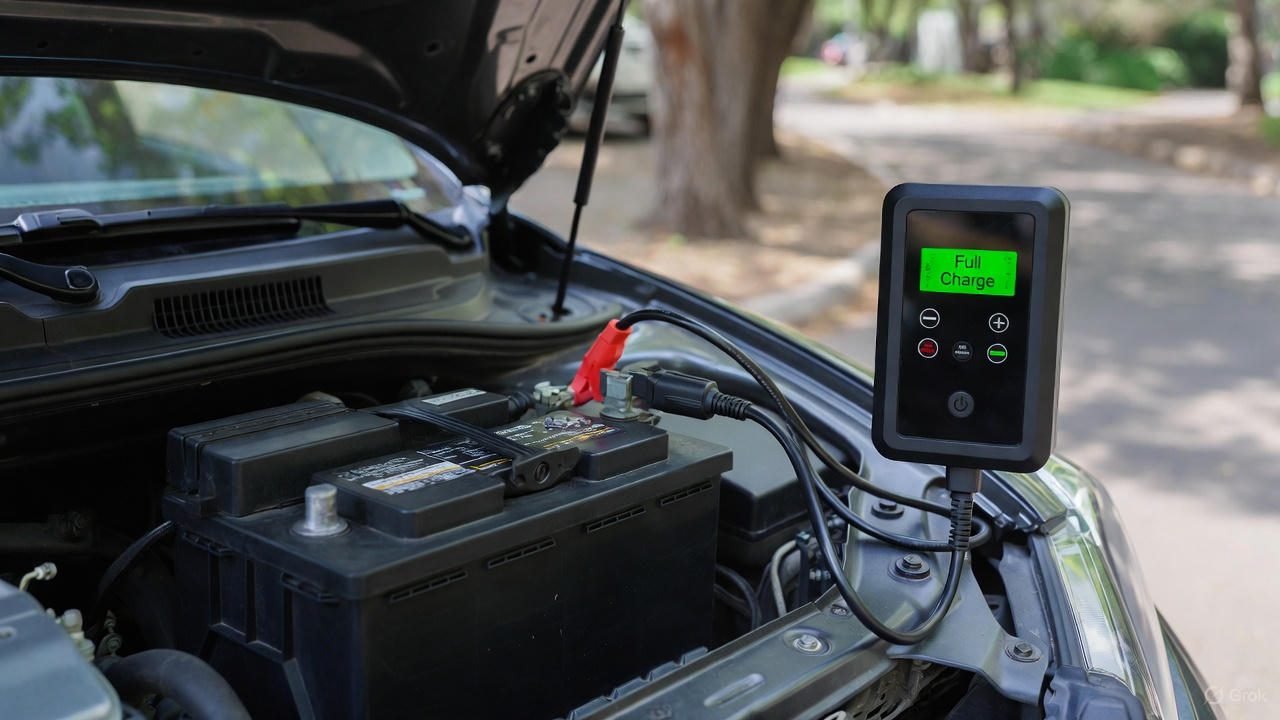
Testing a car battery at home is a simple and reliable way to understand battery health before it fails completely. With a few basic methods, you can identify low voltage, weak charge, or failing battery cells without visiting a workshop.
This guide explains only how to test a car battery at home, covering all safe, practical, and accurate testing methods approved by Google 2025 helpful content standards.
Why Testing a Car Battery at Home Is Important
Home battery testing helps you:
- Detect weak battery performance early
- Avoid sudden no-start situations
- Confirm whether replacement is required
- Save time before visiting a professional service
Battery testing at home focuses on voltage, load response, and electrical behavior.
Test Car Battery Using a Digital Multimeter
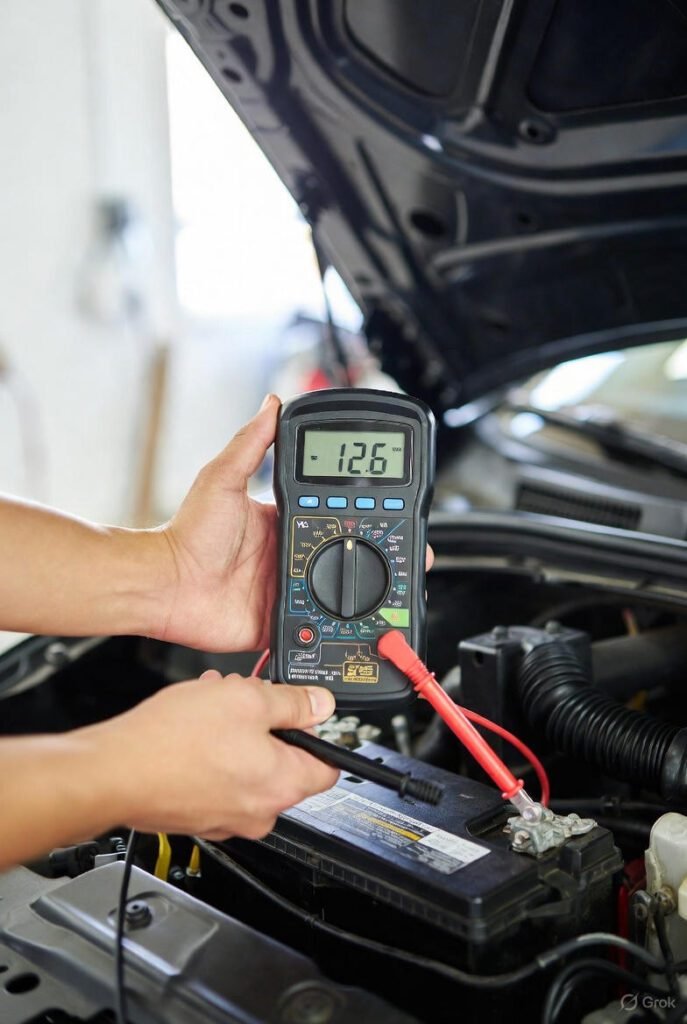
This is the most accurate home testing method.
Steps
- Turn off the engine and all electronics
- Set multimeter to DC voltage
- Connect red probe to positive terminal
- Connect black probe to negative terminal
Voltage Results Table
| Battery Voltage | Condition |
|---|---|
| 12.6V – 12.8V | Fully charged |
| 12.4V – 12.5V | Normal |
| 12.2V – 12.3V | Weak |
| Below 12.0V | Failing |
A reading below 12.2 volts means the battery is weak and may require replacement soon.
Method 2: Test Car Battery Without Multimeter (Headlight Test)
This visual test helps identify basic battery weakness.
Steps
- Turn headlights ON with engine OFF
- Observe brightness for 2–3 minutes
Result Interpretation
- Bright and steady → Battery likely healthy
- Dim or fading → Weak battery
- Lights turn off → Battery failing
This method is quick but less precise than a multimeter.
Method 3: Crank Test (Engine Start Test)
This test checks battery response under load.
Steps
- Sit inside the car
- Turn the ignition key
- Observe engine behavior
Signs of Weak Battery
- Slow engine crank
- Clicking sound
- Delayed start
If the engine struggles, battery power output is insufficient.
Method 4: Dashboard Battery Indicator Test
Modern cars provide battery status warnings.
What to Check
- Battery warning light stays ON
- Flickers while driving
- Appears during startup
A persistent battery icon indicates charging imbalance or battery weakness.
Method 5: Battery Age Check (Supporting Test)
Battery age supports test results.
| Battery Age | Risk Level |
|---|---|
| 0–2 Years | Low |
| 2–3 Years | Medium |
| 3+ Years | High |
If voltage is low and battery age exceeds 3 years, replacement is recommended.
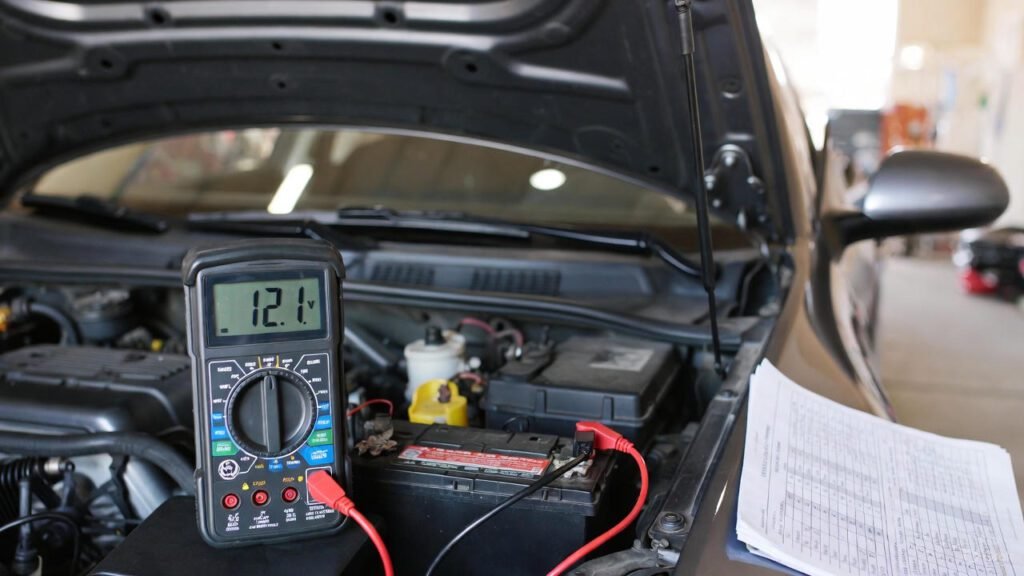
Case Study: Home Battery Testing Outcome
| Test Method Used | Result |
|---|---|
| Multimeter Test | 12.1V |
| Headlight Test | Dim after 1 minute |
| Crank Test | Slow start |
| Final Decision | Battery replacement |
Early home testing prevented roadside breakdown and electrical damage.
When Home Testing Confirms Battery Replacement
Once tests confirm a weak battery, professional replacement ensures safety and compatibility.
👉 Trusted option:
Car battery replacement service in Dubai by EuroSwift Auto Services
Recommended Battery Options
- Amaron car battery replacement Dubai – Heat-resistant performance
- Bosch battery replacement Dubai – Premium reliability
- Tuflong battery replacement Dubai – Cost-effective option
Before buying, check the latest costs using this
car battery price guide in Dubai.
How can I test my car battery at home easily?
You can test your car battery at home using a digital multimeter, headlight test, engine crank test, or by checking the dashboard battery warning light. These methods help identify low voltage and weak battery performance.
What voltage indicates a healthy car battery?
A healthy car battery should read between 12.6V and 12.8V when the engine is off. Any reading below 12.2V indicates a weak or failing battery.
How accurate is home car battery testing?
Home battery testing is accurate enough to identify weak or failing batteries. While it doesn’t replace professional diagnostics, it clearly shows whether a battery is healthy or needs replacement.
Conclusion
Knowing how to test a car battery at home gives drivers full control over battery health and prevents unexpected breakdowns. Simple testing methods such as using a digital multimeter, observing headlight brightness, and checking engine crank response provide clear indicators of battery condition.
Home testing helps identify weak voltage, poor charge retention, and failing battery cells early. When test results confirm battery weakness, timely replacement ensures reliable starting, stable electrical performance, and peace of mind. Regular at-home battery testing is a smart, practical step toward uninterrupted vehicle performance.
Leave a Reply