
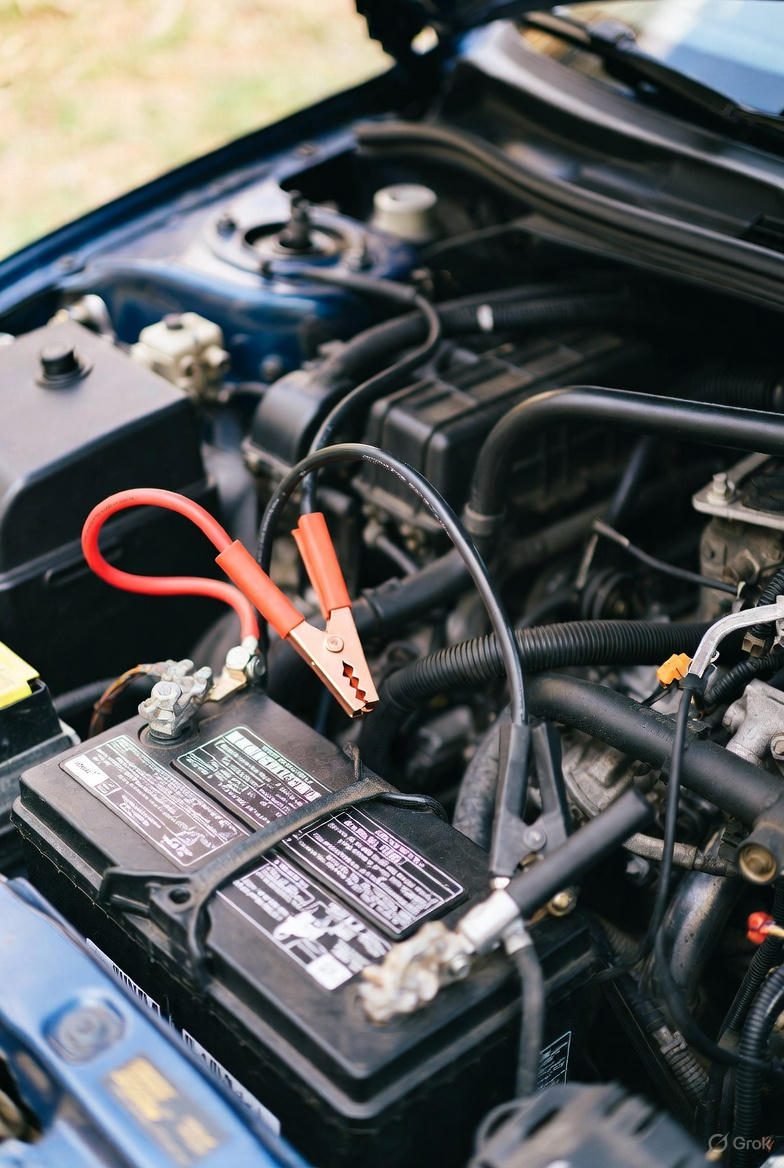
Jump-starting a car battery safely is essential to restore power without damaging the vehicle’s electrical system or risking personal injury. Incorrect jump-starting can cause battery explosions, electronic failures, or alternator damage. This guide explains every critical aspect of safe jump-starting, following Google 2025 quality and safety content standards.
What Does Jump-Starting a Car Battery Safely Mean?
Jump-starting a car battery safely means transferring electrical power from a healthy battery to a discharged one using the correct cable order, proper grounding, and safety precautions. The goal is to start the engine without sparks, voltage spikes, or battery damage.
When Jump-Starting a Car Battery Is Safe to Do
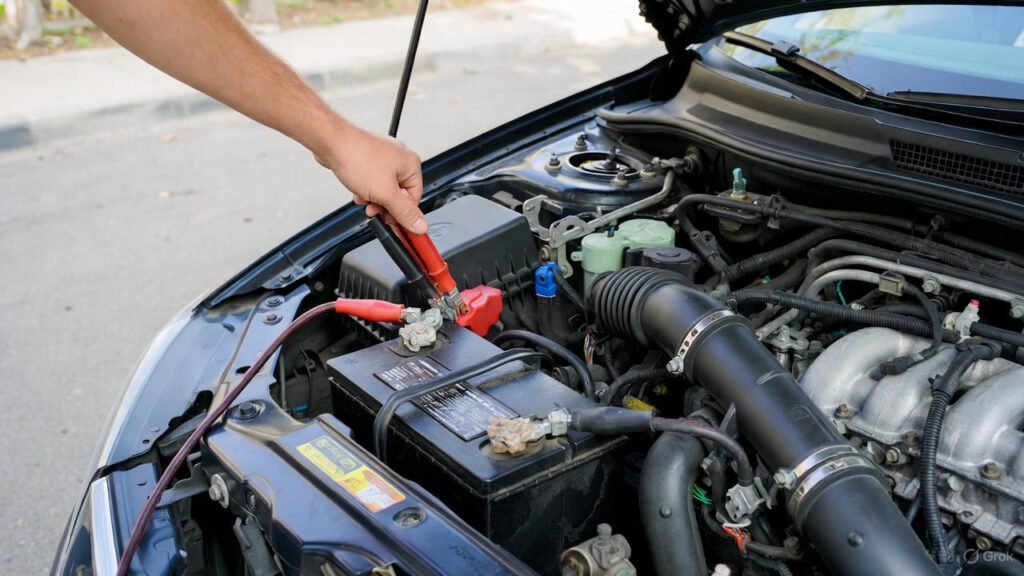
Jump-starting is safe only when:
- The battery casing is intact
- No acid leakage is visible
- Terminals are clean and not heavily corroded
- The battery is discharged, not internally damaged
If the battery shows swelling, cracks, or strong odor, jump-starting is unsafe.
Step-by-Step Process for Jump-Starting a Car Battery Safely
Step 1: Position the Vehicles Correctly
Park both vehicles close enough for cables to reach, but ensure they do not touch.
Step 2: Turn Off Engines and Electronics
Switch off engines, headlights, AC, infotainment systems, and all electrical accessories.
Step 3: Connect Jumper Cables in the Correct Order
- Red clamp to positive terminal of dead battery
- Red clamp to positive terminal of good battery
- Black clamp to negative terminal of good battery
- Black clamp to unpainted metal ground on dead vehicle
This grounding step is critical for safety.
Step 4: Start the Donor Vehicle
Let it run for 2–3 minutes to stabilize voltage.
Step 5: Start the Dead Vehicle
Once started, allow it to idle before disconnecting cables.
Step 6: Remove Cables in Reverse Order
Always disconnect in the exact reverse order to prevent sparks.
Safety Risks of Improper Jump-Starting
Improper jump-starting can cause:
- Battery explosion
- ECU and sensor damage
- Alternator failure
- Cable overheating
- Electrical short circuits
Following the correct procedure minimizes these risks.
Comparison Table: Safe vs Unsafe Jump-Starting
| Aspect | Safe Jump-Starting | Unsafe Jump-Starting |
|---|---|---|
| Cable Order | Correct sequence | Random connection |
| Grounding | Proper metal ground | Direct negative terminal |
| Electrical Load | All electronics off | Accessories left on |
| Risk Level | Minimal | High |
| Vehicle Damage | None | Possible ECU damage |
Case Study: Jump-Starting a Car Battery Safely in Dubai
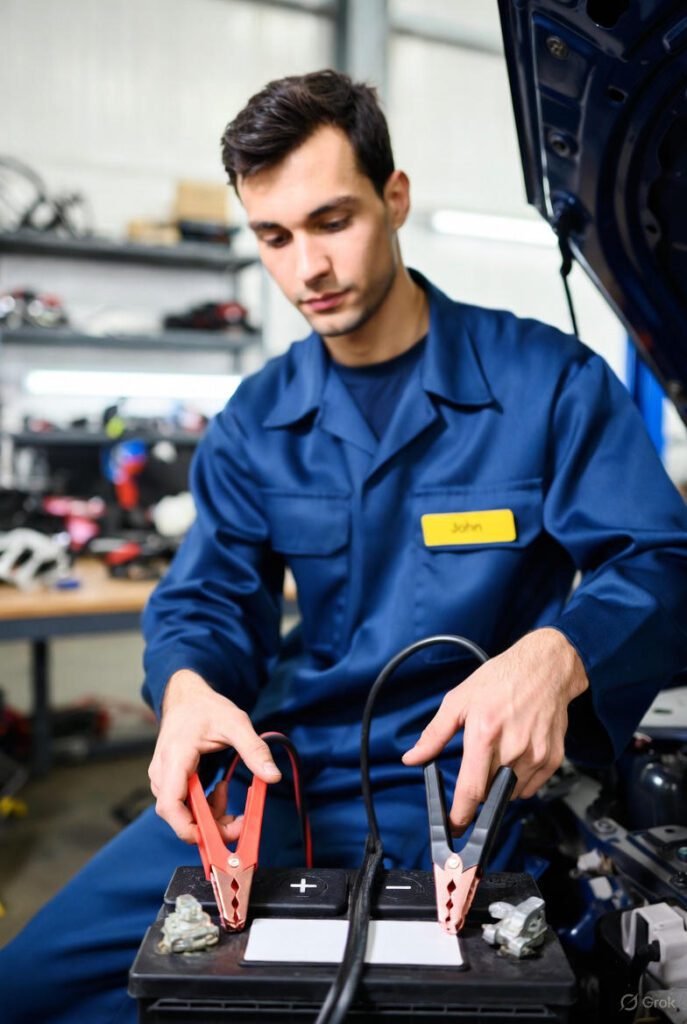
A sedan failed to start in high heat conditions. The owner attempted an unsafe jump-start by connecting negative clamps directly to the battery terminal, causing a spark and terminal damage. After professional assistance, the battery was safely jump-started using proper grounding. The incident highlights how following correct safety steps prevents damage—especially in hot climates.
When Jump-Starting Is Not a Long-Term Solution
If a battery requires repeated jump-starting, it indicates internal failure. In such cases, professional inspection and replacement are recommended. EuroSwift Auto Services offers reliable car battery replacement near you in Dubai, ensuring safe installation and compatibility.
Trusted replacement options include:
- Amaron car battery replacement
- Bosch battery replacement
- Tuflong battery replacement
For cost planning, refer to this Dubai car battery price guide for updated pricing.
What is the safest way to jump-start a car battery?
The safest way to jump-start a car battery is to connect jumper cables in the correct order, use a proper ground point instead of the negative terminal, and keep all vehicle electronics turned off during the process to prevent sparks and voltage damage.
Can jump-starting a car battery damage the vehicle?
Yes, jump-starting a car battery incorrectly can damage sensitive electronics, the alternator, or the ECU. Following the correct connection sequence and grounding method prevents electrical surges and component failure.
Is it safe to jump-start a car battery in hot weather?
Jump-starting a car battery in hot weather is safe only when proper precautions are followed. High temperatures increase battery pressure, so correct grounding and avoiding sparks are essential to prevent battery overheating or explosion.
Conclusion: Jump-Starting a Car Battery Safely
Jump-starting a car battery safely requires careful attention to cable connections, grounding technique, and electrical safety measures. Using the correct procedure prevents battery damage, protects vehicle electronics, and reduces the risk of injury. While jump-starting is an effective emergency solution, repeated need for jump-starts often indicates battery failure and should be followed by professional inspection to ensure long-term reliability and safe vehicle operation.

Leave a Reply