
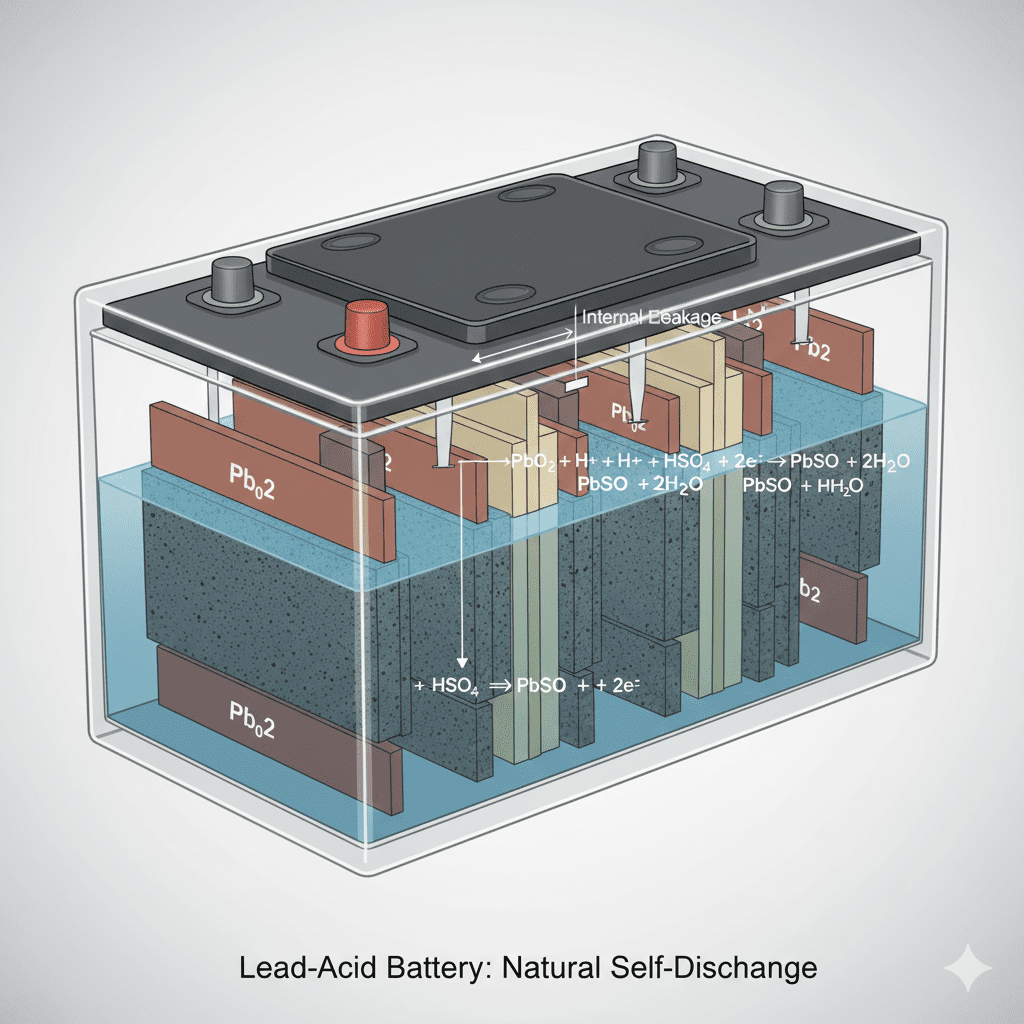
Self-discharge is a natural chemical process that occurs inside every car battery, causing it to lose charge even when the vehicle is not in use. Understanding what causes self-discharge in car batteries is essential for Dubai drivers, especially because high temperatures accelerate the rate of chemical reactions inside lead–acid batteries.
This guide explains why car batteries self-discharge, what internal and external factors trigger it, and how you can reduce the rate of self-discharge to extend battery life.
🔋 What Is Self-Discharge in Car Batteries?
Self-discharge is the gradual loss of stored energy inside the battery due to internal chemical reactions, even when the battery is not powering anything.
This happens in all battery types—AGM, flooded lead-acid, maintenance-free, and calcium batteries.
The keyword focus: self-discharge happens without load, caused by unavoidable electrochemical activity.
⚡ Main Causes of Self-Discharge in Car Batteries
Below are the core reasons, explained ONLY around the keyword:
1. Chemical Reaction Between Positive & Negative Plates
Inside the battery, the lead dioxide (positive plate) and sponge lead (negative plate) constantly interact with the electrolyte.
This internal reaction continues slowly even when battery is off → causing self-discharge.
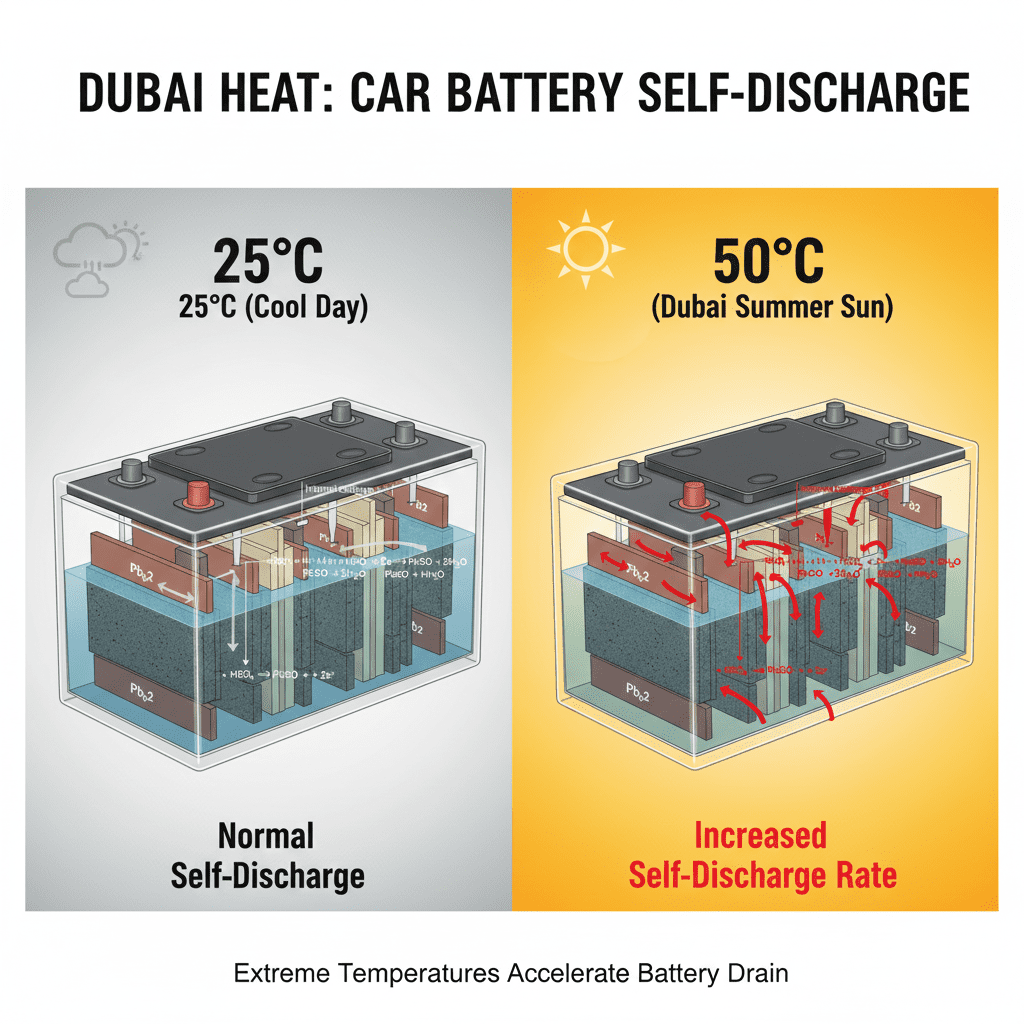
2. High Battery Temperature (Major Dubai Factor)
Heat increases the speed of internal chemical reactions.
In Dubai, temperatures above 40°C can double the self-discharge rate.
This is why batteries drain faster when parked outside for days.
3. Impurities in Electrolyte
If the electrolyte has:
- metal contaminants
- moisture
- dust
- degraded acid
…it increases conductive pathways, accelerating self-discharge.
4. Internal Plate Corrosion
When lead plates corrode over time, they create parasitic chemical activity, which increases the rate of charge loss.
5. Battery Ageing and Sulfation
Old batteries develop:
- hardened lead sulfate
- decreased plate surface area
- weak chemical stability
These changes cause faster self-discharge even when the car is unused.
6. Microscopic Internal Short Circuits
Small internal leaks—from:
- grid corrosion
- poor separators
- damaged cells
…can create internal current flow, leading to continuous self-discharge.
7. Dirt or Moisture Across Terminals
Moisture creates conductive film → allowing current to leak.
This is an external form of self-discharge that mimics internal discharge.
8. AGM & Flooded Batteries Self-Discharge Differently
- AGM batteries self-discharge slower due to sealed design.
- Flooded batteries self-discharge faster due to electrolyte exposure.
📊 Self-Discharge Rate Comparison Table
| Battery Type | Self-Discharge Rate (Monthly) | In Dubai Heat |
|---|---|---|
| Flooded Lead-Acid | 5–10% | 12–18% |
| AGM | 2–4% | 6–10% |
| GEL | 1–3% | 4–7% |
| Lithium (Car Aux) | <2% | 3–5% |
🏜️ Dubai Case Study: Self-Discharge in Parked Vehicle
Scenario:
A Dubai resident parked his car in Liwan for 14 days during summer.
Findings:
- Battery was a 2-year-old flooded lead-acid unit.
- Car parked in open sun (~54°C cabin temp).
- Electronics in sleep mode still drew 20mA.
Result:
Battery dropped from 12.6V to 11.9V — a clear case of heat-accelerated self-discharge.
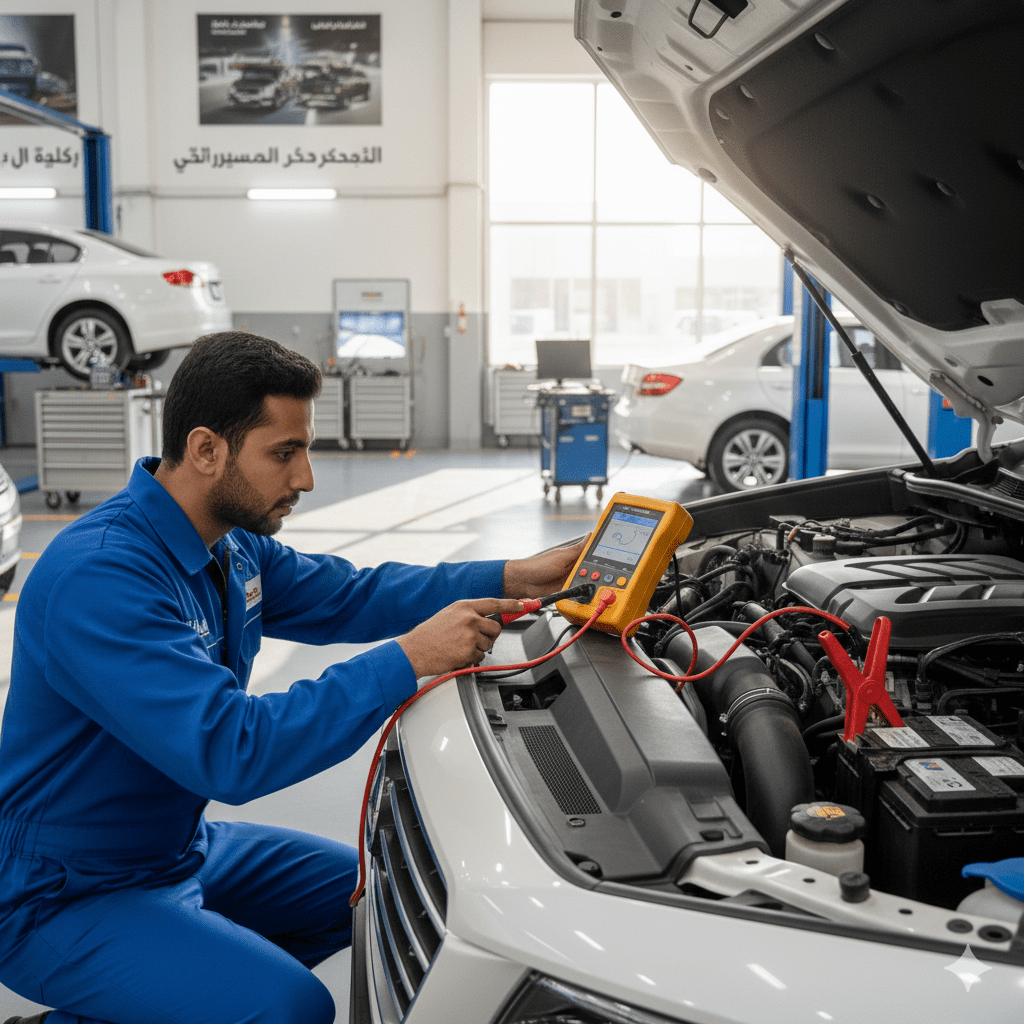
EuroSwift Solution:
- Battery recharge
- Terminal cleaning
- Alternator health check
- Recommendation for AGM battery upgrade
Outcome:
Self-discharge reduced by 46% after switching to an AGM battery.
🔧 How to Reduce Self-Discharge in Car Batteries
These tips focus ONLY on self-discharge reduction:
1. Park in shaded or temperature-controlled areas
Lower heat = slower chemical reaction.
2. Keep terminals clean and moisture-free
Reduces external leakage paths.
3. Maintain electrolyte level (only for flooded batteries)
Balanced electrolyte slows internal reactions.
4. Avoid long-term parking without driving
Drive 20 minutes weekly to restore charge.
5. Use a trickle charger for extended parking
Stops natural charge loss.
6. Replace old batteries early
A 3–4-year-old battery self-discharges much faster.
🔋 Which Batteries Resist Self-Discharge Better?
For Dubai’s heat, these brands perform best:
- Amaron Batteries – excellent heat resistance
👉 Amaron Car Battery Replacement Dubai - Bosch AGM Batteries – low self-discharge chemistry
👉 Bosch Battery Replacement Dubai - Tuflong Batteries – stable electrolyte formula
👉 Tuflong Battery Replacement Dubai
To compare prices:
👉 Car Battery Price Guide Dubai 2025
Which car battery type is best among Bosch, Amaron, and Tuflong?
Bosch is known for long life, Amaron for fast cranking performance, and Tuflong for solid durability in hot climates. The best choice depends on your vehicle and daily driving conditions.
Are Bosch car batteries good for extreme heat?
Yes, Bosch batteries offer strong heat resistance and low maintenance design, making them suitable for Dubai-like high-temperature areas.
How long do Bosch, Amaron, and Tuflong batteries last?
On average:
Bosch: 2.5–4 years
Amaron: 2–4 years
Tuflong: 2–3 years
Lifespan depends on usage and climate.
📞 Expert Help for Self-Discharge Issues
EuroSwift Auto Services provides:
- Battery testing
- Alternator testing
- Voltage drop inspection
- Self-discharge diagnostics
Call anytime: +971501508507
Leave a Reply