
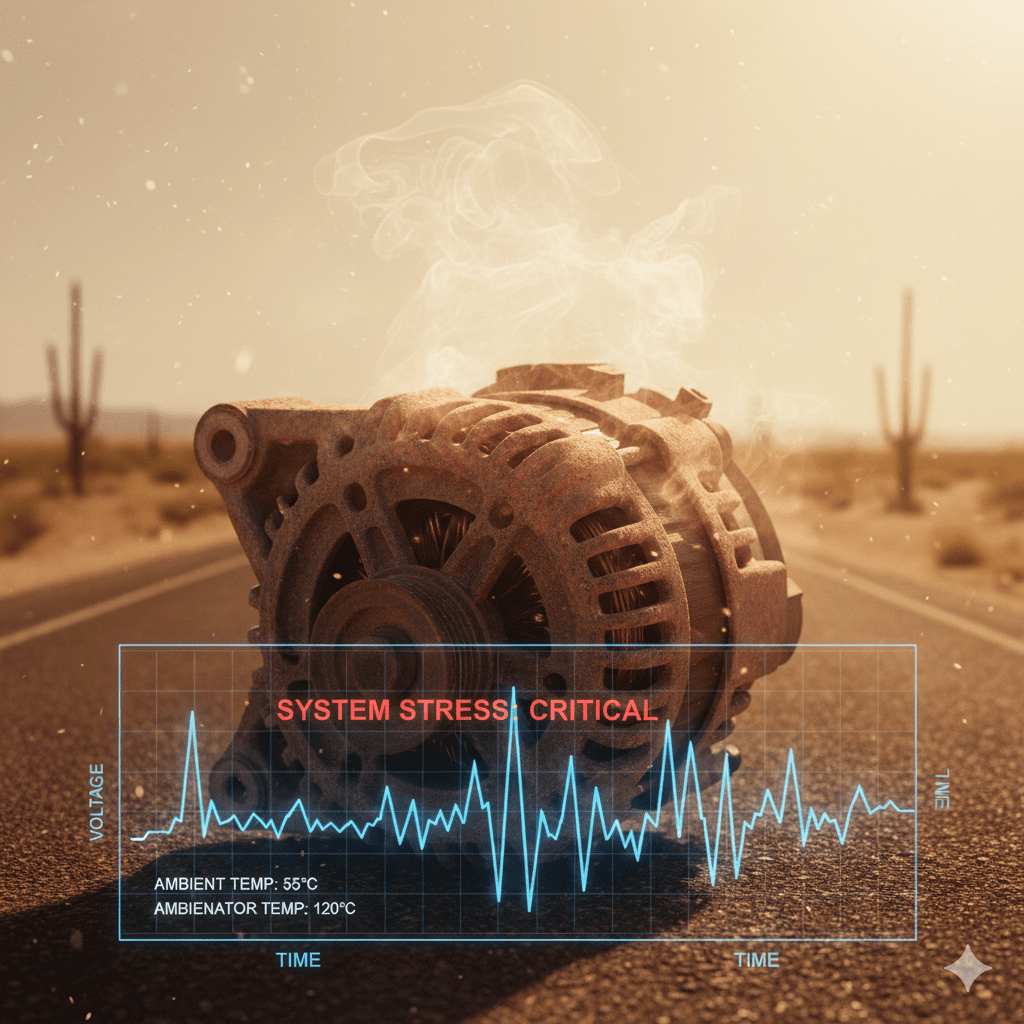
The extreme heat in the UAE does more than just affect car batteries—it also stresses the alternator, the component responsible for keeping your battery charged and all electrical systems running. Prolonged exposure to high temperatures accelerates wear and reduces efficiency, leading to electrical failures, battery drain, and unexpected breakdowns.
This article explains heat-related alternator stress in UAE vehicles, with a focus on causes, effects, and preventive solutions.
1. What is Alternator Stress?
Alternator stress occurs when the alternator has to work harder than normal due to:
- High ambient temperatures
- Excessive electrical loads (AC, infotainment, GPS, LED lights)
- Prolonged idling or stop-and-go traffic
Semantic keywords: alternator overload, thermal alternator stress, high-temperature alternator strain, UAE vehicle alternator problems
Under stress, alternators generate more heat internally, which can degrade components and reduce lifespan.
2. How UAE Heat Impacts Alternators
a) Increased Internal Resistance
High temperatures increase the electrical resistance in alternator windings, leading to:
- Reduced charging efficiency
- Excessive heat build-up
- Voltage drops under load
Semantic keywords: thermal resistance increase, high-temperature alternator efficiency loss, heat-induced voltage drop
b) Bearing and Pulley Wear
Extreme heat softens lubricants in alternator bearings and pulleys, causing:
- Faster mechanical wear
- Noise and vibration
- Risk of alternator seizure
Semantic keywords: bearing degradation, pulley thermal wear, alternator lubrication failure
c) Voltage Regulator Failure
Heat affects the alternator voltage regulator:
- Overcharging or undercharging the battery
- Reduced battery cycle life
- Electrical system malfunctions
Semantic keywords: regulator thermal failure, overcharge risk, voltage instability under heat
3. UAE Traffic & Driving Conditions That Amplify Stress
- Prolonged idling in traffic
- Constant stop-and-go driving
- Long AC operation in extreme heat
- Heavy electrical loads (LED taxis, digital meters, GPS, cameras)
All these factors compound alternator stress and accelerate component failure.
4. Technical Data: Heat vs Alternator Performance
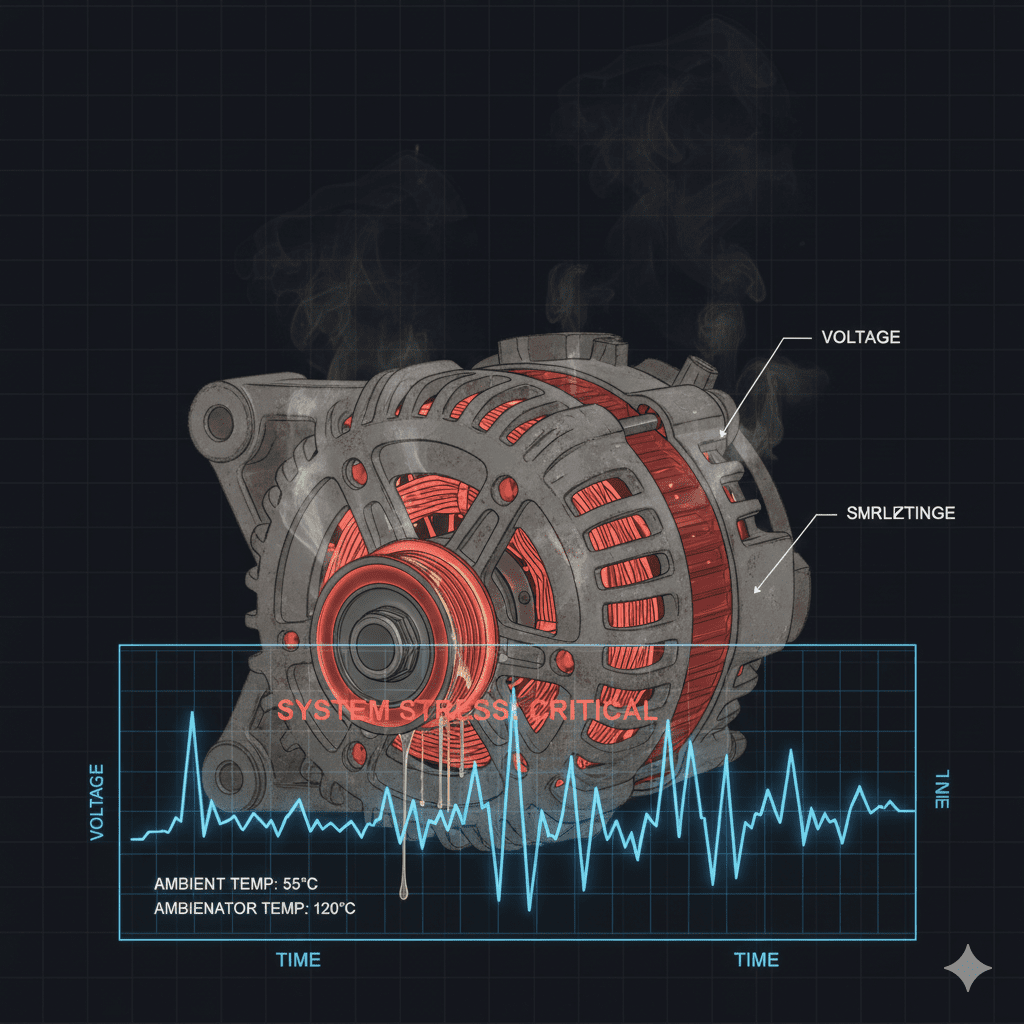
| Ambient Temp (°C) | Alternator Efficiency | Voltage Output Stability | Stress Level |
|---|---|---|---|
| 25°C | 100% | Stable | Low |
| 35°C | 95% | Slight fluctuation | Moderate |
| 45°C | 85% | Voltage dips | High |
| 55°C | 70% | Frequent under/overcharge | Very High |
| 60°C+ | 60% | Critical voltage instability | Extreme |
5. Real-World UAE Case Study: Alternator Heat Stress
| Car Model | Ambient Temp | Under-Hood Temp | Electrical Load | Expected Alternator Life | Actual Life | Main Cause |
|---|---|---|---|---|---|---|
| Toyota Camry | 42°C | 63°C | High AC + infotainment | 5 years | 2.5 years | Heat + AC load |
| Nissan Altima | 40°C | 60°C | GPS + lights + meters | 5 years | 2.8 years | Thermal overload |
| Lexus ES | 45°C | 65°C | High AC + cameras | 6 years | 3 years | Stop-go traffic + heat |
Insight: Alternators in UAE fail 40–50% sooner due to heat and heavy electrical loads.
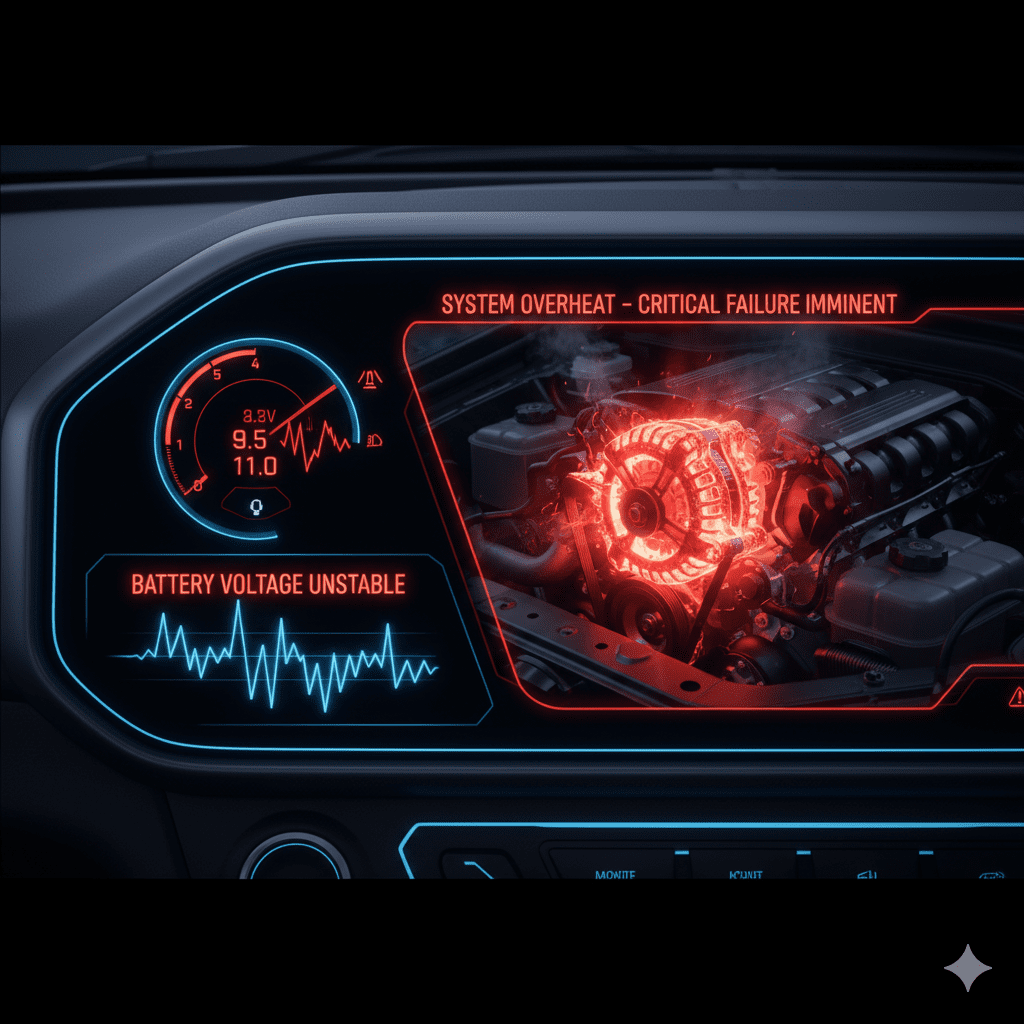
6. Preventive Measures for Heat-Related Alternator Stress
1. Limit Continuous Idling
Avoid prolonged stationary periods in extreme heat; it reduces thermal buildup.
2. Use Heat-Resistant Alternators
Some aftermarket alternators are designed to handle higher thermal loads.
3. Reduce Electrical Load When Possible
Turn off unused accessories, meters, or devices when not needed.
4. Regular Alternator Maintenance
Inspect belt tension, bearing lubrication, and voltage regulator performance.
5. Parking in Shade
Whenever possible, keep vehicles out of direct sun to reduce under-hood temperatures.
Heat-Optimized Batteries & Alternator Support in UAE
To reduce overall electrical system stress, pairing a high-temperature battery with a healthy alternator is crucial. Trusted brands include:
- Amaron Batteries – Amaron Car Battery Replacement Dubai
- Bosch Batteries – Bosch Car Battery Replacement Dubai
- Tuflong Batteries – Trusted Tuflong Car Battery Replacement Dubai
For expert alternator and battery inspection:
👉 EuroSwift Auto Services – Car Battery & Alternator Services
What is heat-related alternator stress?
It is the accelerated wear and reduced efficiency of an alternator caused by high temperatures, heavy electrical load, and prolonged idling.
What are the signs of alternator stress due to heat?
Flickering or dimming lights
Slow battery charging
Voltage fluctuations
Unusual noise from alternator bearings
How often should alternators be checked in the UAE?
At least once every 12 months, or more frequently for vehicles operating in extreme heat or heavy-duty conditions.
Conclusion
Heat-related alternator stress is one of the most common causes of electrical system failures in UAE vehicles. The extreme desert temperatures, prolonged idling, heavy AC usage, and continuous electrical loads combine to push alternators beyond their designed limits. This not only reduces alternator efficiency but also shortens battery life, causes voltage fluctuations, and increases the risk of unexpected breakdowns.
Understanding the effects of heat on alternators allows vehicle owners to take preventive steps, such as reducing idle time, parking in shaded areas, using heat-resistant alternators, and scheduling regular maintenance. Pairing a reliable, heat-tolerant battery—like Amaron, Bosch, or Tuflong—with a well-maintained alternator ensures optimal performance under the UAE’s harsh climate.
For professional alternator and battery inspection or replacement, EuroSwift Auto Services offers expert solutions across Dubai:
👉 Car Battery & Alternator Services Near Me – EuroSwift Auto Services
By proactively managing alternator stress, UAE drivers can safeguard their vehicles against heat-related failures and maintain reliable performance throughout the year.
Leave a Reply