
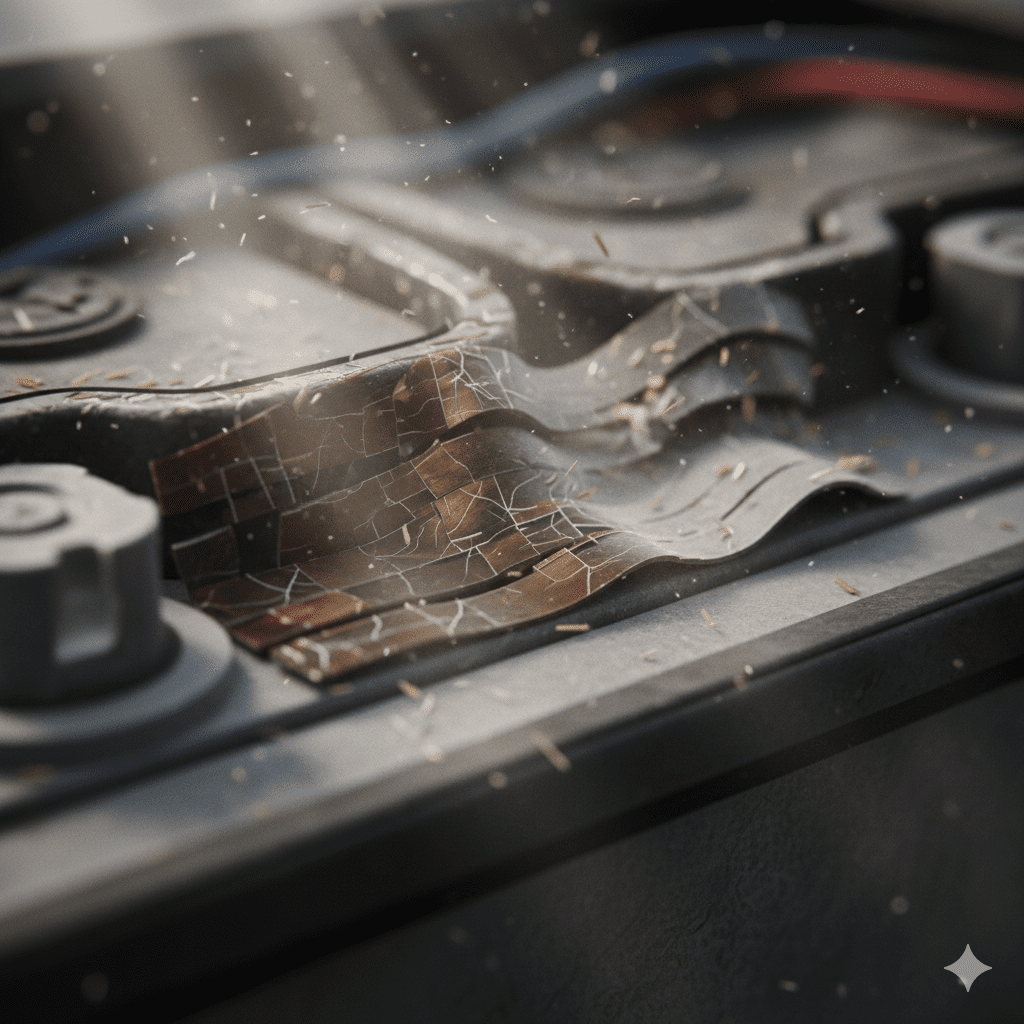
Dubai’s extreme climate—intense heat, high humidity, asphalt heat reflection, and rapid temperature shifts—creates severe thermal stress on battery plates. This stress weakens internal grids, accelerates chemical breakdown, and dramatically shortens battery life.
Understanding how thermal stress impacts battery plates in Dubai weather helps drivers protect their vehicle, reduce unexpected breakdowns, and choose the right heat-resistant battery technology.
✅ What Is Thermal Stress on Battery Plates?
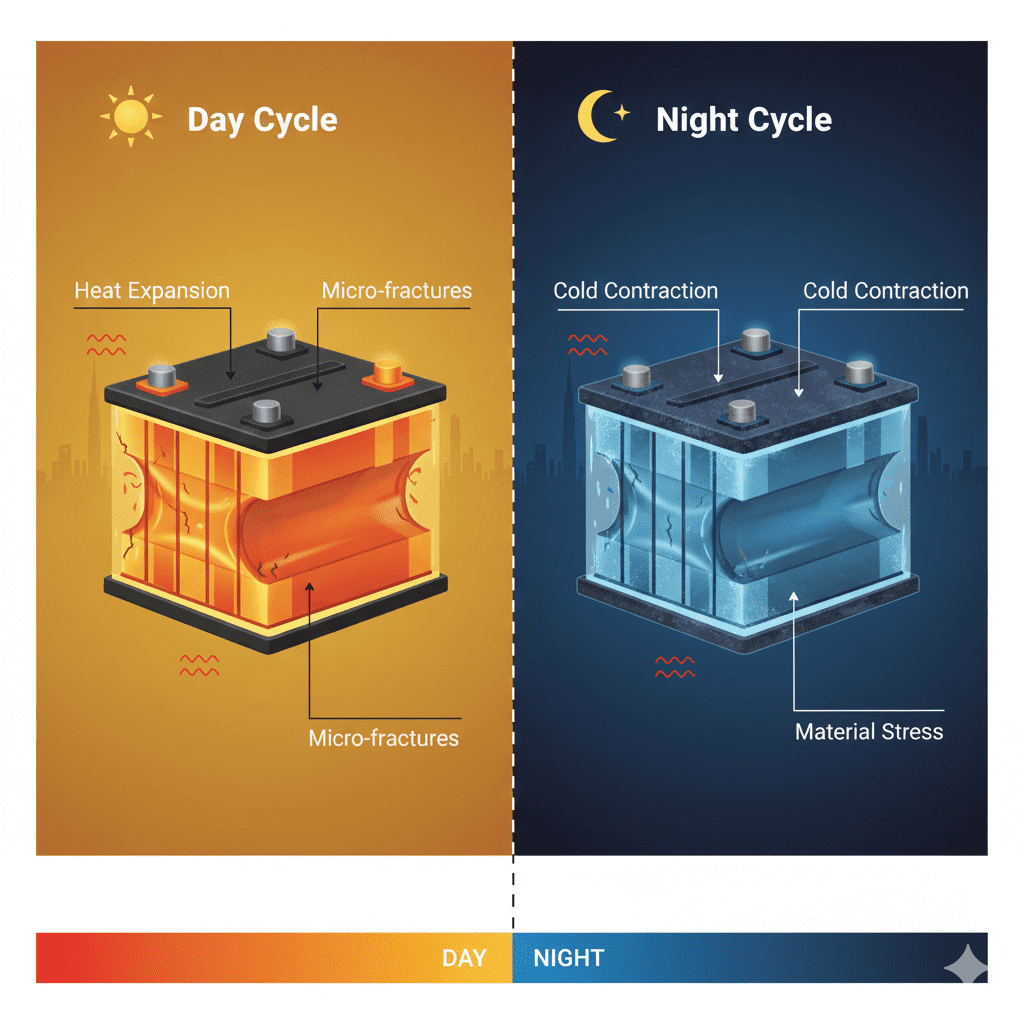
Thermal stress is the internal strain created when the positive and negative plates inside a car battery expand in heat and contract when cooling down.
Dubai’s climate makes this cycle extreme:
- Daytime temperatures: 45–52°C
- Cabin/engine bay temps: 65–75°C
- Nighttime cooling: 27–33°C
This constant thermal cycling causes:
- Plate bending
- Micro-cracks
- Grid corrosion
- Active material shedding
- Capacity loss
⚠ Dubai’s harsh weather triples the rate of thermal stress compared to moderate climates.
🌡 How Dubai Weather Intensifies Thermal Stress on Battery Plates
Below are the exact environmental triggers specific to Dubai:
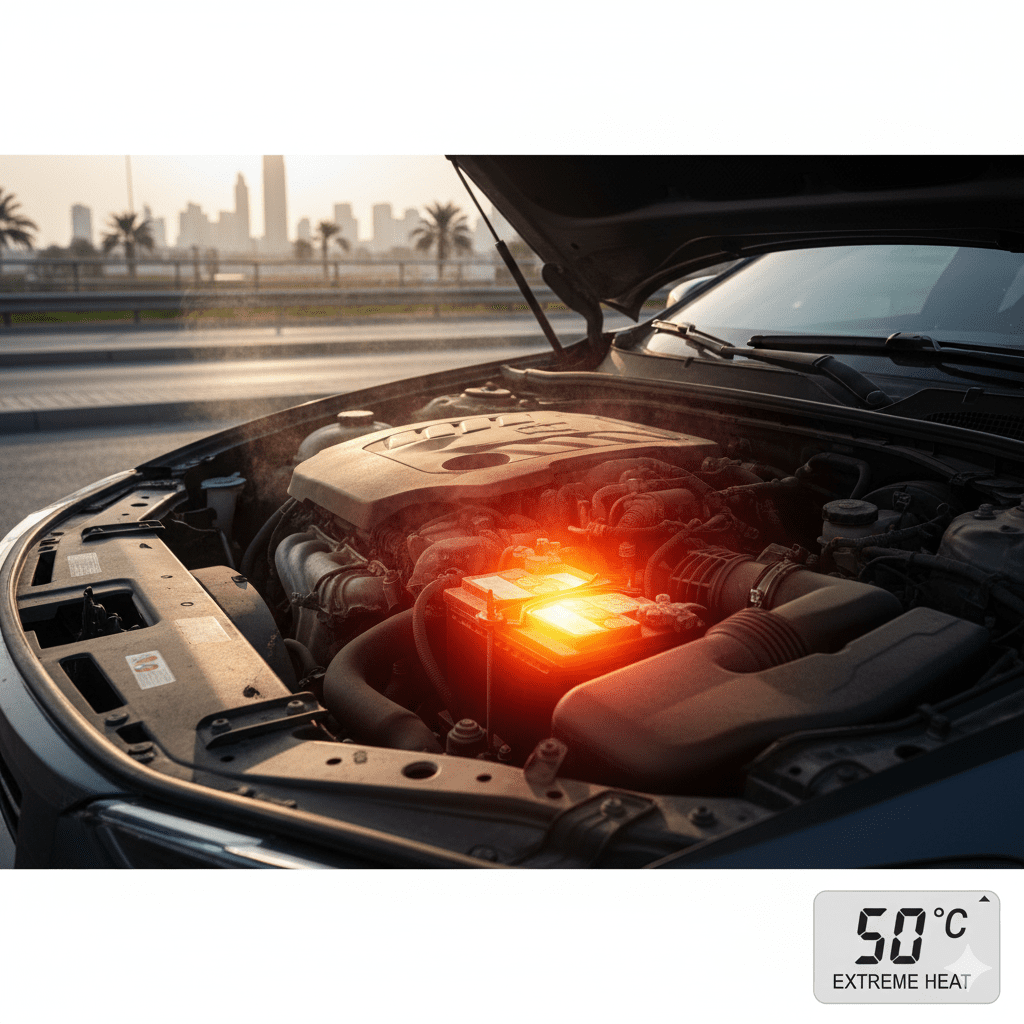
1. Extreme Ambient Heat (Main Cause)
As temperatures rise above 45°C, the battery plates expand rapidly.
This causes:
- Increased internal resistance
- Faster corrosion
- Weakening of grid structure
- Faster evaporation of electrolyte
Heat also accelerates every chemical reaction happening inside the battery, causing over-activity and plate fatigue.
2. High Under-Bonnet Temperatures (Up to 75°C)
Modern cars trap heat. Dubai’s sun amplifies it.
Battery plates face:
- Thermal over-pressure
- Softening of plate material
- Faster grid oxidation
- Active paste shedding
This makes batteries fail suddenly—usually without warning.
3. Rapid Temperature Drop at Night
Dubai nights cool down fast, sometimes a 15–20°C drop.
This causes:
- Plate contraction
- Micro-fractures
- Internal stress fatigue
Repeated daily, this cycle destroys plate stability.
4. Humidity + Heat Reaction
High humidity in coastal Dubai areas leads to:
- Electrolyte dilution
- Increased corrosion rate
- Condensation inside caps
- Accelerated plate wear
5. Sand & Dust Slowing Cooling
Desert dust deposits create insulation around the battery.
This means:
- Battery stays hot longer
- Plates undergo longer expansion
- Thermal fatigue worsens
🧪 Case Study: Dubai 2024 Battery Plate Stress Test
| Condition | Heat Level | Result on Battery Plates | Failure Speed |
|---|---|---|---|
| 25°C Normal Climate | Low | Minimal expansion | 2–3 years |
| 45°C Dubai Daytime | High | Plate bending + corrosion | 12–18 months |
| 75°C Engine Bay | Very High | Active material shedding | 6–12 months |
| 20°C Night Rapid Cooling | Medium | Micro-cracks form | Accelerates failure |
Conclusion:
Dubai weather shortens battery lifespan by 40–60% because thermal stress becomes continuous, not seasonal.
🔧 How Thermal Stress Damages Battery Plates Internally
✔ Plate Grid Corrosion
Heat interacts with acid → grid metal corrodes faster.
✔ Sulfation Clusters
Excess heat speeds up sulfate crystal growth → battery loses charge-holding ability.
✔ Active Material Shredding
The battery paste becomes brittle → falls off the grid → reduced CCA.
✔ Warped Plates Touch Each Other
This causes internal short circuits, the #1 cause of sudden Dubai battery deaths.
🚗 Dubai-Specific Driving Patterns That Increase Thermal Stress
- Long idling with AC
- Stop-go traffic on Sheikh Zayed Road
- Car parked in direct sun
- Engine bay pre-heating due to asphalt reflection
- Driving on desert tracks (sand heat reflection)
🛠 How to Reduce Thermal Stress on Battery Plates in Dubai
Only heat-resistance-focused tips — no extra topics:
1. Park in Shade Whenever Possible
Reduces plate expansion cycles by 30–40%.
2. Use Heat-Shield Battery Jackets
Lower plate temperature by 8–12°C.
3. Choose Heat-Resistant Battery Brands
Heat-friendly options available at EuroSwift:
- Amaron batteries → strong high-temperature endurance
- Bosch batteries → durable anti-corrosion grids
- Tuflong batteries → toughness in desert environments
4. Get Regular Battery Heat Load Tests
Done by EuroSwift Auto Services:
Car battery replacement near me Dubai
5. Check Electrolyte Levels (Wet Batteries)
Heat accelerates evaporation → plates get exposed → thermal cracks form.
6. Avoid High-RPM Driving After Hot Parking
Plates are already in a soft expanded state → sudden current load causes damage.
📉 How Much Life Is Lost Due to Thermal Stress?
| Battery Type | Avg Life in Normal Climate | Avg Life in Dubai | Loss Due to Thermal Stress |
|---|---|---|---|
| Lead-Acid | 36 months | 12–18 months | 45–60% |
| AGM | 48 months | 24–30 months | 35–40% |
| EFB | 42 months | 20–26 months | 30–35% |
📌 When Should a Battery Be Replaced (Thermal Stress Indicators)?
- Bulging battery case
- Weak morning crank
- Burning smell
- Voltage drop below 12.3V
- Visible corrosion on plates
- Topping up water frequently
- Sudden battery death
If any signs appear → Contact EuroSwift Auto Services.
🔗 Helpful Resource: Battery Prices in Dubai
For choosing a heat-resistant battery smartly:
Complete guide car battery prices in Dubai
What is thermal stress on battery plates?
Thermal stress refers to the damage caused when a car battery’s internal plates expand in extreme heat and contract when the temperature drops. Dubai’s climate accelerates this cycle, weakening battery plates faster.
How can I protect my battery plates from thermal stress in Dubai?
Parking in shade, keeping your engine bay clean, and choosing heat-resistant batteries like Amaron, Bosch, and Tuflong helps minimize plate damage. Regular inspections also reduce failure risks.
What are the signs of thermal stress on battery plates?
Look for:
Weak starts
Swollen battery case
Rapid discharge
Overheating smell
Low voltage drops overnight
These indicate heat-induced plate damage.
Leave a Reply