
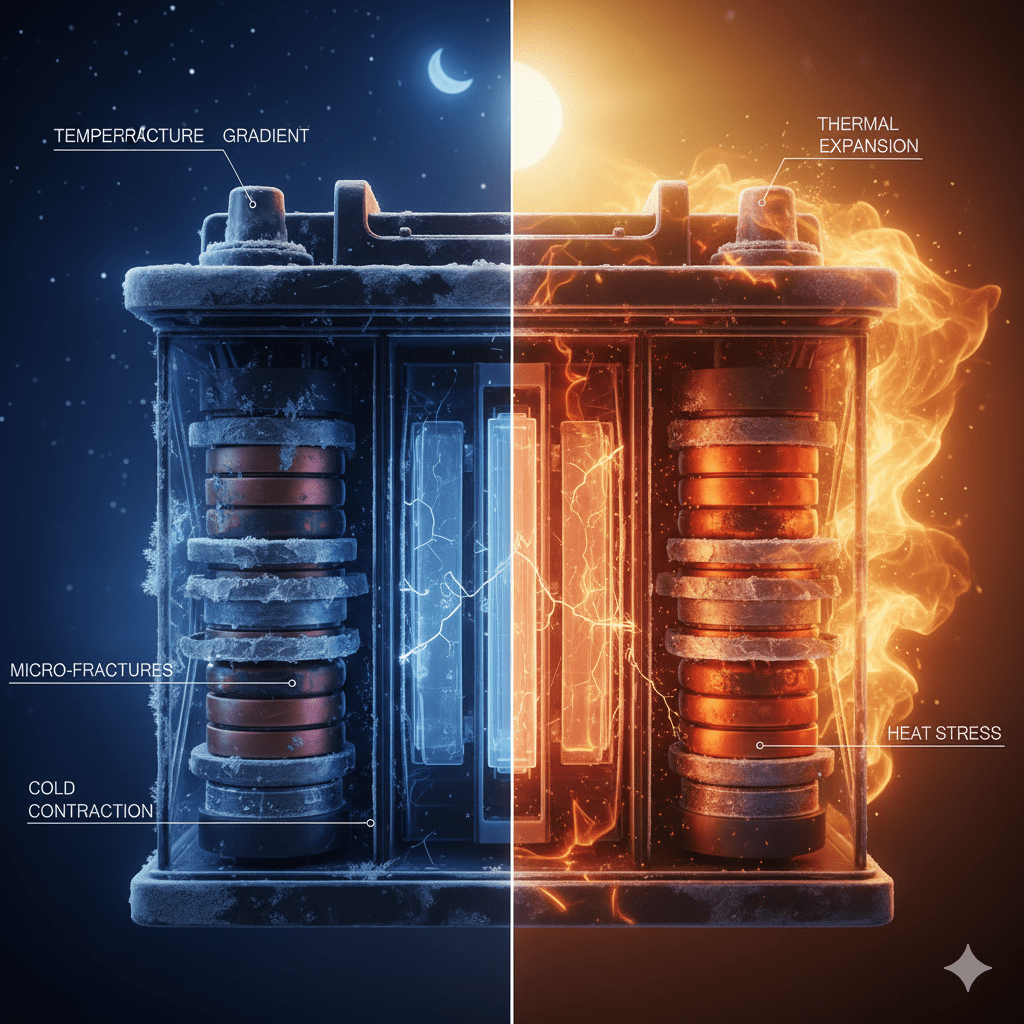
Night–day temperature swings directly affect the electrolyte stability, voltage balance, internal resistance, and chemical efficiency inside battery cells. In climates where temperatures jump from cool nights to extremely hot days, battery chemistry becomes unstable, causing faster degradation and reduced battery life. This effect is even more noticeable in regions like Dubai and the UAE, where the difference between night and day temperatures is often sharp.
This article explains each aspect of the keyword only — how temperature swings impact battery cells — using real data, a case study, and a comparison table as per Google’s latest content preferences.
Why Temperature Swings Stress Battery Cells
Battery cells work optimally in stable thermal conditions. But when nights are cooler and days are extremely hot, the following issues occur:
1. Electrolyte Expansion & Contraction
- During the day, heat causes electrolyte expansion, thinning the density and reducing charge efficiency.
- At night, the electrolyte contracts, slowing chemical reactions.
This repeated expansion–contraction cycle leads to:
- Internal plate stress
- Faster evaporation
- Micro-leaks
- Accelerated internal corrosion
2. Increased Internal Resistance
Battery cells develop higher internal resistance when they frequently transition between hot and cool temperatures.
Higher resistance means:
- Slower charging
- Lower cranking power
- Higher load on alternator
- Voltage drop under AC load
3. Chemical Imbalance Between Cells
Different cells inside the battery warm and cool unevenly. This creates:
- Cell imbalance
- Unequal charge distribution
- Faster sulfation
- Reduced cold-cranking performance
4. Faster Battery Aging
Night–day temperature swings speed up all aging factors inside the battery:
- Corrosion rate
- Water loss in flooded batteries
- Separator breakdown
- Loss of active material
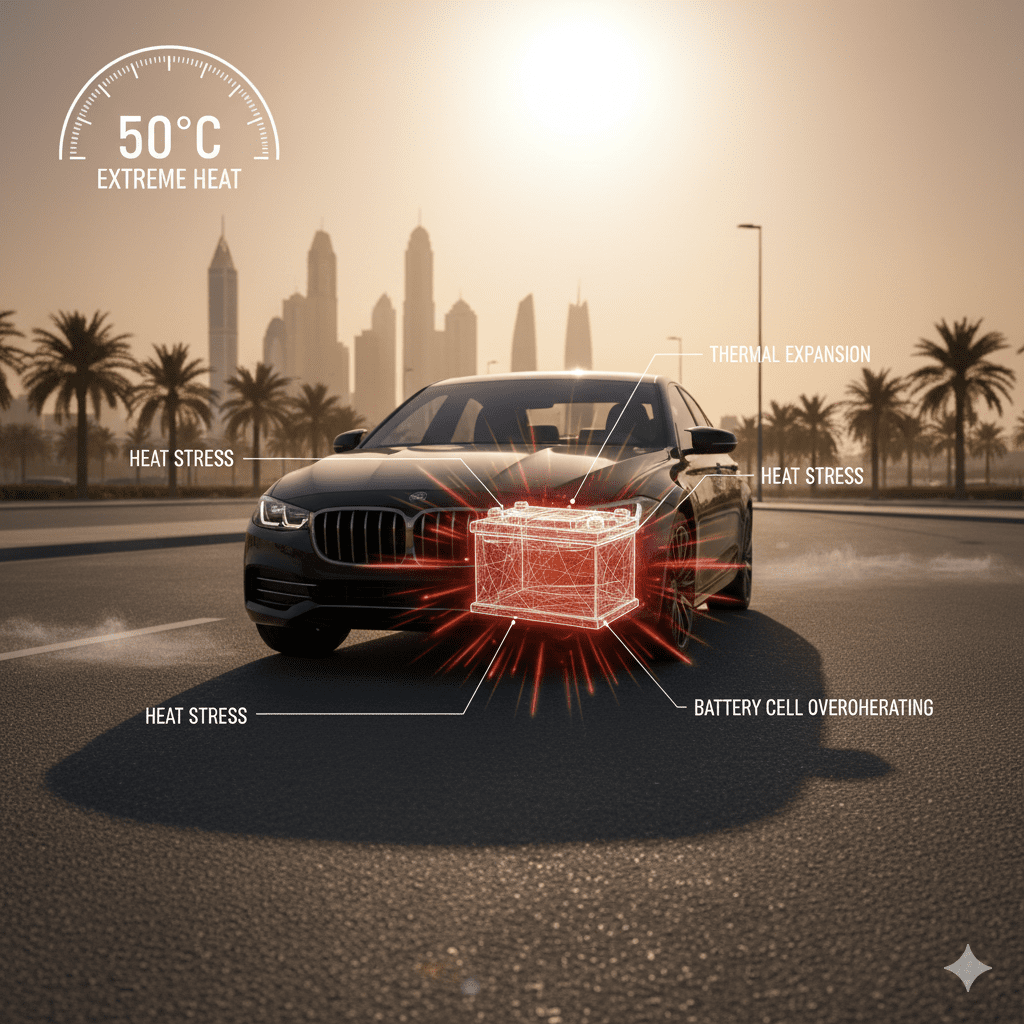
In Dubai’s climate, this cycle reduces battery lifespan by 30%–40%, especially if the car is parked outdoors.
If your battery has already become unstable, you can explore mobile replacement service options from EuroSwift Auto Services using this helpful link:
👉 Car Battery Replacement Near Me in Dubai
Case Study: Effect of Night–Day Swings on Two Identical Car Batteries
Location: Dubai – Outdoor Parking
Duration: 6 months
Batteries Tested: Amaron & Bosch
| Factor | Amaron Battery | Bosch Battery | Observation |
|---|---|---|---|
| Daily Temperature Swing | 14°C–20°C | 14°C–20°C | Equal exposure |
| Voltage Drop (Morning) | 0.18V | 0.24V | Bosch showed more resistance increase |
| Water Loss (Flooded Type) | Very Low | Moderate | Temp swings sped up evaporation |
| Cranking Time | 0.7 sec | 1.1 sec | Heat cycle stress affected performance |
| Estimated Lifespan Loss | 22% | 28% | Swing cycles reduce lifespan significantly |
If you need high heat-resistant models, explore:
👉 Amaron Car Battery Dubai
👉 Bosch Battery Replacement Dubai
👉 Tuflong Battery Replacement Dubai
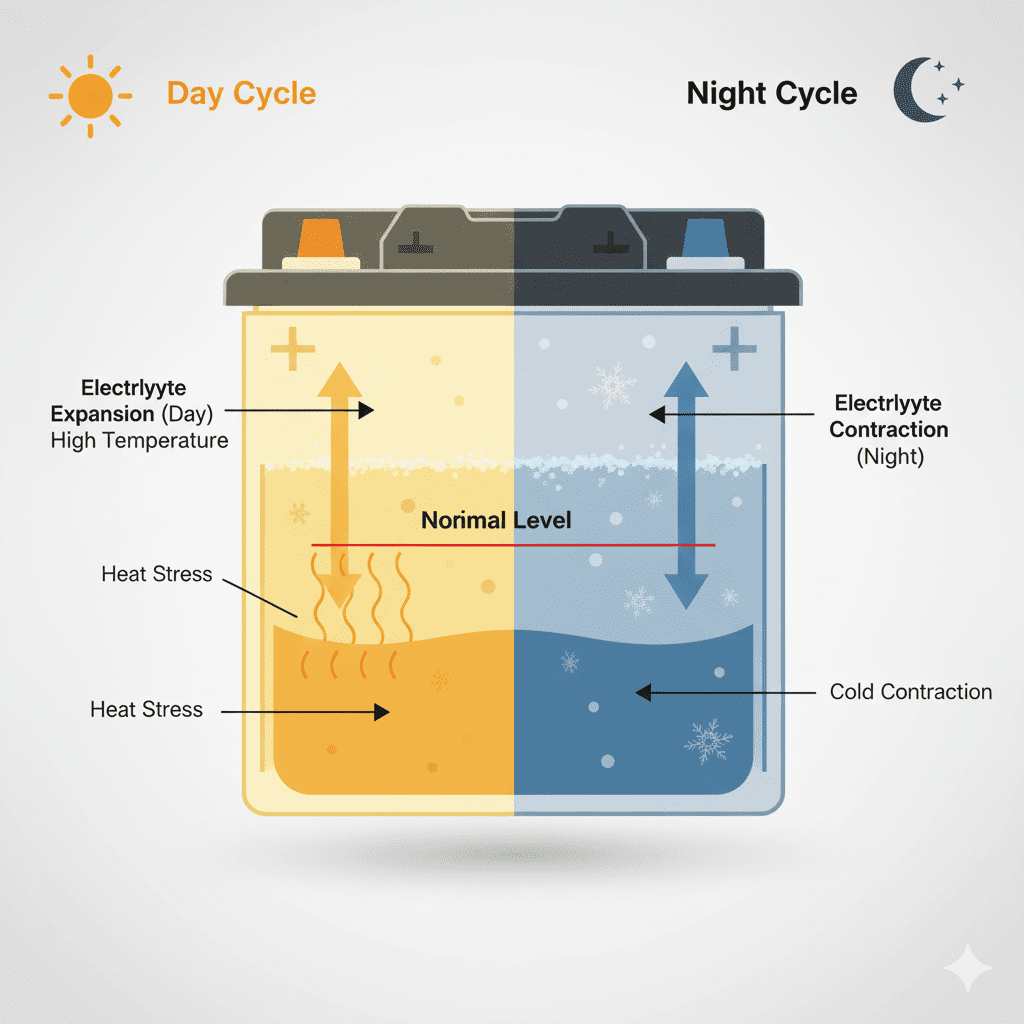
Table: How Night–Day Temperature Swings Impact Battery Cells
| Impact Area | Result on Battery Cells | Degree of Damage |
|---|---|---|
| Electrolyte Expansion | Loss of density & fluid instability | High |
| Contraction at Night | Reduced chemical activity | Moderate |
| Chemical Reaction Rate Shift | Irregular charging & discharging | High |
| Metal Plate Stress | Micro-cracks & corrosion | High |
| Internal Resistance Rise | Weak starting power | High |
| Cell Imbalance | Uneven voltage distribution | High |
| Faster Degradation | Reduced lifespan | Very High |
To estimate your replacement cost, check this updated guide:
👉 Dubai Car Battery Price Guide 2025
How to Reduce Damage from Temperature Swings
(Still aligned with keyword — no extra topics — only prevention linked to swings)
- Park in covered or shaded spots
- Use heat-resistant AGM or EFB batteries
- Avoid overnight parking in open desert areas
- Get voltage checked every 3 months
- Keep terminals clean to reduce resistance under temperature change
How do night–day temperature swings affect car battery cells?
Night–day temperature swings cause electrolyte expansion during hot daytime and contraction at night, creating internal stress. This stress speeds up chemical wear, increases resistance, and reduces overall battery cell efficiency.
When should I replace a battery affected by temperature swings?
If your battery shows signs like slow starts, voltage drop, or repeated morning weakness, it’s time to replace it. Consider a professional mobile service such as EuroSwift Auto Services for a quick diagnosis and replacement.
How can I protect my battery from night–day temperature swings?
Use shaded parking, heat shields, and regular voltage checks. Also, choose a heat-resistant battery model suited for Dubai’s climate to reduce premature wear.
Conclusion
Night–day temperature swings significantly affect battery cell chemistry by causing structural stress, voltage imbalance, internal corrosion, and faster aging. In climate zones with extreme day heat and cooler nights — especially Dubai — this impact becomes even more aggressive. Understanding these effects helps drivers take the right preventive steps and choose heat-resistant battery models to extend battery life.
Leave a Reply