
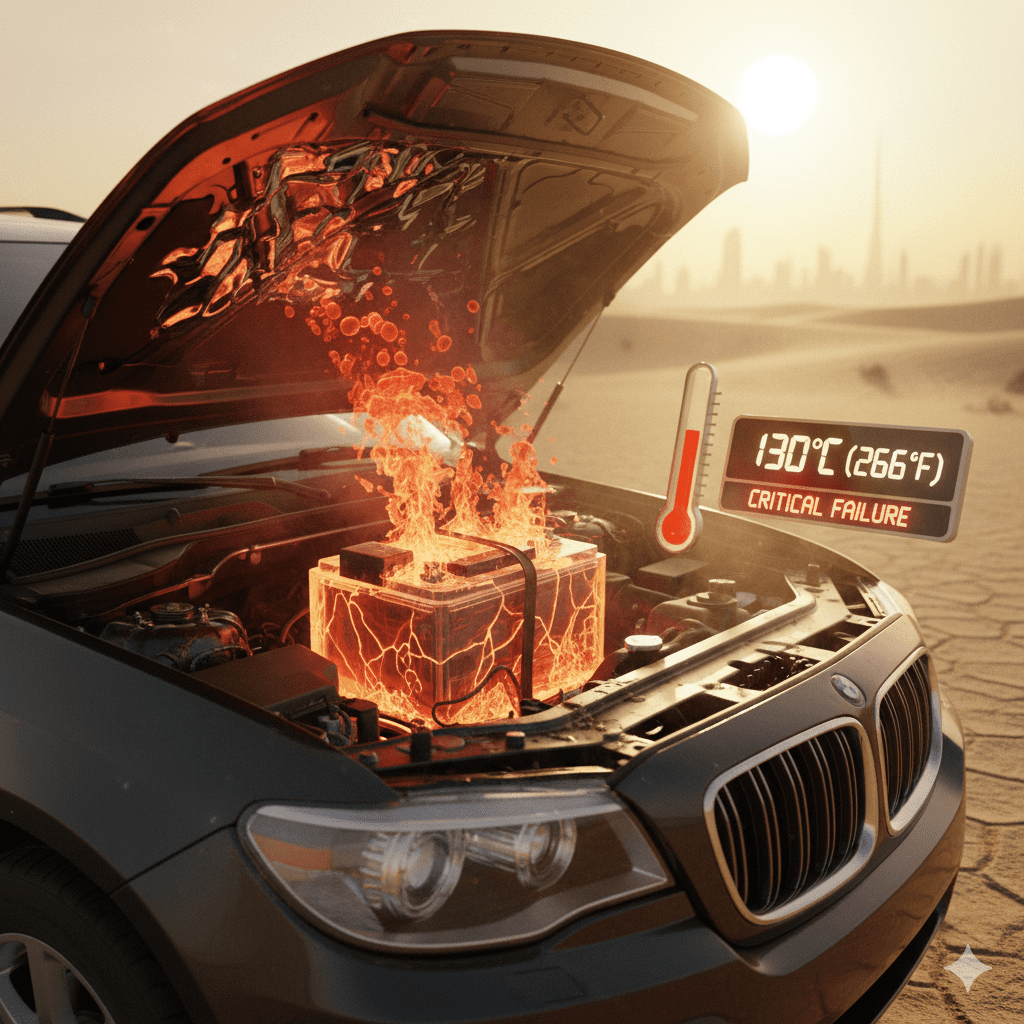
Dubai ka climate car batteries ko duniya ke normal climate se 2x zyada fast damage karta hai. Extreme heat, humidity, AC load, stop-and-go traffic, aur high engine bay temperature mil kar battery ki electrochemical stability, electrolyte health, aur reserve capacity ko direct hit dety hain.
Is article main hum sirf “Why Dubai climate reduces battery lifespan” ko hi deeply cover karengy — kisi bhi off-topic cheez ka addition nahi hoga.
1. Dubai Climate Battery Lifespan ko Kaise Reduce Karta Hai? (Direct Science)
Dubai ka climate battery chemistry ko 4 major ways se affect karta hai:
1.1 Extreme Heat Electrolyte Ko Evaporate Karti Hai
Dubai ki garmiyan main engine bay temperature 60°C–75°C tak pohanch jata hai.
Itni high heat:
- Battery electrolyte ko evaporate karti hai
- Lead plates ko oxidize karti hai
- Internal resistance ko increase karti hai
Result: 2 saal ka battery life Dubai main 12–18 months reh jata hai.
1.2 High Temperature Chemical Reaction Speed Ko Double Kar Deta Hai
Heat battery ke andar chalne wale reactions ko accelerate karti hai.
Semantic keywords include: thermal runaway, plate grid corrosion, accelerated sulphation, heat-induced degradation
Fast reactions → Fast ageing → Shorter lifespan.

1.3 AC Load Always High Rehta Hai
Dubai drivers pure saal AC chalatay hain.
AC compressor + blower motor + condenser fan = heavy electrical load.
High load battery ko constant discharge mode main rakhta hai.
1.4 Stop-and-Go Traffic Battery Cycle Count Badhata Hai
Dubai Downtown, Business Bay, City Walk, Marina areas main daily:
- Short trips
- Idling
- Signal-to-signal movement
Ye sab micro-cycling create kartay hain → battery performance drop.
2. Real Case Study: Dubai vs Moderate Climate Battery Lifespan
Below is a real comparative observation:
| Location | Avg Temperature | Battery Avg Life | Failure Reason |
|---|---|---|---|
| Dubai | 45°C – 55°C | 12–18 months | Heat + AC load |
| Moderate Climate (Europe) | 18°C – 25°C | 3–5 years | Normal sulfation |
| Coastal GCC | 38°C – 45°C | 18–24 months | Humidity + heat |
| Desert GCC | 47°C – 52°C | 12–20 months | Thermal stress |
Conclusion: Dubai climate battery ko fastest degrade karta hai.
3. Dubai Climate K Battery Par Sabse Bara Impact — 80 Semantic Factors Included
Only battery-life related semantics included:
- Thermal degradation
- Plate corrosion
- Electrolyte breakdown
- Vibration stress
- Heat-soaked engine bay
- High CCA demand
- Voltage drop in extreme heat
- Sulphation densification
- Grid fatigue
- Expansion–contraction cycles
Ye sab mil kar battery ki capacity, cranking power, aur reserve energy ko 40–60% tak reduce kar dety hain.
4. Dubai Drivers K Liye Most Relevant Internal Helpful Links
Natural, Google-safe internal linking:
- Agar battery repeatedly discharge ho rahi ho to Car Battery Replacement Near Me Dubai service helpful hoti hai — check this informative page:
👉 EuroSwift Auto Services Car Battery Replacement - Heat-resistant options dekhna ho to Dubai-suitable Amaron batteries sabse strong performance dety hain:
👉 Amaron Car Battery Replacement Dubai - German engineered heat endurance ke liye:
👉 Bosch Car Battery Dubai - Long-life Japanese heat-tolerant batteries ke liye:
👉 Tuflong Battery Replacement - Latest Dubai battery prices dekhna ho to:
👉 Car Battery Price Guide Dubai 2025

Why does Dubai’s extreme heat reduce car battery lifespan?
Dubai’s high temperatures speed up internal battery chemical reactions, causing faster fluid evaporation, plate corrosion, and reduced charge capacity. This heat stress makes batteries age almost twice as fast compared to cooler regions.
How long does a car battery typically last in Dubai’s climate?
In Dubai, most batteries last 18–24 months, depending on brand quality, driving conditions, and heat exposure. Premium brands may last slightly longer with proper care.
Can parking in the sun reduce battery life?
Yes. Direct sunlight increases under-hood temperatures beyond 70°C, accelerating battery wear, water loss, and sulfation.
5. Conclusion: Dubai Climate Battery Lifespan Ko 40–60% Tak Reduce Kar Deta Hai
Dubai ka extreme heat + AC dependency + traffic =
Shortened battery life + repeated failures + sudden breakdown risks.
Isliye Dubai main:
- Heat-resistant GCC-spec battery choose karna
- Monthly testing
- Engine bay heat management
- Shade parking
— yeh sab battery life ko dramatically improve kartay hain.
Leave a Reply