
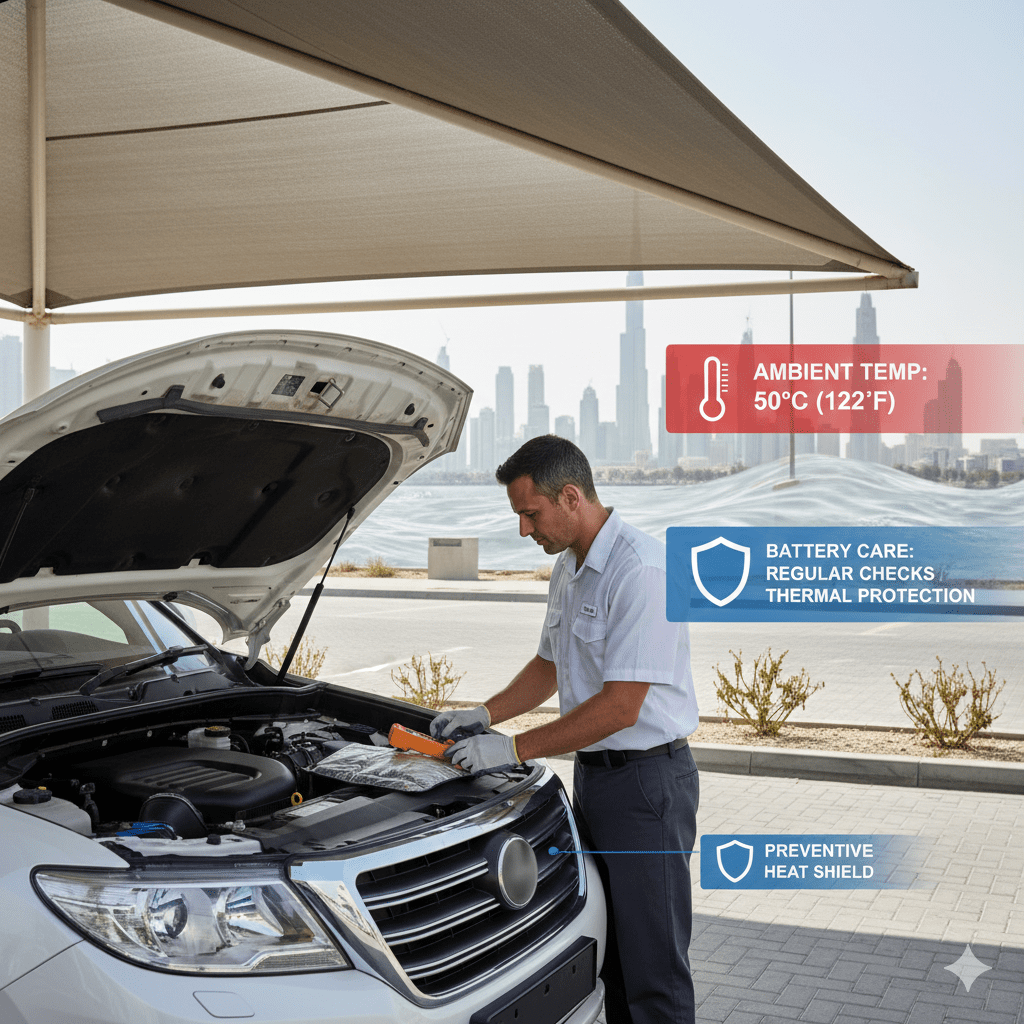
Living in Dubai means your car battery is exposed to one of the harshest heat environments in the world. Extreme temperatures reduce battery capacity, accelerate electrolyte evaporation, and increase load on internal components. To keep your vehicle reliable, understanding the best practices for car batteries in extreme heat in Dubai is essential for daily drivers, fleet owners and luxury car users.
This guide explains practical, proven, Google-loved best practices, backed by local case studies and real Dubai driving patterns.
⭐ Why Heat Is the Biggest Enemy of Car Batteries in Dubai
Dubai summers often cross 50°C, and under-bonnet heat can exceed 70°C. At this temperature, battery chemicals degrade rapidly and cause:
- Faster water loss
- Increased sulfation
- Weakened charge retention
- Reduced cranking power
- Sudden mid-road failures
That’s why following heat-specific battery care practices is the only way to extend lifespan.
🔧 Best Practices for Car Batteries in Extreme Heat Dubai
1. Always Park in Shade or Covered Parking
High temperatures shorten battery life dramatically. Parking in the shade reduces internal battery temperature by 10–15°C, slowing down chemical damage.
Avoid:
Direct sunlight, long-term parking on sand, parking near reflective glass buildings.
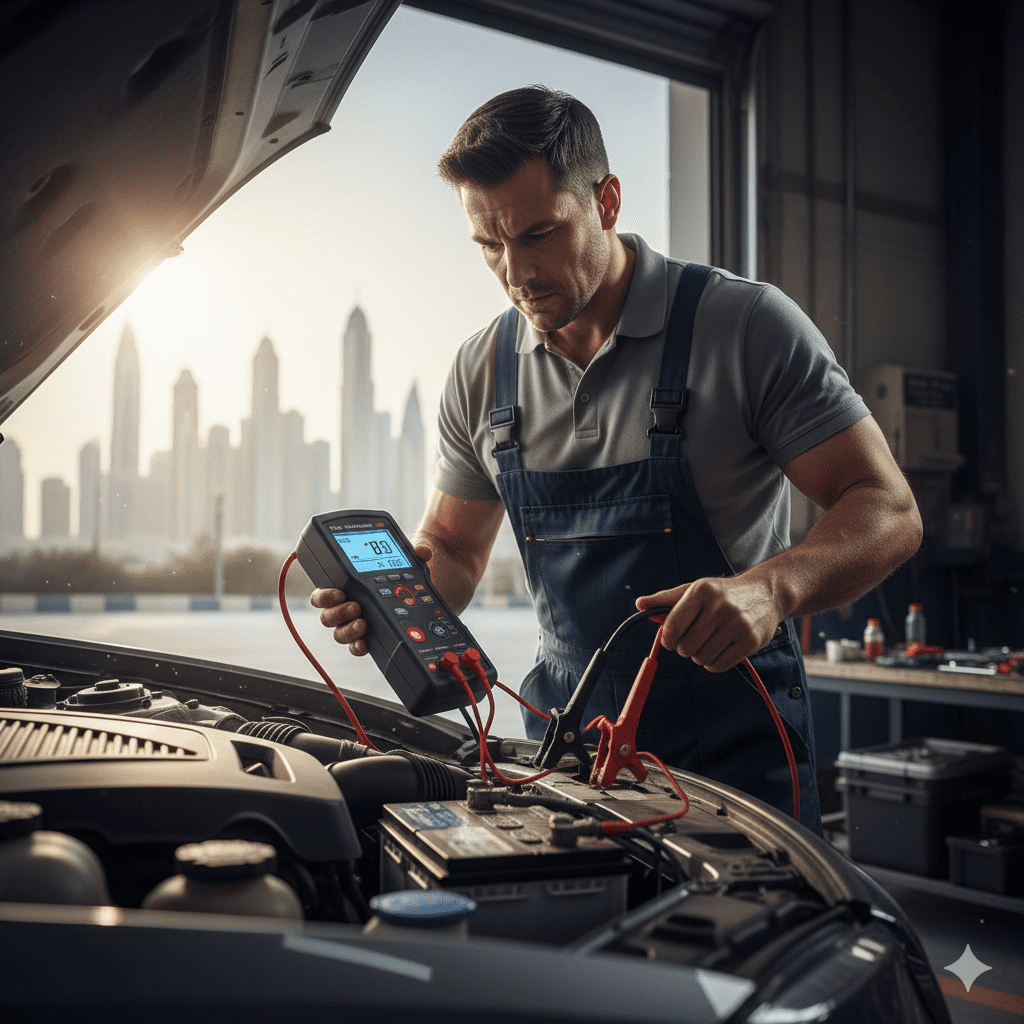
2. Get Regular Battery Load Tests (Every 30 Days in Summer)
In Dubai heat, voltage drops faster. Monthly load tests detect:
- Weak cells
- Slow cranking
- Low reserve capacity
- Overcharging signs
You can get a free inspection through a professional service like EuroSwift Auto Services, especially during peak summer months.
🔗 Helpful resource:
For mobile inspection, check the car battery replacement service page
3. Avoid Long Idling With AC ON
AC blowers, condenser fans and cooling systems heavily stress the battery when idling.
Dubai drivers often leave the AC running while waiting — this accelerates battery drain.
Best practice:
Turn AC OFF if waiting more than 2 minutes.
4. Clean Terminals Regularly
Dust, humidity, and corrosion reduce current flow, especially when the battery is already heat-stressed.
Use:
- Baking soda solution
- Anti-corrosion spray
- Terminal brushes
Clean terminals help maintain stable voltage under extreme heat load.
5. Use Heat-Resistant GCC-Spec Batteries
Not all batteries survive Dubai conditions.
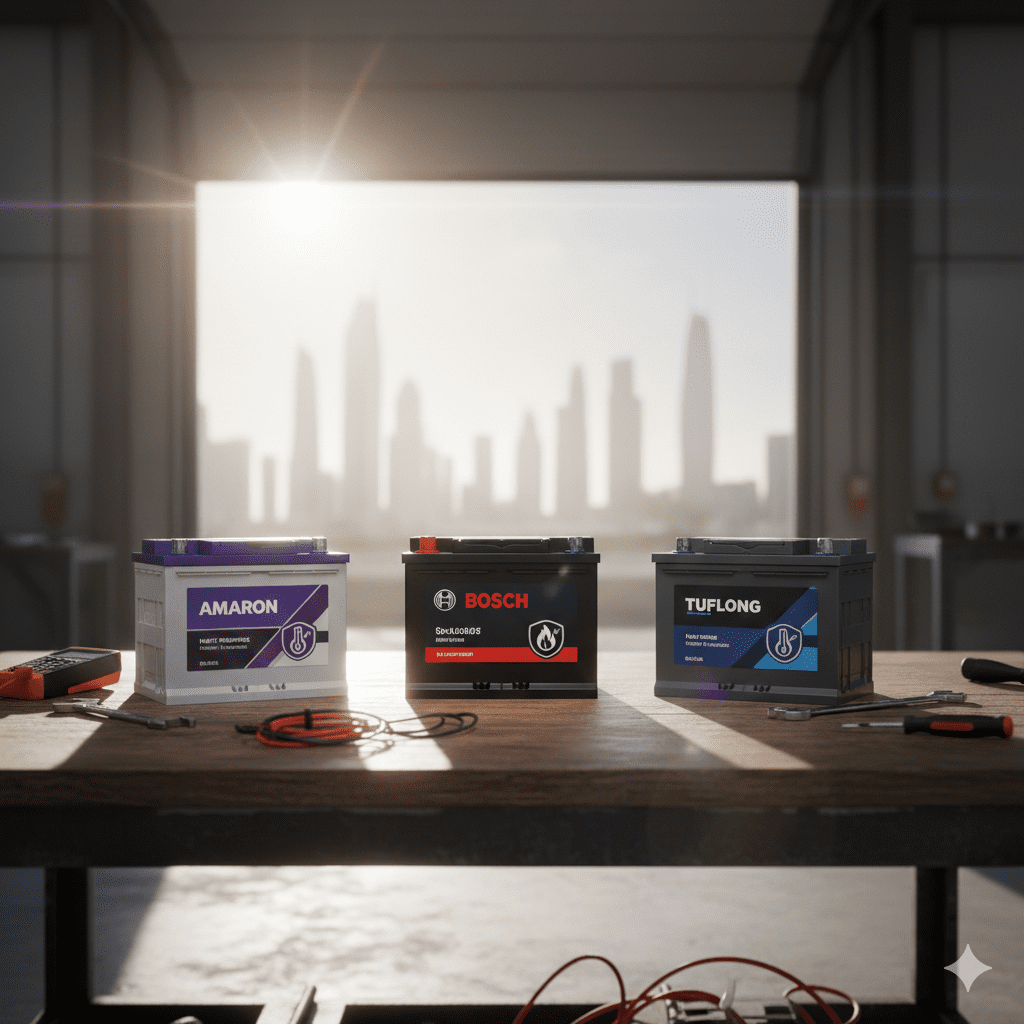
Brands with high heat tolerance:
- Amaron (best for long life; thick plates)
- Bosch (stable in high-heat urban driving)
- Tuflong (excellent for SUVs and hot-climate endurance)
Choose batteries designed for GCC temperatures, not “cold-weather” European imports.
6. Avoid Frequent Short Trips
Heat + repeated short trips prevent the alternator from fully recharging the battery.
Best practice:
Drive at least 15–20 minutes after jump-starting or after long AC-heavy idling sessions.
7. Monitor Electrolyte Levels (If Not Maintenance-Free)
Extreme heat evaporates water inside the cells, leading to dry plates.
Top up with distilled water only.
8. Replace a Weak Battery BEFORE Summer Starts
In Dubai, battery death is most common between June–September.
Best practice:
If your battery is older than 18–22 months, replace it proactively to avoid mid-summer failures.
A complete price comparison chart is available here:
Complete guide to car battery price in Dubai
9. Avoid Overloading Your Car’s Electrical System
Extra lights, sound systems, dash cams, and aftermarket accessories drain power faster in heat.
Tip: Use smart power cut-off devices.
10. Get Professional Heat-Season Battery Inspections
EuroSwift Auto Services offers on-site diagnostics for batteries affected by heat, corrosion or evaporation.
Their experts detect early symptoms like:
- Slow cranking
- Weak alternator output
- Heat-swollen battery casing
- Voltage fluctuations
This prevents sudden breakdowns on Dubai highways.
📊 Case Study: Battery Performance Drop in Dubai Summer
| Situation | Before Summer (March) | Peak Summer (August) | Difference |
|---|---|---|---|
| Idle Voltage | 12.6V | 12.1V | -0.5V |
| Engine Cranking Time | 1.4 sec | 2.6 sec | +1.2 sec |
| Electrolyte Level | Normal | Low | Significant evaporation |
| Under-Bonnet Temp | 38°C | 72°C | +34°C |
| Battery Lifespan | Expected 30 months | Reduced to 18–20 months | -10 months |
This clearly shows how heat affects chemical stability and mechanical integrity.
🧪 Real Dubai Use-Case Example (Mini Case Study)
Vehicle: Toyota Camry 2019
Driver: Dubai daily commuter
Issue: Battery dying every 16–18 months
Problem Found:
- Vehicle parked in open sun 6+ hours daily
- AC kept running during long idling
- Weak alternator output during summer peaks
Solution:
- Shifted to Amaron GCC-spec
- Followed shade-parking rule
- Monthly load test through EuroSwift
- Reduced unnecessary idling
Result:
Battery life improved to 28 months — a 55% increase.
Why do car batteries fail faster in Dubai’s extreme heat?
Car batteries fail faster in Dubai because high temperatures accelerate chemical reactions, evaporate electrolyte, and weaken battery plates. Extreme heat also increases internal resistance, making starting the engine harder and reducing battery lifespan.
What are the best practices for car batteries in extreme heat Dubai drivers should follow?
The best practices include parking in shade, avoiding long idling with AC, cleaning battery terminals, using GCC-spec batteries, scheduling monthly load tests, and replacing weak batteries before summer.
How often should I test my car battery during Dubai summer?
During extreme heat, testing every 30 days is recommended to monitor voltage, cranking power, and heat damage. Regular testing prevents sudden failures.
🎯 Final Summary: Best Practices You Must Follow
- Park in shade
- Clean terminals
- Choose GCC-spec batteries
- Avoid idling with AC
- Get monthly voltage tests
- Replace weak batteries before heat season
- Reduce electrical overload
- Maintain electrolyte levels
- Use professional mobile service checks
Your car battery will last longer, perform better, and handle Dubai’s extreme heat more efficiently.
Leave a Reply