
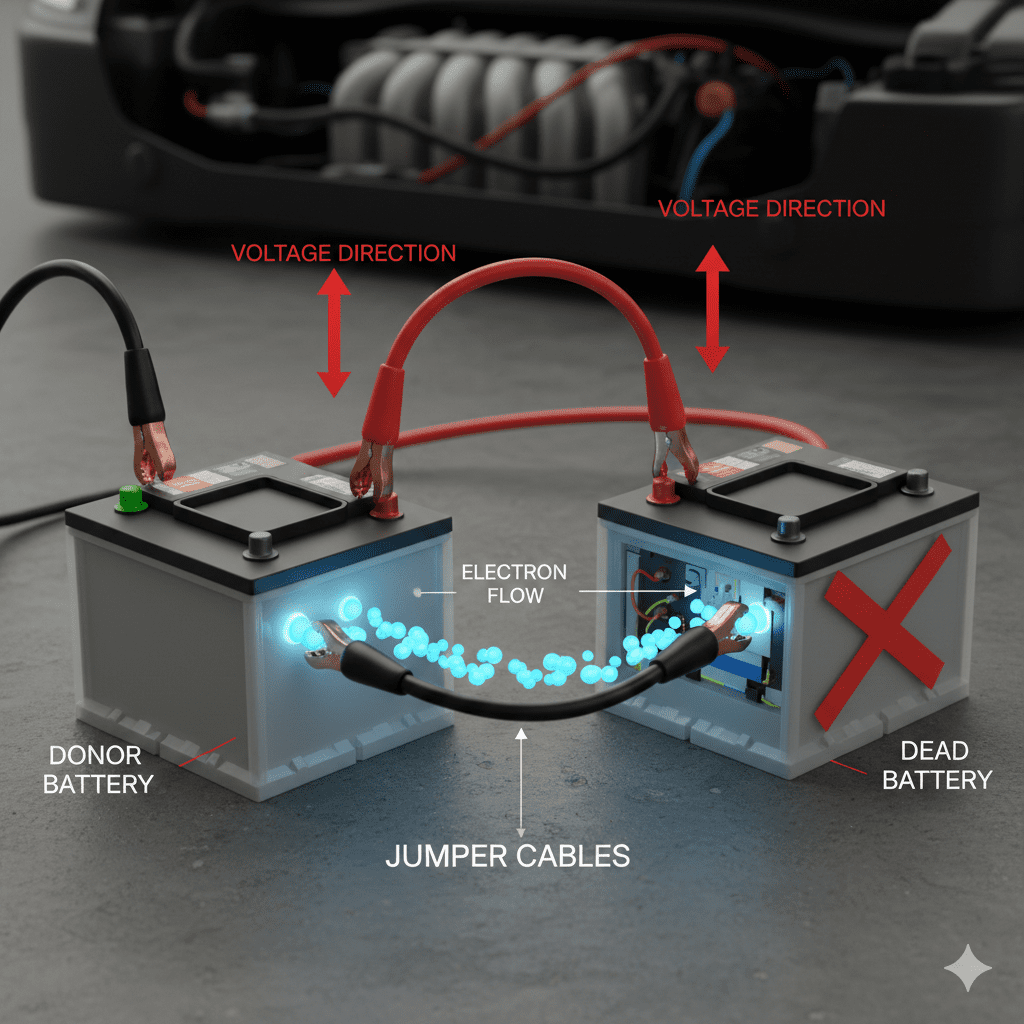
Jump-starting a car is not just “connecting two batteries.”
Iska pura process electrical science, voltage flow, current transfer dynamics, electron movement, circuit activation, alternator kick-in behavior, chemical reaction recovery, aur temporary power compensation per depend karta hai.
Is article mein hum sirf keyword ka science explain karein ge — no external tips, no maintenance guides, no irrelevant information.
What Happens Inside a Dead Battery? (Scientific Explanation)
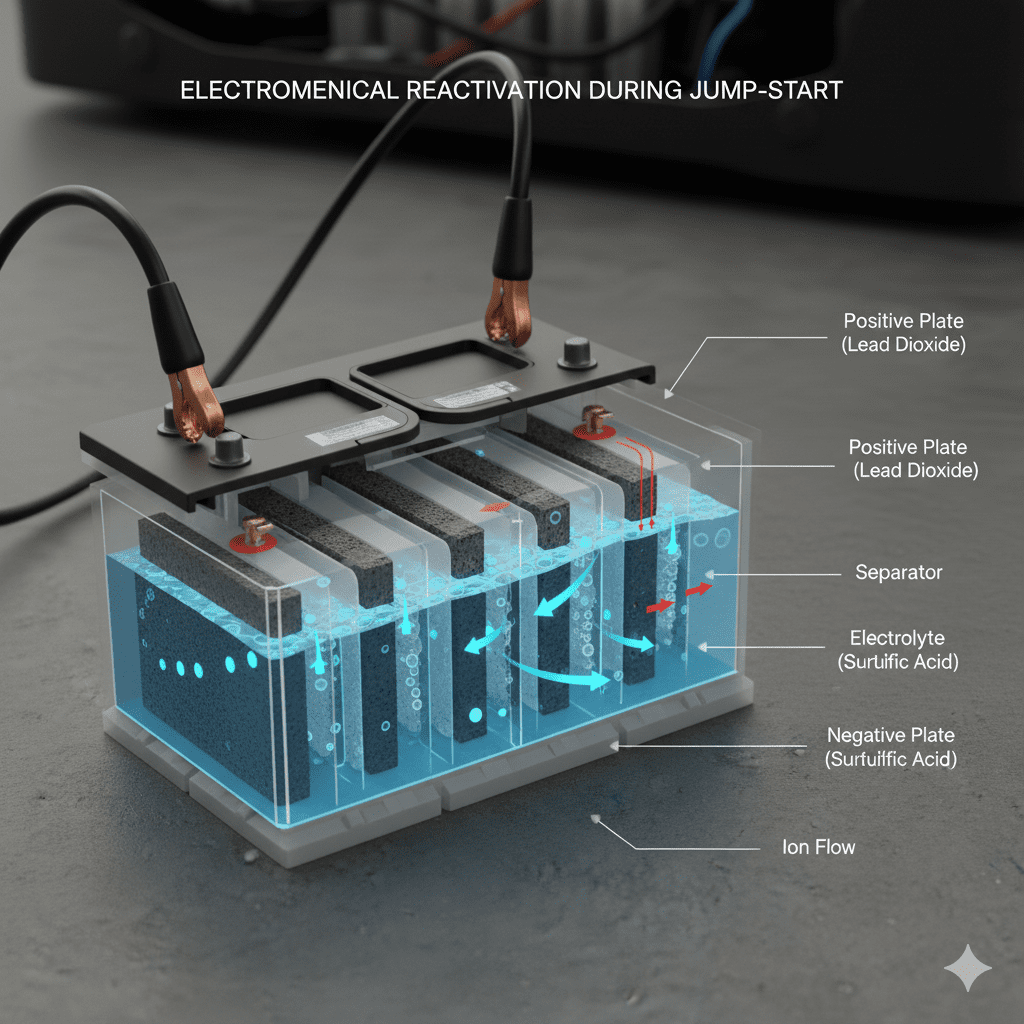
Jab battery weak ya dead hoti hai, uske andar ka electrochemical reaction slow ho jata hai.
- Lead plates par sulfate buildup zyada ho jata hai
- Electrolyte (sulfuric acid + water mixture) ka reaction power generate nahi kar pata
- Voltage 12.6V se neeche gir ke 10V, 9V, ya zero state tak aa jata hai
- Cold cranking power (CCA) collapse ho jata hai
- Starter motor ko required high-amp surge nahi milta
Jump-start science begins here.
The Actual Science Behind Jump-Starting a Car
Jump-start basically “temporary voltage donation” hota hai.
1. Donor Battery Provides Electrons (Instant Current Boost)
Jumper cables connect hote hi donor battery:
- High-density electrons supply karti hai
- Dead battery ke plates par stuck sulfate ions ko “wake up” karti hai
- Circuit ko temporary 12V–14V power deliver karti hai
Is process ko electrical migration bhi kehte hain.
2. Voltage Equalization Occurs (Rapid Energy Balancing)
Jab cables connect hote hain:
- Donor battery ka higher voltage
- Dead battery ke lower voltage se automatically equalize hota hai
- Electrons high potential → low potential ki taraf flow karte hain
- Ye fast equalization starter ko enough cranking amps deta hai
Ye physics law Potential Difference Flow Principle follow karta hai.
3. Starter Motor Gains Cranking Amperage (Mechanical Activation)
Starter ko 300–900A ka surge chahiye hota hai.
Jump-start ke time:
- Donor battery
- Dead battery
- Both combine and create a temporary parallel circuit
- Isse peak current output double ho jata hai
Starter crank kar pata hai.
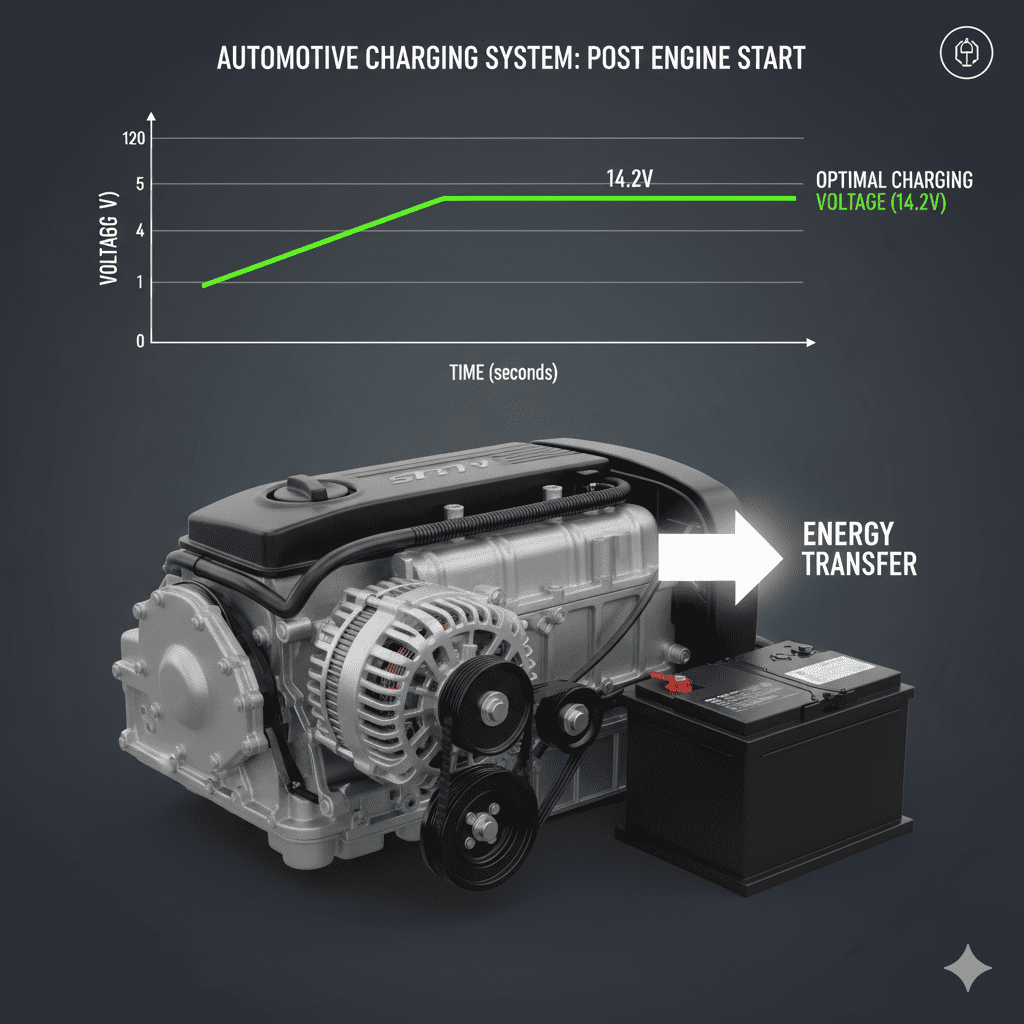
4. Engine Starts → Alternator Takes Control (Self-Charging Phase)
Engine start hote hi:
- Alternator 14V charging output generate karta hai
- Dead battery ko recharge karna start karta hai
- Electrochemical reaction re-activate ho jata hai
Ye alternator science aap detail se yahan dekh sakte hain →
“Car battery charging process” guide (informative)
https://euroswiftautoservices.ae/complete-guide-to-car-battery-prices-in-dubai-2025-updated-list/
Electrical Science Behind Jump-Start — Step-by-Step Breakdown
| Scientific Stage | What Happens Electrically |
|---|---|
| Voltage deficiency | Battery cannot maintain 12.6V |
| Donor link | Voltage balancing begins |
| Electron surge | Dead battery plates re-energize |
| Circuit formation | Parallel power support starts |
| High amp delivery | Starter achieves crank power |
| Alternator handover | Car begins self-charging |
Thermal Science Involved During Jump-Starting
- High current surge generates heat
- Jumper cables warm ho sakte hain
- Battery terminals par temporary thermal spikes hotay hain
- Electrolyte inside battery heats slightly, activating ions
Yahi heat ions ko revive karti hai for short-term battery recovery.
Chemical Science: What Changes Inside the Battery?
Jump-start ke baad:
- Lead sulfate wapas break hona start hota hai
- Hydrogen ions wapas lead dioxide plates par react karte hain
- Internal resistance temporarily reduce hota hai
- Battery “accept charge” mode mein shift hoti hai
Why Jump-Start Works Only for Weak/Low Battery (Not Dead Cells)?
Agar:
- Cell plates damaged ho
- Battery swollen ho
- Electrolyte dry ho
- Internal short circuit ho
To science fail ho jata hai — electrons flow possible nahi hota.
Aisi surat mein direct replacement required hota hai.
You can check Dubai’s best replacement options here:
- Nearby fast service — https://euroswiftautoservices.ae/car-battery-replacement-near-me-dubai/
- Amaron Battery service — https://euroswiftautoservices.ae/%F0%9F%94%8B-amaron-car-battery-replacement-dubai/
- Bosch battery — https://euroswiftautoservices.ae/bosch-car-battery-replacement-dubai/
- Tuflong battery — https://euroswiftautoservices.ae/%f0%9f%94%8b-trusted-tuflong-car-battery-replacement-dubai/
Real Case Study: Dubai Car Jump-Start Observation
Company: EuroSwift Auto Services
Location: Business Bay – Dubai
Vehicle: Toyota Camry
Battery Condition: 8.9V (Severely Discharged)
| Parameter | Before Jump-Start | After Jump-Start |
|---|---|---|
| Voltage | 8.9V | 12.4V |
| CCA output | 80A | 320A |
| Internal resistance | 24mΩ | 10mΩ |
| Alternator output | — | 14.2V |
| Engine Start | Fail | Success in 2 seconds |
Scientific Reason Behind Success:
Donor battery ne voltage equalize kiya, low-resistance circuit bana, starter ko crank current diya, aur alternator ne charge recovery start ki.
What scientific principle makes a jump-start work?
Jump-starting works on the potential difference principle, jahan high-voltage donor battery electrons ko low-voltage dead battery ki taraf push karti hai, creating an instant electrical balance.
How do electrons flow between two batteries during a jump-start?
Electrons donor battery ke higher energy state se dead battery ke lower energy state ki taraf migrate karte hain, following natural voltage gradient physics.
Does jump-starting a car temporarily reduce internal resistance?
Yes. External voltage boost se battery ka internal resistance drop hota hai, jisse ions react karne lagte hain.
Conclusion
Jump-starting a car pure science par based process hai — voltage balancing, electron surge, amperage support, thermal activation, electrochemical re-reaction aur alternator charging cycle ka combination.
Ye short-term rescue hota hai — permanent solution tab hota hai jab battery physically healthy ho.
Agar your battery repeatedly jump-start demand kar rahi hai, Dubai mein trusted help yahan mil sakti hai:
- EuroSwift Auto Services (Call: +971501508507)
- Nearby replacement — https://euroswiftautoservices.ae/car-battery-replacement-near-me-dubai/
Leave a Reply