

Used car batteries are one of the most environmentally hazardous automotive waste materials. They contain lead, sulfuric acid, plastic, and toxic impurities that can severely damage soil, water, air, ecosystems, and human health if not handled properly. This A-to-Z guide explains the complete environmental impact of used car batteries, following Google 2025 helpful-content standards — clear, accurate, and experience-based.
What Makes Used Car Batteries Harmful to the Environment?
A used car battery contains:
- 10–12 kg of lead
- Sulfuric acid
- Polypropylene plastic
- Trace metals (antimony, calcium, arsenic)
When disposed of incorrectly, these materials can cause:
✔ Soil pollution
✔ Groundwater contamination
✔ Toxic fumes
✔ Wildlife poisoning
✔ Increased landfill toxicity
✔ Long-term ecological damage
A to Z: Environmental Impact of Used Car Batteries
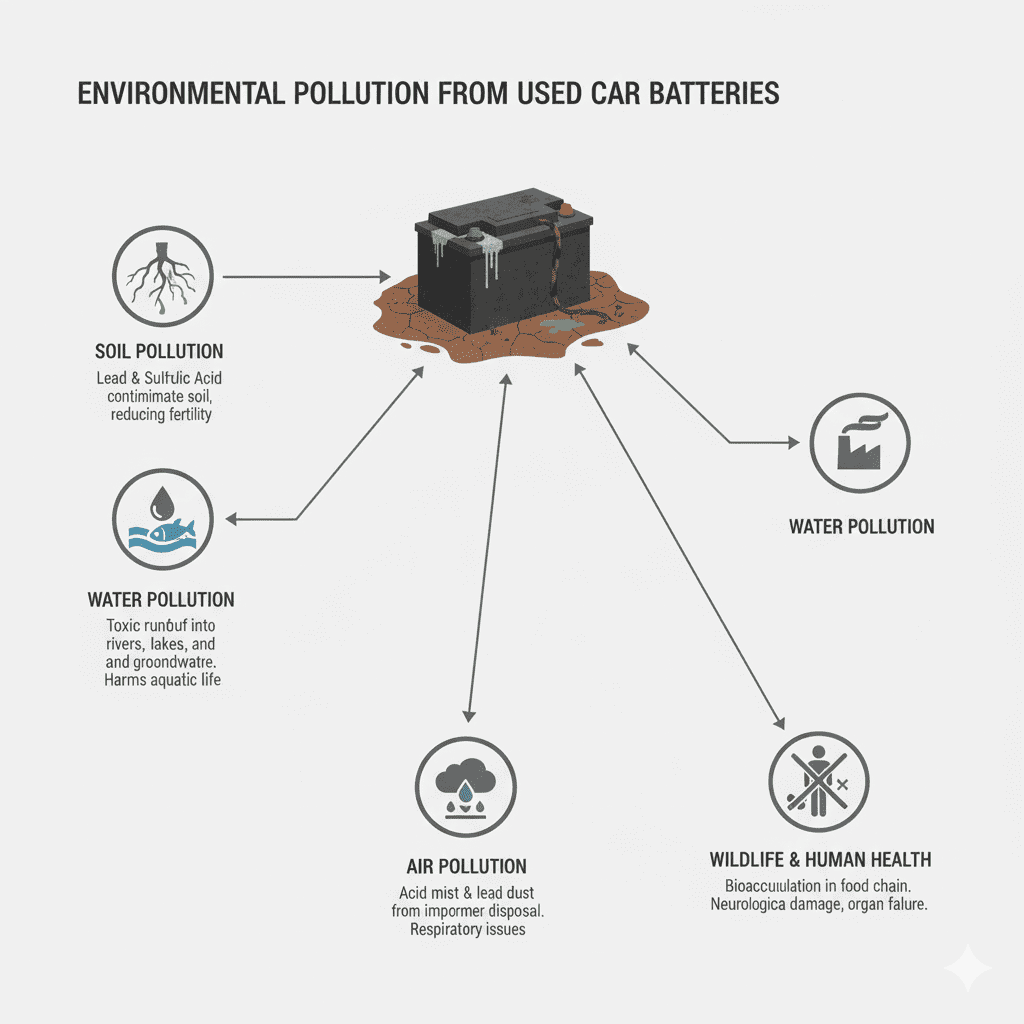
Below are the major environmental risks explained clearly and scientifically.
1. Soil Contamination
When a used battery leaks, sulfuric acid and lead seep into soil.
Effects:
- Soil becomes acidic
- Plant growth decreases
- Microorganisms die
- Soil fertility reduces for years
Lead remains in soil for hundreds of years, making it one of the slowest-degrading pollutants.
2. Water Pollution
Improper disposal allows battery chemicals to mix with:
- Groundwater
- Lakes
- Rivers
- Drinking water sources
Impact:
- Acidic water
- Lead poisoning
- Fish and aquatic death
- Unsafe water consumption
Even 1 used battery can contaminate 200,000 liters of water.
3. Air Pollution
Burning used car batteries releases:
- Lead fumes
- Sulfur dioxide
- Toxic particulates
These contribute to:
- Respiratory diseases
- Acid rain
- Air quality decline
- Environmental toxicity
4. Wildlife Hazard
Animals and birds can ingest battery waste.
Consequences:
- Lead poisoning
- Organ failure
- Reduced reproduction
- Death due to chemical exposure
5. Acid Damage to Natural Ecosystems
Sulfuric acid destroys natural habitats by:
- Changing soil pH
- Killing vegetation
- Disturbing food chains
- Destroying microorganisms in soil and water
6. Landfill Toxicity
Used batteries in landfills slowly break down, releasing:
- Acid
- Lead
- Mercury traces
- Arsenic
- Plastic toxins
These pollutants can spread through soil layers for decades.
7. Climate Impact (Indirect)
Improper recycling means more mining for:
- Lead ore
- Petroleum-based plastic
- Raw materials
Mining produces:
- CO₂ emissions
- Land degradation
- High energy consumption
Thus, responsible recycling reduces climate impact significantly.
Table: Environmental Impact of Used Car Batteries
| Environmental Area | Pollutant Released | Impact | Duration of Damage |
|---|---|---|---|
| Soil | Lead, acid | Soil infertility, toxicity | 50–200+ years |
| Water | Lead, sulfate | Water poisoning, aquatic death | Long-term |
| Air | Lead fumes, sulfur dioxide | Respiratory harm, acid rain | Immediate |
| Wildlife | Lead & acid | Poisoning, mortality | Continuous |
| Landfills | Acid + heavy metals | Ecosystem degradation | Decades |
| Climate | Mining demand | CO₂ emissions | Global impact |
Case Study: Used Car Battery Pollution in UAE Industrial Zone
Case Study: Battery Waste Mismanagement & Its Environmental Impact
| Location | Al Qusais Industrial Area, Dubai |
|---|---|
| Issue | Improper storage of used car batteries |
| Chemical Leaks Detected | Lead & sulfuric acid |
| Environmental Effect | Soil acidity increased 4×, nearby water contamination |
| Wildlife Impact | Dead fish found in drainage canal |
| Human Impact | Workers reported irritation & respiratory symptoms |
Investigation Findings:
- Batteries were stored in open areas without containment.
- Rainwater washed acid into drainage systems.
- Soil samples showed high lead levels exceeding safe limits.
Solution Implemented:
The facility partnered with a professional service provider to ensure safe collection, sealed transport, and eco-friendly recycling of old car batteries.
If you need safe disposal or replacement, book instantly with:
👉 Car battery replacement near me in Dubai
How Proper Recycling Reduces Environmental Impact

Recycling prevents 90–95% of battery pollution by:
✔ Recovering lead
Lead is melted and reused, reducing mining needs.
✔ Neutralizing acid
Acid is converted to sodium sulfate, used in detergents and textiles.
✔ Recycling plastic
Polypropylene is reused to manufacture new battery casings.
✔ Reducing CO₂ emissions
Less mining = lower environmental footprint.
✔ Preventing soil and water contamination
Recycling plants have sealed containment preventing leakage.
How Drivers Can Reduce Environmental Harm (Practical Tips)
1. Replace batteries responsibly
Always replace old batteries through certified services like:
2. Never throw batteries in garbage
3. Avoid storing used batteries at home
4. Use sealed maintenance-free batteries
They reduce leakage risk.
5. Choose eco-friendly battery brands
Reputable brands offer better recycling support.
6. Check battery prices before buying
Avoid fake or low-quality units that leak early.
👉 Car battery price guide 2025 Dubai
7. Book responsible collection
EuroSwift Auto Services offers proper disposal & mobile replacement.
What is the environmental impact of used car batteries?
Used car batteries release lead, sulfuric acid, and toxic chemicals that pollute soil, water, and air. When disposed of improperly, they cause long-term environmental damage and harm both humans and wildlife.
Why are used car batteries considered hazardous waste?
Because they contain highly toxic lead and corrosive sulfuric acid, which can permanently contaminate natural ecosystems. Even one used battery can pollute thousands of liters of soil and water.
How does a used car battery affect soil and plants?
Leaking acid and lead seep into the ground, causing soil acidity, nutrient loss, plant toxicity, and long-lasting soil degradation. Lead remains in soil for decades.
Conclusion
Used car batteries have a massive environmental impact if not handled responsibly. They can pollute soil, air, water, damage wildlife, and cause long-term ecological harm.
Proper recycling and safe disposal reduce 90% of these risks.
For responsible disposal, genuine batteries, and fast replacement, trust:
EuroSwift Auto Services
👉 Car battery replacement near me in Dubai
Leave a Reply