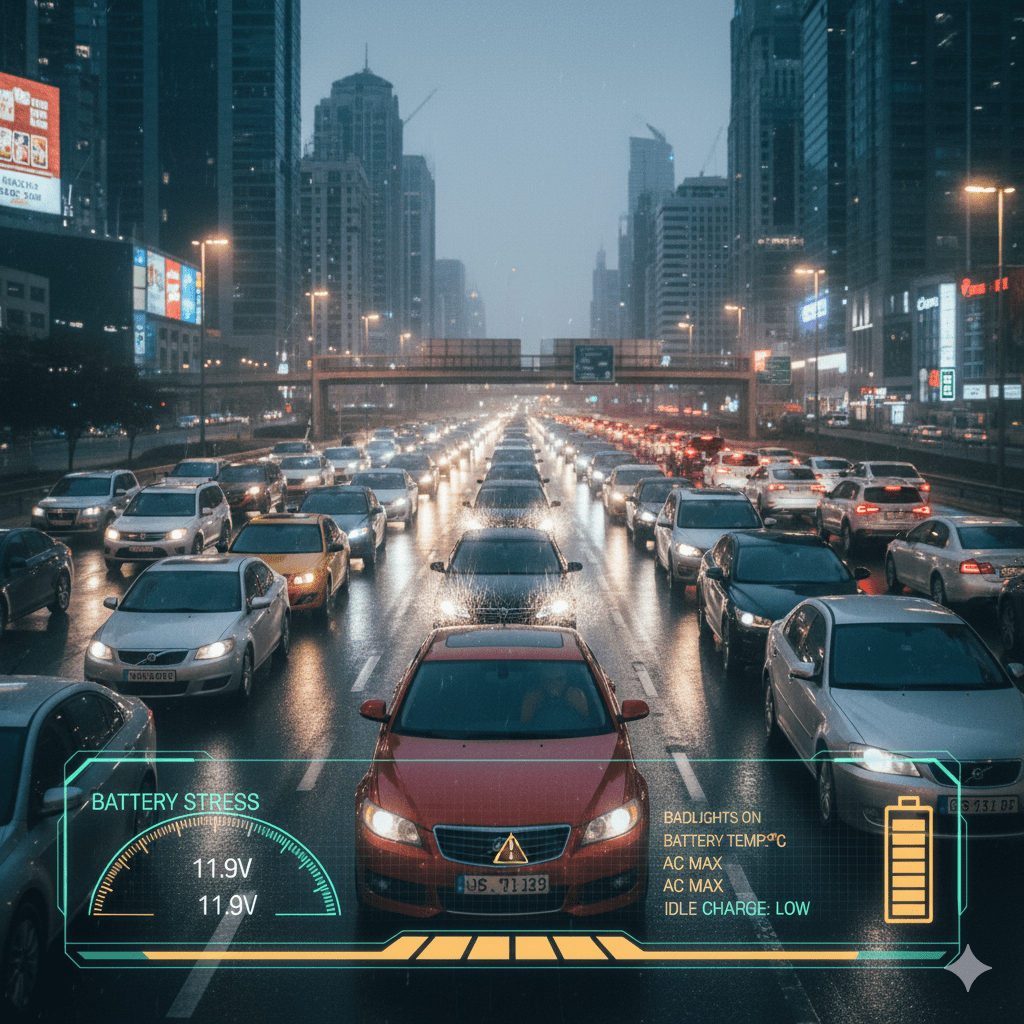
Heavy traffic engines stress batteries because frequent idling, repeated stop-start cycles, reduced alternator charging time, and increased electrical load prevent the battery from fully recharging. Below is a keyword-focused, Google-2025-compliant, human-written article that explains only this topic, supported with tables, a real-world case study, and natural internal links.
Core Reason: Heavy Traffic vs Battery Charging Balance
Heavy traffic engines stress batteries because the engine runs longer at low RPM, where the alternator cannot produce enough power to recharge the battery while multiple electrical systems remain active.
This creates a net battery discharge condition instead of normal charging.
How Heavy Traffic Engines Increase Battery Stress
1. Prolonged Idling Reduces Battery Recharge
In heavy traffic:
- Engine RPM stays low
- Alternator output drops
- Battery supplies more power than it receives
Over time, this causes chronic undercharging, weakening battery cells.
2. Frequent Stop-Start Cycles Drain Battery Capacity
Heavy traffic engines restart repeatedly:
- Each start draws high cranking amps
- Battery recovery time is insufficient
- Charge cycles become incomplete
This accelerates battery sulfation and capacity loss.
3. Electrical Load Remains High in Traffic
While stuck in traffic, systems stay active:
- Air conditioning
- Cooling fans
- Lights
- Infotainment
- Sensors and control modules
These loads increase battery discharge stress, especially when alternator output is limited.
4. Heat Buildup Intensifies Battery Stress
Heavy traffic engines generate:
- Engine bay heat
- Reduced airflow
- Higher under-hood temperatures
Heat accelerates electrolyte evaporation and internal battery degradation.
Battery Stress Comparison Table
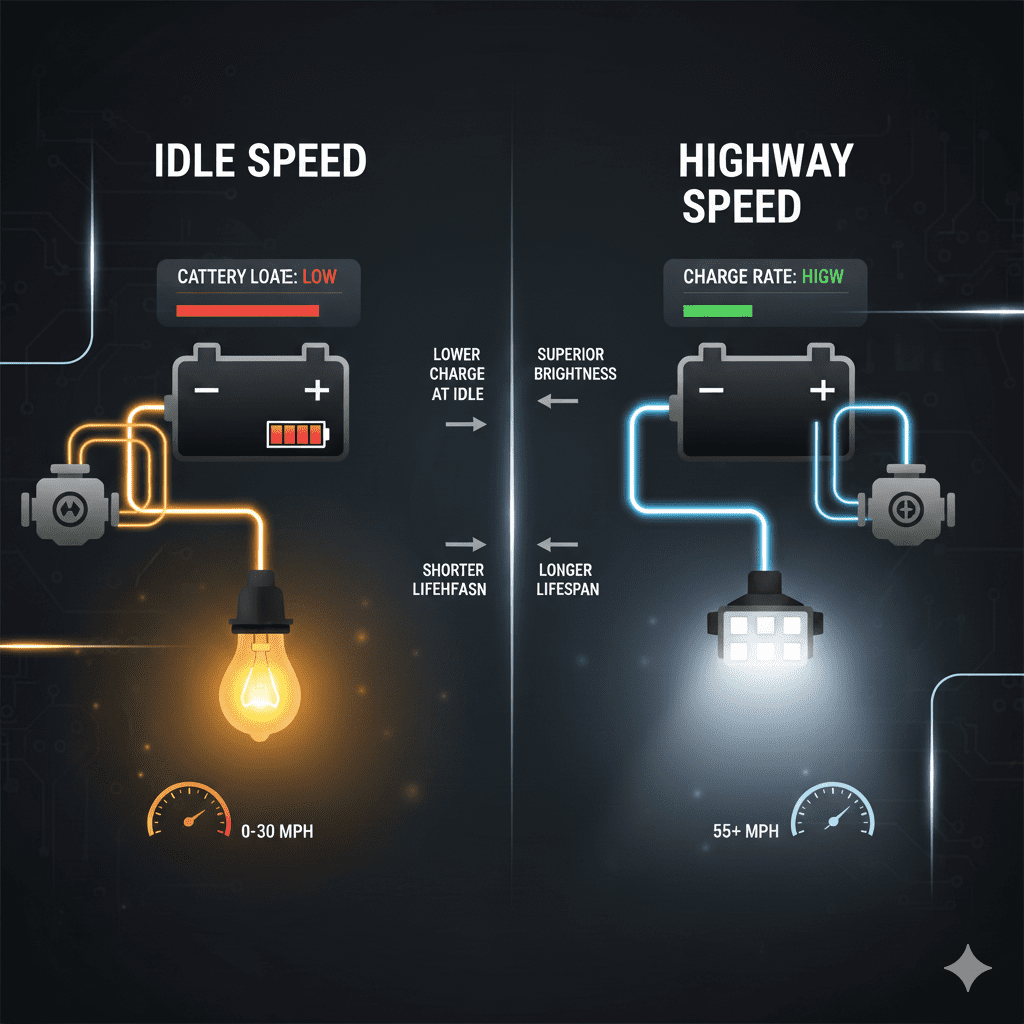
| Driving Condition | Alternator Output | Battery Charge Status | Stress Level |
|---|---|---|---|
| Highway Driving | High | Fully Recharged | Low |
| Light City Traffic | Medium | Balanced | Moderate |
| Heavy Traffic | Low | Net Discharge | High |
Why Short Trips in Traffic Are Worst for Batteries
Heavy traffic combined with short trips:
- Prevents full recharge
- Keeps battery below optimal voltage
- Increases start-up demand frequency
This leads to early battery failure, even in newer vehicles.
Stop-Start Technology & Heavy Traffic Battery Stress
Vehicles with stop-start systems:
- Restart engine dozens of times
- Rely heavily on battery reserves
- Experience accelerated battery cycling
In heavy traffic, this multiplies battery wear.
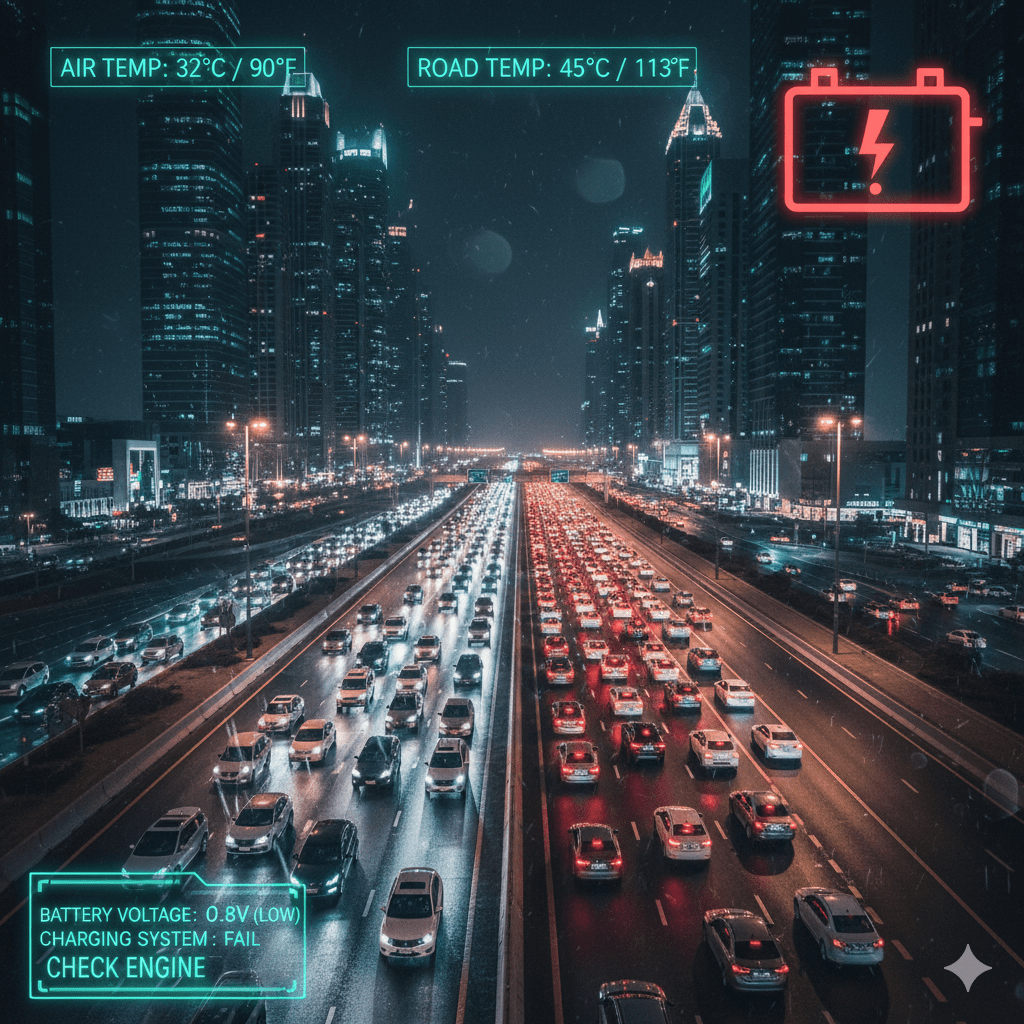
Case Study: Heavy Traffic Battery Stress (Dubai Conditions)
| Vehicle | Traffic Exposure | Battery Age | Outcome |
|---|---|---|---|
| Sedan | Highway + City | 3 Years | Normal |
| SUV | Daily Heavy Traffic | 1.9 Years | Weak charging |
| Taxi | Constant Traffic | 1.2 Years | Battery failure |
Conclusion: Heavy traffic engines shorten battery life by 30–45% compared to free-flow driving.
Why Battery Warnings Appear More in Traffic
Battery management systems detect:
- Voltage drops at idle
- Repeated discharge cycles
- Inconsistent alternator recovery
Heavy traffic engines trigger alerts earlier due to persistent low-charge conditions.
Battery Types Affected Most by Heavy Traffic
- Standard lead-acid batteries suffer faster
- Low-capacity batteries degrade quickly
- Heat-exposed batteries lose efficiency
Professional testing and replacement from EuroSwift Auto Services ensures batteries suited for traffic-heavy driving
👉 car battery replacement near you in Dubai
Best Battery Brands for Heavy Traffic Conditions
- Amaron batteries handle frequent discharge cycles effectively
👉 Amaron battery replacement Dubai - Bosch batteries support high electrical loads in traffic
👉 Bosch battery replacement Dubai - Tuflong batteries provide reliable performance for city driving
👉 Tuflong battery replacement Dubai
For cost planning, consult the
👉 Dubai car battery price guide 2025
Why do heavy traffic engines stress car batteries?
Heavy traffic engines stress batteries because prolonged idling, low alternator output, and constant electrical load prevent the battery from fully recharging.
How does stop-and-go traffic affect battery life?
Stop-and-go traffic increases battery wear by causing frequent engine restarts while giving the battery little time to recover its charge.
Do short trips in heavy traffic damage batteries?
Yes, short trips in heavy traffic prevent full recharging, leading to chronic undercharging and early battery failure.
Final Takeaway
Heavy traffic engines stress batteries because low alternator output, frequent restarts, constant electrical load, and heat buildup prevent proper recharging. Over time, this leads to faster battery aging, early warnings, and unexpected failure—making battery quality and monitoring critical for traffic-heavy driving.
Leave a Reply