20 Min Avg Turnaround | 18-Month Warranty | Free Diagnostics | Free Installation | 24/7 Support | 🚘 Feel the Bosch Difference |🚗 Try Once, Stay Forever
👉 🔥 Try EuroSwift once — and you’ll never go anywhere else for Bosch Car Battery Replacement in Dubai..
💬 Chat on WhatsApp
☎️ Call Emergency: +971 50 150 8507
Introduction to Car Battery Watt Capacity
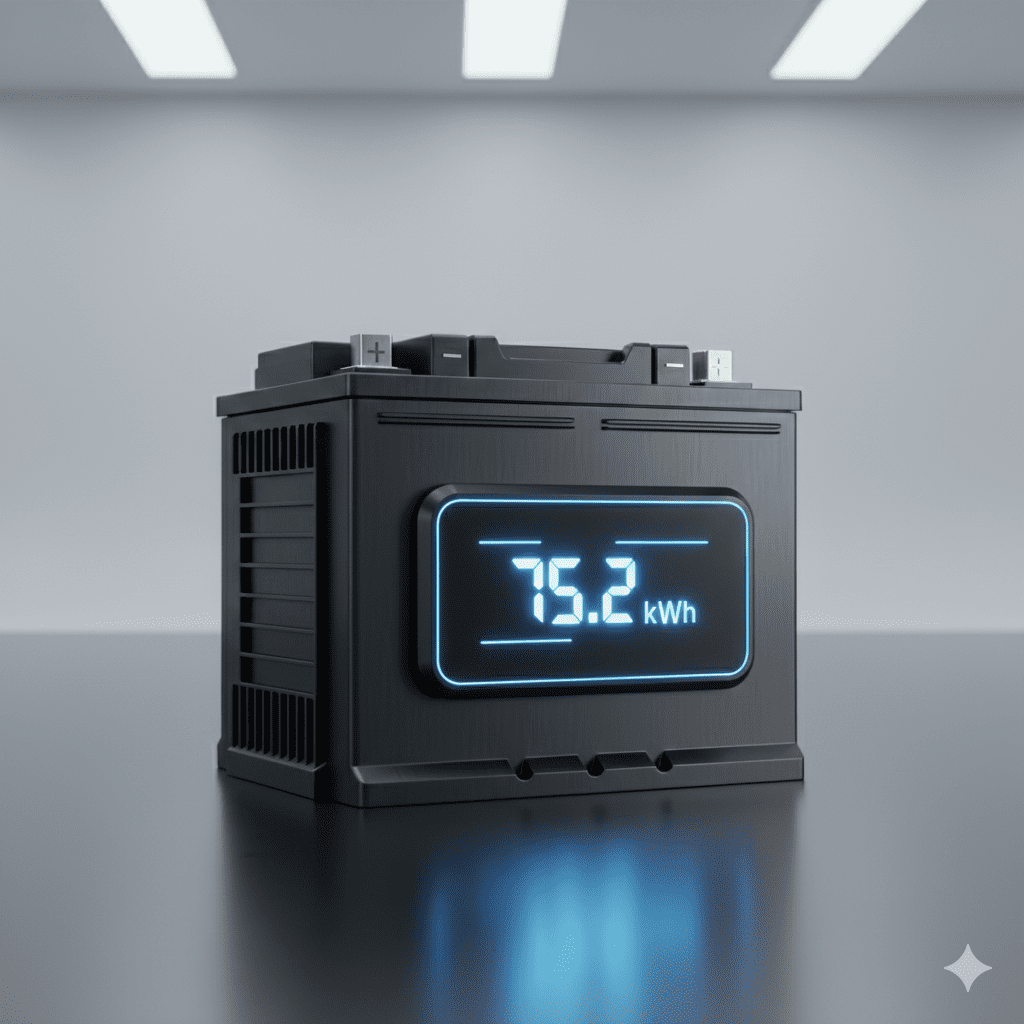
Car battery watt capacity represents the total amount of electrical energy a vehicle battery can store and deliver during real-world operation. Unlike basic ratings such as voltage or cold cranking amps, watt capacity provides a complete energy measurement, helping drivers understand how long electrical systems can operate, how stable voltage remains, and how efficiently power is supplied under load.
In modern vehicles filled with electronics, infotainment systems, sensors, cooling fans, and safety modules, car battery watt capacity has become a critical performance indicator.
What Exactly Is Car Battery Watt Capacity?
Car battery watt capacity is measured in watt-hours (Wh) and indicates the total usable energy stored in a battery.
Standard Formula
Watt Capacity (Wh) = Battery Voltage (V) × Battery Capacity (Ah)
Example:
A 12V 70Ah battery
→ 12 × 70 = 840 Wh
This means the battery can theoretically supply 840 watts for one hour, or 420 watts for two hours, depending on load conditions.
Why Car Battery Watt Capacity Matters in Real Driving

Car battery watt capacity directly impacts:
- Electrical system runtime
- Voltage stability under load
- Accessory performance
- Battery longevity
- Heat resistance
- Recharge efficiency
- Emergency power availability
A battery with higher watt capacity handles real-world driving stress far better than a battery chosen only by CCA.
Watt Capacity vs Voltage vs AH vs CCA
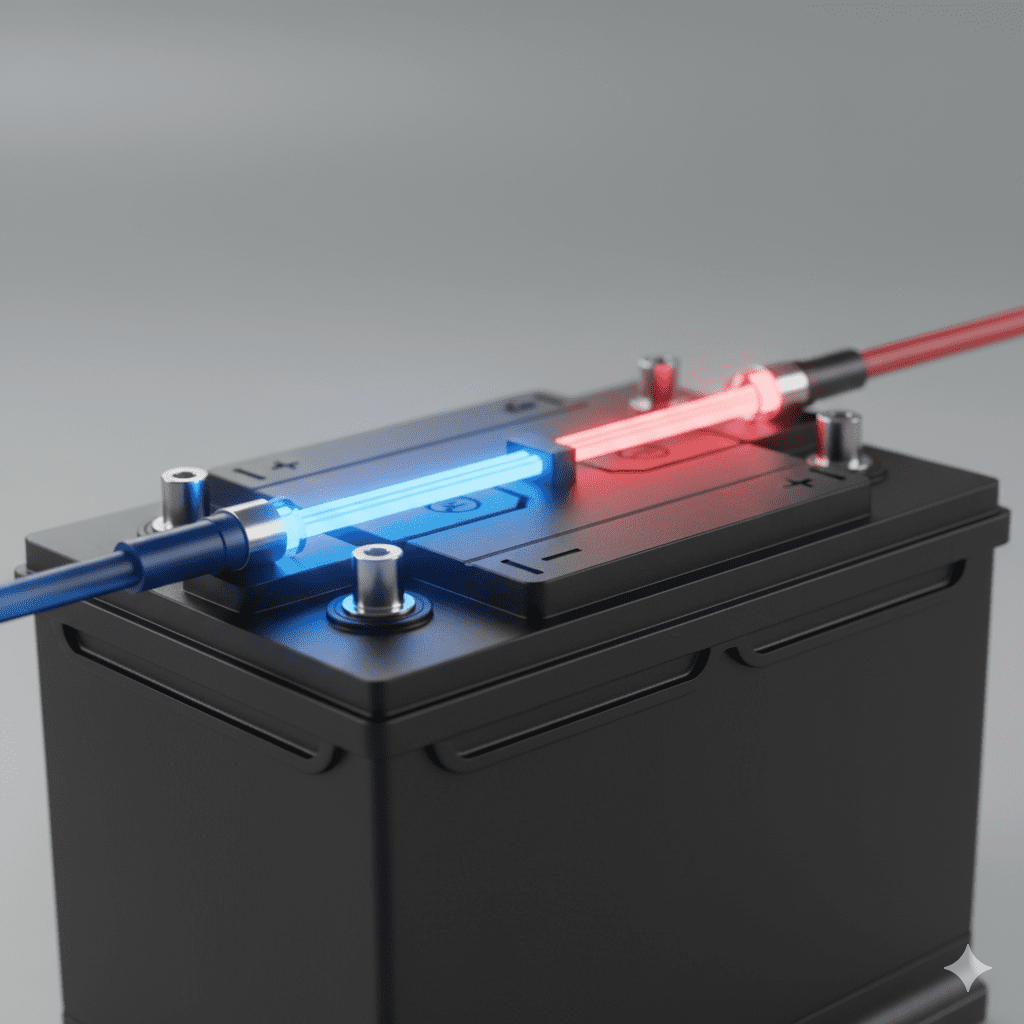
Many drivers confuse these ratings. Here’s a clear comparison:
| Rating | Meaning | Role |
|---|---|---|
| Voltage (V) | Electrical pressure | System compatibility |
| Ampere-Hour (Ah) | Duration of output | Runtime |
| Cold Cranking Amps (CCA) | Starting power | Engine ignition |
| Watt Capacity (Wh) | Total energy | Overall performance |
👉 Car battery watt capacity combines voltage and AH, making it the most accurate real-world metric.
Typical Car Battery Watt Capacity Range
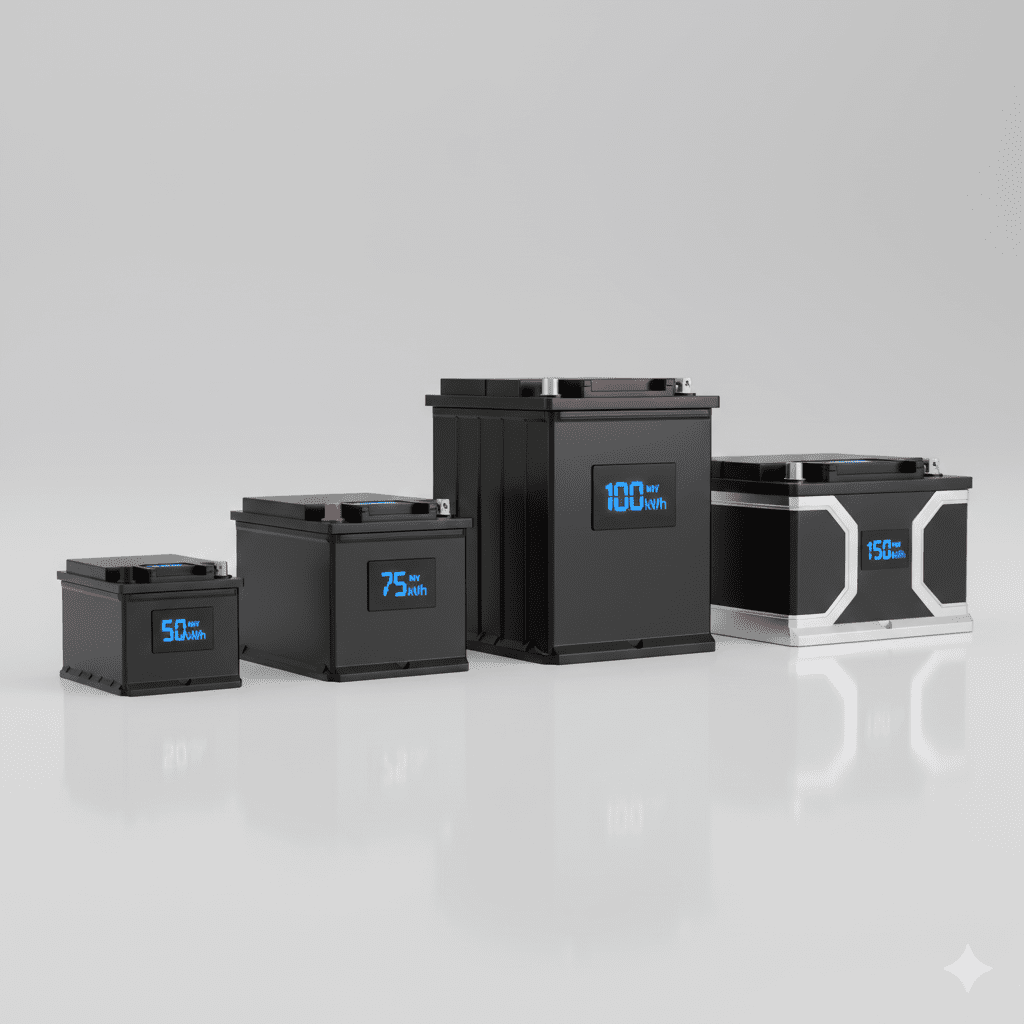
| Battery Type | Voltage | Ah | Watt Capacity |
|---|---|---|---|
| Small Sedan | 12V | 45Ah | 540 Wh |
| Mid Sedan | 12V | 60Ah | 720 Wh |
| SUV | 12V | 70Ah | 840 Wh |
| Large SUV | 12V | 90Ah | 1080 Wh |
| Luxury / Fleet | 12V | 110Ah | 1320 Wh |
How Watt Capacity Affects Daily Vehicle Use
Higher car battery watt capacity allows:
- Longer accessory usage when engine off
- Stable infotainment performance
- Reduced voltage drop
- Better idle performance
- Fewer jump-starts
- Improved alternator recovery
Low watt capacity batteries often fail early under urban driving conditions.
Car Battery Watt Capacity in Hot Climates
High temperatures accelerate internal resistance and electrolyte loss. Batteries with higher watt capacity and thicker plates maintain usable energy longer in heat-intensive regions like Dubai.
Heat reduces effective watt capacity by 15–30% over time if the battery is undersized.
Electrical Load and Watt Capacity Relationship
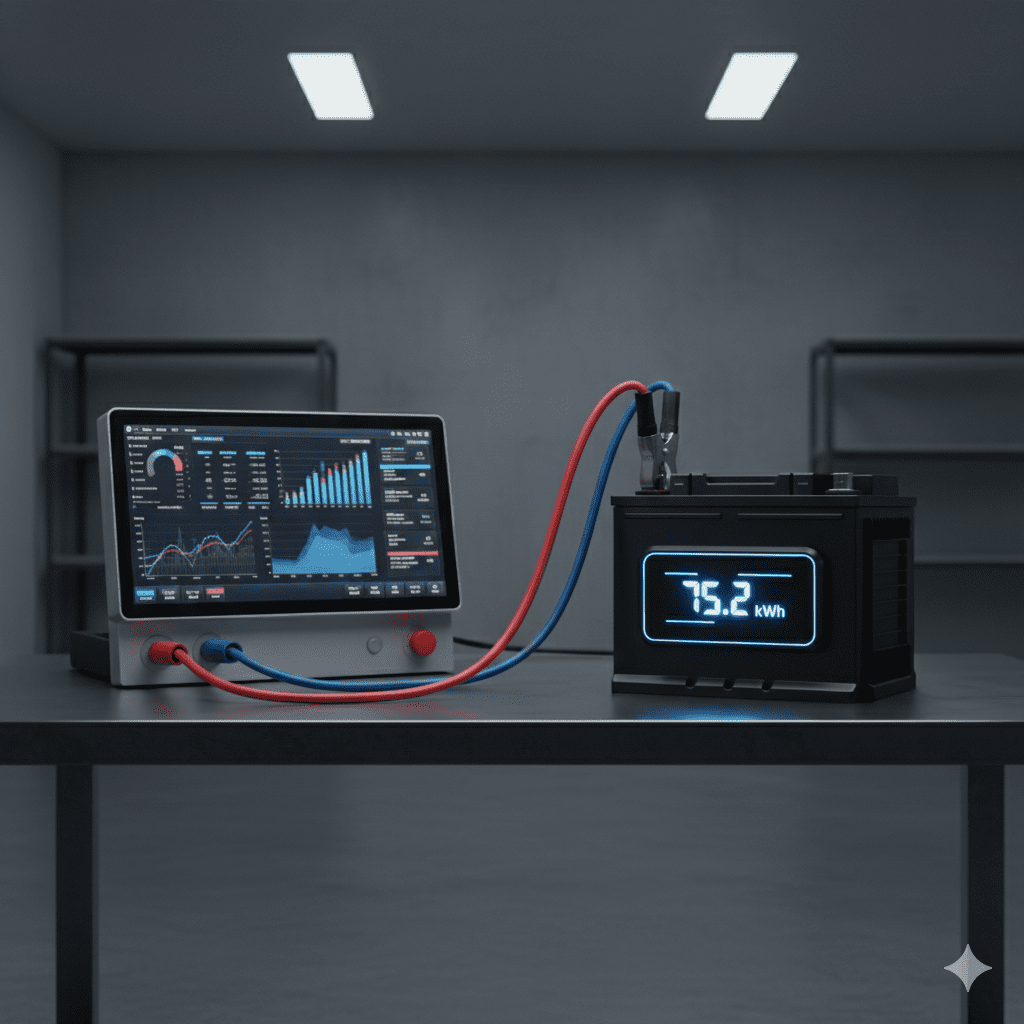
Modern vehicles consume power continuously:
- ECU modules
- Cameras and sensors
- Digital dashboards
- Cooling fans
- Entertainment systems
A higher watt capacity battery absorbs these loads without voltage collapse.
Real-World Case Study: Watt Capacity Performance
Vehicle Type
Mid-size SUV with continuous AC usage
| Parameter | 60Ah Battery | 90Ah Battery |
|---|---|---|
| Watt Capacity | 720 Wh | 1080 Wh |
| Voltage Stability | Moderate | High |
| Idle Runtime | 45 mins | 90 mins |
| Heat Degradation | Fast | Slow |
| Replacement Interval | 18 months | 30 months |
Insight: Higher watt capacity significantly improves durability and performance.
How to Choose Correct Car Battery Watt Capacity
Correct selection depends on:
- Engine size
- Electrical accessories
- Driving pattern
- Climate
- Vehicle age
Always choose equal or higher watt capacity than OEM specification.
Watt Capacity and Battery Lifespan
Higher watt capacity batteries:
- Discharge less deeply
- Recover charge faster
- Experience reduced sulfation
- Maintain voltage longer
This directly extends service life.
Watt Capacity and Alternator Efficiency
A properly matched watt capacity allows:
- Faster charging
- Reduced alternator strain
- Stable system voltage
Over-sized watt capacity does not damage the alternator when voltage is correct.
Watt Capacity vs Reserve Capacity
Reserve capacity measures minutes of runtime; watt capacity measures total energy. Watt capacity provides a more universal and precise comparison.
Common Myths About Car Battery Watt Capacity
❌ Higher watt capacity damages electronics
❌ Watt capacity replaces CCA
❌ Bigger battery always drains alternator
✔ Reality: Correct voltage + higher watt capacity improves stability.
Signs of Insufficient Watt Capacity
- Dim lights at idle
- Infotainment rebooting
- Frequent jump-starts
- Battery dying early
- Voltage warning alerts
These issues often indicate low watt capacity, not poor quality.
Best Battery Brands for High Watt Capacity Performance
Batteries engineered for high watt capacity and heat resistance:
- 🔗 Amaron Car Battery Replacement Dubai
- 🔗 Bosch Car Battery Replacement Dubai
- 🔗 Trusted Tuflong Car Battery Replacement Dubai
Watt Capacity and Battery Pricing
Higher watt capacity batteries cost more but provide longer service life.
📘 Car Battery Price Guide (2026)
When to Replace Based on Watt Capacity Loss
Replace when effective watt capacity drops below 70%, even if engine still starts.
Professional testing measures usable watt output, not just voltage.
Professional Testing & Replacement
For accurate watt capacity testing and expert replacement:
🔧 EuroSwift Auto Services
🔗 Car Battery Replacement Near Me Dubai
📞 +971501508507
How many watt-hours are in a car battery?
The watt-hours (Wh) of a car battery can be calculated using the formula:
Watt-hours (Wh)
=
Voltage (V)
×
Ampere-hour (Ah)
\text{Watt-hours (Wh)} = \text{Voltage (V)} \times \text{Ampere-hour (Ah)}Watt-hours (Wh)=Voltage (V)×Ampere-hour (Ah) Example Calculations:
12V 45Ah battery:
12
×
45
=
540
Wh
12 \times 45 = 540 \text{ Wh}12×45=540 Wh 12V 60Ah battery:
12
×
60
=
720
Wh
12 \times 60 = 720 \text{ Wh}12×60=720 Wh 12V 70Ah battery:
12
×
70
=
840
Wh
12 \times 70 = 840 \text{ Wh}12×70=840 Wh 12V 90Ah battery:
12
×
90
=
1080
Wh
12 \times 90 = 1080 \text{ Wh}12×90=1080 Wh So, a typical car battery ranges from ~540 Wh to 1080 Wh, depending on the voltage and Ah rating.
How many watt-hours are in a 100Ah 12V battery?
To calculate the watt-hours (Wh) of a battery, use the formula:
Watt-hours (Wh)
=
Voltage (V)
×
Ampere-hour (Ah)
\text{Watt-hours (Wh)} = \text{Voltage (V)} \times \text{Ampere-hour (Ah)}Watt-hours (Wh)=Voltage (V)×Ampere-hour (Ah) For a 100Ah 12V battery:
12
×
100
=
1200
Wh
12 \times 100 = 1200 \text{ Wh}12×100=1200 Wh ✅ Answer: 1200 Wh
This means the battery can theoretically deliver 1200 watts for 1 hour, or proportionally less/more depending on the load.
How long can a 12V battery run 1000 watts?
To calculate how long a 12V battery can run a 1000-watt load, we use the formula:
Runtime (hours)
=
Battery Watt-Hours (Wh)
Load Watts (W)
\text{Runtime (hours)} = \frac{\text{Battery Watt-Hours (Wh)}}{\text{Load Watts (W)}}Runtime (hours)=Load Watts (W)Battery Watt-Hours (Wh) Step 1: Calculate Battery Watt-Hours
Assume a 12V 100Ah battery:
12
V
×
100
Ah
=
1200
Wh
12 \text{ V} \times 100 \text{ Ah} = 1200 \text{ Wh}12 V×100 Ah=1200 Wh Step 2: Divide by Load
Runtime
=
1200
Wh
1000
W
=
1.2
hours
\text{Runtime} = \frac{1200 \text{ Wh}}{1000 \text{ W}} = 1.2 \text{ hours}Runtime=1000 W1200 Wh=1.2 hours ✅ Answer:
The battery can theoretically run approximately 1.2 hours (1 hour 12 minutes) at a 1000-watt load.
Note: Real-world runtime may be slightly less due to efficiency losses and Peukert effect.
How many watts is a 12V car battery?
The number of watts a 12V car battery can provide depends on its ampere-hour (Ah) rating and the load. You calculate it using the formula:
Watts (W)
=
Voltage (V)
×
Current (A)
\text{Watts (W)} = \text{Voltage (V)} \times \text{Current (A)}Watts (W)=Voltage (V)×Current (A) Example Calculations
12V 45Ah battery
12
×
45
=
540
Wh (total energy)
12 \times 45 = 540 \text{ Wh (total energy)}12×45=540 Wh (total energy) 12V 60Ah battery
12
×
60
=
720
Wh (total energy)
12 \times 60 = 720 \text{ Wh (total energy)}12×60=720 Wh (total energy) 12V 70Ah battery
12
×
70
=
840
Wh (total energy)
12 \times 70 = 840 \text{ Wh (total energy)}12×70=840 Wh (total energy) So, a typical 12V car battery ranges from roughly 540 watts to 1080 watts of stored energy (depending on Ah rating).
Note: This is the total energy stored. The instantaneous power output (watts at a moment) can be higher during cranking, defined by CCA (Cold Cranking Amps).
Can I run a 2000W inverter off a car battery?
Yes, you can run a 2000W inverter off a car battery, but there are several important considerations:
1. Check Battery Watt-Hours
A typical 12V 100Ah battery has:
12
V
×
100
Ah
=
1200
Wh
12 \text{ V} \times 100 \text{ Ah} = 1200 \text{ Wh}12 V×100 Ah=1200 Wh A 2000W inverter requires 2000 watts at full load.
Runtime
=
Battery Wh
Load W
=
1200
2000
=
0.6
hours
\text{Runtime} = \frac{\text{Battery Wh}}{\text{Load W}} = \frac{1200}{2000} = 0.6 \text{ hours}Runtime=Load WBattery Wh=20001200=0.6 hours ✅ Approximate runtime: 36 minutes at full load (theoretical, ideal conditions).
2. Consider Peak Power & Efficiency
Inverters are not 100% efficient. Typical efficiency: 85–90%.
Adjusted runtime:
0.6
×
0.85
≈
0.51
hours (about 30 minutes)
0.6 \times 0.85 \approx 0.51 \text{ hours (about 30 minutes)}0.6×0.85≈0.51 hours (about 30 minutes) Peak power draw for devices may exceed continuous 2000W rating, requiring battery with high CCA or deep-cycle type.
3. Battery Type Matters
Starter (Cranking) battery: Not ideal for long-term high load. May damage battery.
Deep-cycle / AGM / Lithium battery: Better suited for continuous high-power inverters.
4. Voltage Drops & Safety
Running a 2000W inverter from a small car battery can cause voltage drop.
Can overheat battery or inverter if used continuously without proper cabling.
5. Recommendation
For 2000W inverter, use 2–4 deep-cycle batteries in parallel or a large AGM / lithium battery.
Avoid draining a starter battery below 50% to preserve life.
✅ Summary:
You can run a 2000W inverter off a car battery, but runtime will be short, and a deep-cycle or multiple batteries are recommended for safe, sustained use.
How many kilowatt hours are in a 12 volt car battery?
To calculate kilowatt-hours (kWh) of a 12V car battery, you use the formula:
kWh
=
Voltage (V)
×
Ampere-Hour (Ah)
1000
\text{kWh} = \frac{\text{Voltage (V)} \times \text{Ampere-Hour (Ah)}}{1000}kWh=1000Voltage (V)×Ampere-Hour (Ah)
Example Calculations:
12V 45Ah battery:
12
×
45
1000
=
0.54
kWh
\frac{12 \times 45}{1000} = 0.54 \text{ kWh}100012×45=0.54 kWh 12V 60Ah battery:
12
×
60
1000
=
0.72
kWh
\frac{12 \times 60}{1000} = 0.72 \text{ kWh}100012×60=0.72 kWh 12V 100Ah battery:
12
×
100
1000
=
1.2
kWh
\frac{12 \times 100}{1000} = 1.2 \text{ kWh}100012×100=1.2 kWh
✅ Answer:
A 12V car battery typically contains 0.5–1.2 kWh depending on its Ah rating.
Note: This is usable energy under ideal conditions; real-world energy may be lower due to efficiency losses and battery age.
Which is better, 100Ah or 200Ah?
When comparing 100Ah vs 200Ah batteries, “better” depends entirely on your application and energy needs. Let’s break it down:
1. Capacity Comparison
100Ah battery: Stores 100 ampere-hours × 12V = 1200 Wh (1.2 kWh)
200Ah battery: Stores 200 ampere-hours × 12V = 2400 Wh (2.4 kWh)
✅ 200Ah has double the stored energy.
2. Runtime
A higher Ah battery runs the same load for longer:
Load
100Ah Battery Runtime
200Ah Battery Runtime
500W
2.4 hours
4.8 hours
1000W
1.2 hours
2.4 hours
2000W
0.6 hours
1.2 hours
3. Application Considerations
100Ah battery: Good for short trips, small loads, cars, light inverters.
200Ah battery: Better for long trips, heavy electrical loads, inverters, off-grid applications.
4. Physical & Cost Factors
200Ah is larger, heavier, and more expensive.
Installation may require more space and stronger mounts.
5. Battery Life
Higher Ah batteries experience less deep discharge for the same load, which often extends battery lifespan.
Running a 100Ah battery at high load frequently can reduce its service life.
✅ Conclusion
Use 100Ah: Light, short-term, standard car use.
Use 200Ah: High power demand, longer runtime, heavy accessories, or off-grid setups.
If you want, I can make a visual comparison table of 12V batteries (100Ah, 150Ah, 200Ah, 250Ah) showing Wh, kWh, runtime at different loads for easy reference.
What is the 80 20 rule for charging batteries?
The 80/20 rule for charging batteries is a guideline that helps maximize battery life and performance by avoiding full deep charges and deep discharges. Here’s a detailed explanation:
1. The Concept
Charge up to 80%: Avoid charging a battery to 100% all the time.
Discharge down to 20%: Avoid letting the battery drop below 20% state of charge.
This prevents excessive heat, sulfation, and chemical degradation, which are common causes of battery wear.
2. Why It Works
Most batteries experience stress at extreme charge levels.
Keeping the battery between 20% and 80% reduces strain on the plates and electrolyte.
Extends cycle life, improves charge acceptance, and maintains watt capacity longer.
3. Practical Example
A 12V 100Ah battery (1200 Wh):
Do not discharge below 20% → minimum usable energy: 1000 × 0.2 = 240 Wh
Do not charge above 80% → maximum usable energy: 1200 × 0.8 = 960 Wh
Operating between 240 Wh and 960 Wh keeps battery in the optimal range.
4. Applications
Car batteries: Reduces stress from frequent short trips or high accessory loads.
Deep-cycle batteries: Common in solar, marine, or inverter setups.
Lithium batteries: Especially sensitive to full charge cycles, so 80/20 extends lifespan.
5. Benefits of the 80/20 Rule
Longer battery life
Consistent voltage and watt capacity
Reduced heat generation
Improved performance under load
✅ Summary:
The 80/20 rule means never fully charge to 100% or discharge below 20%. This simple habit dramatically improves battery longevity and efficiency in real-world usage.
Conclusion
Understanding car battery watt capacity is essential for anyone who wants reliable, long-lasting vehicle performance. Watt capacity provides the most accurate measure of a battery’s real-world energy compared to simple voltage, ampere-hour (Ah), or cold cranking amp (CCA) ratings. It determines how long your battery can power your car’s electrical systems, handle high accessory loads, and endure heat or frequent starts.
By choosing the correct watt capacity for your vehicle, you ensure:
- Stable voltage under heavy electrical load
- Longer runtime for electronics and accessories
- Reduced risk of early battery failure
- Extended overall battery lifespan
Real-world testing, proper maintenance, and understanding factors like the 80/20 charging rule further maximize efficiency and performance. For high-quality, heat-resistant, and long-lasting batteries, brands like Amaron, Bosch, and Tuflong offer reliable solutions.
For professional testing, replacement, and expert guidance on selecting the right watt capacity for your vehicle, trust EuroSwift Auto Services: Car Battery Replacement Near Me Dubai.
✅ Investing in the right battery watt capacity today ensures safe, efficient, and uninterrupted driving tomorrow.
Leave a Reply