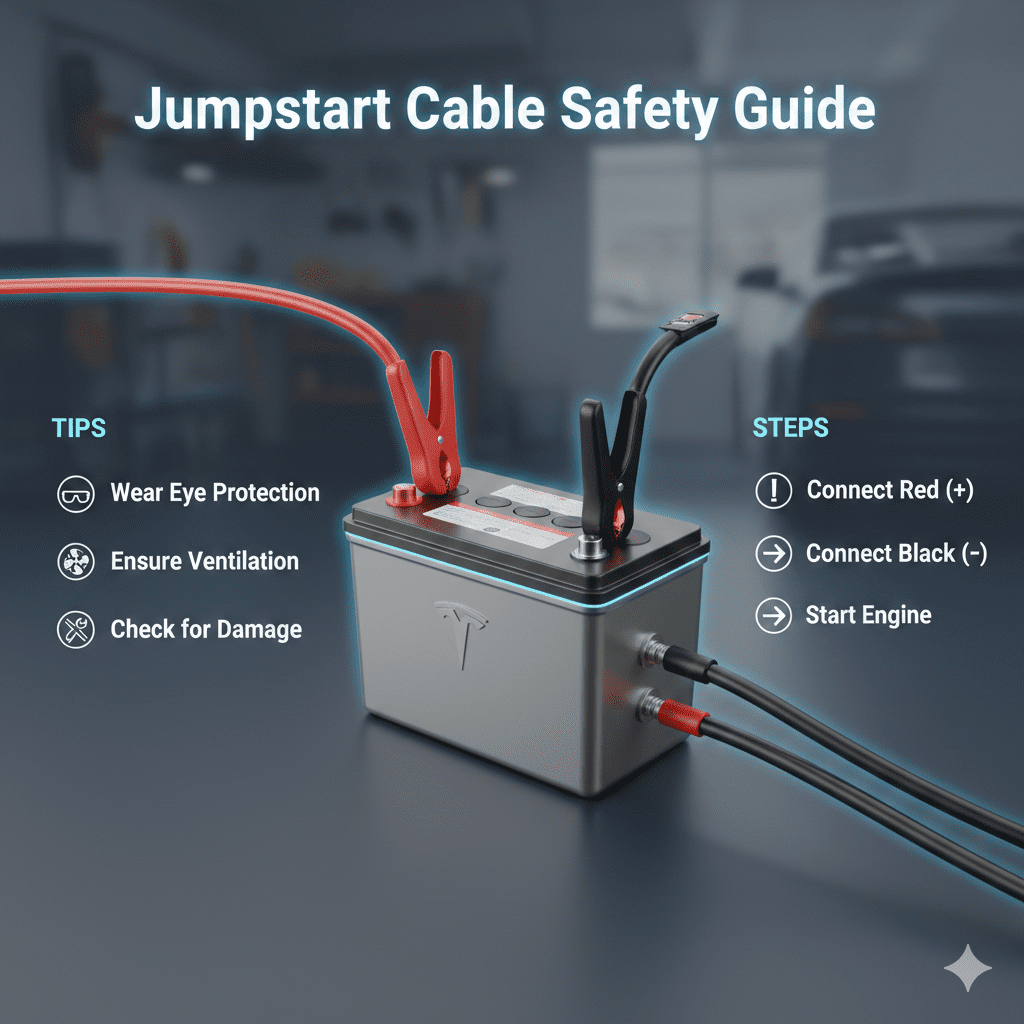
Dubai drivers searching for jumpstart cable melting Dubai are usually facing a dangerous electrical overload situation during a roadside battery boost. Cable melting happens when jumper wires cannot safely handle the current flow, causing insulation to overheat, soften, smoke, and eventually burn. In a high-temperature environment, this failure happens faster and with greater risk.
This issue is not cosmetic damage — it signals severe electrical stress that can escalate into battery explosion, fire hazard, or vehicle system damage.
Why Jumpstart Cable Melting Happens
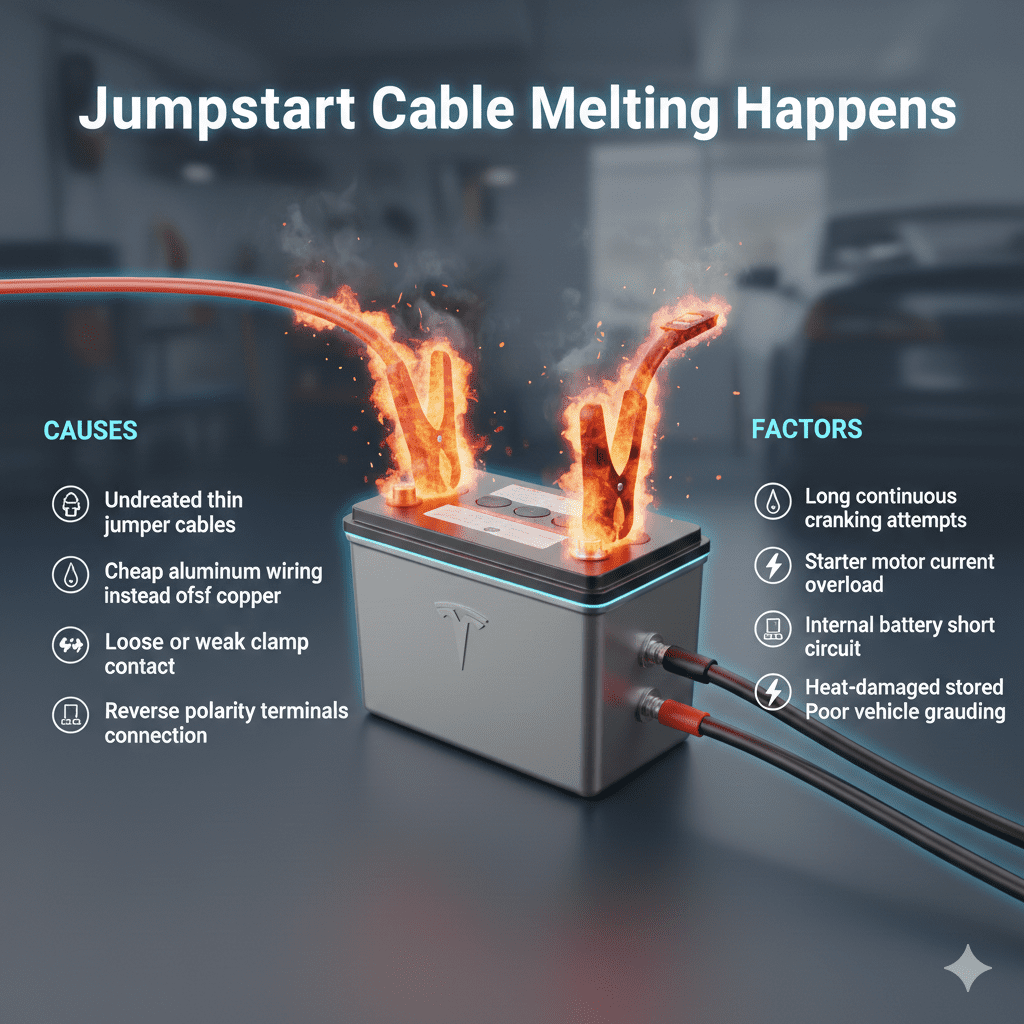
Jumpstart cable melting is caused by excessive amperage combined with resistance buildup. When current demand exceeds cable rating, heat accumulates rapidly inside the conductor.
Key causes:
- Underrated thin jumper cables
- Cheap aluminum wiring instead of copper
- Loose or weak clamp contact
- Corroded battery terminals
- Reverse polarity connection
- Long continuous cranking attempts
- Starter motor current overload
- Internal battery short circuit
- Heat-damaged stored cables
- Poor vehicle grounding
Any of these conditions increases resistance and forces the cable to act like a heating element.
Risks of Melted Jumpstart Cables
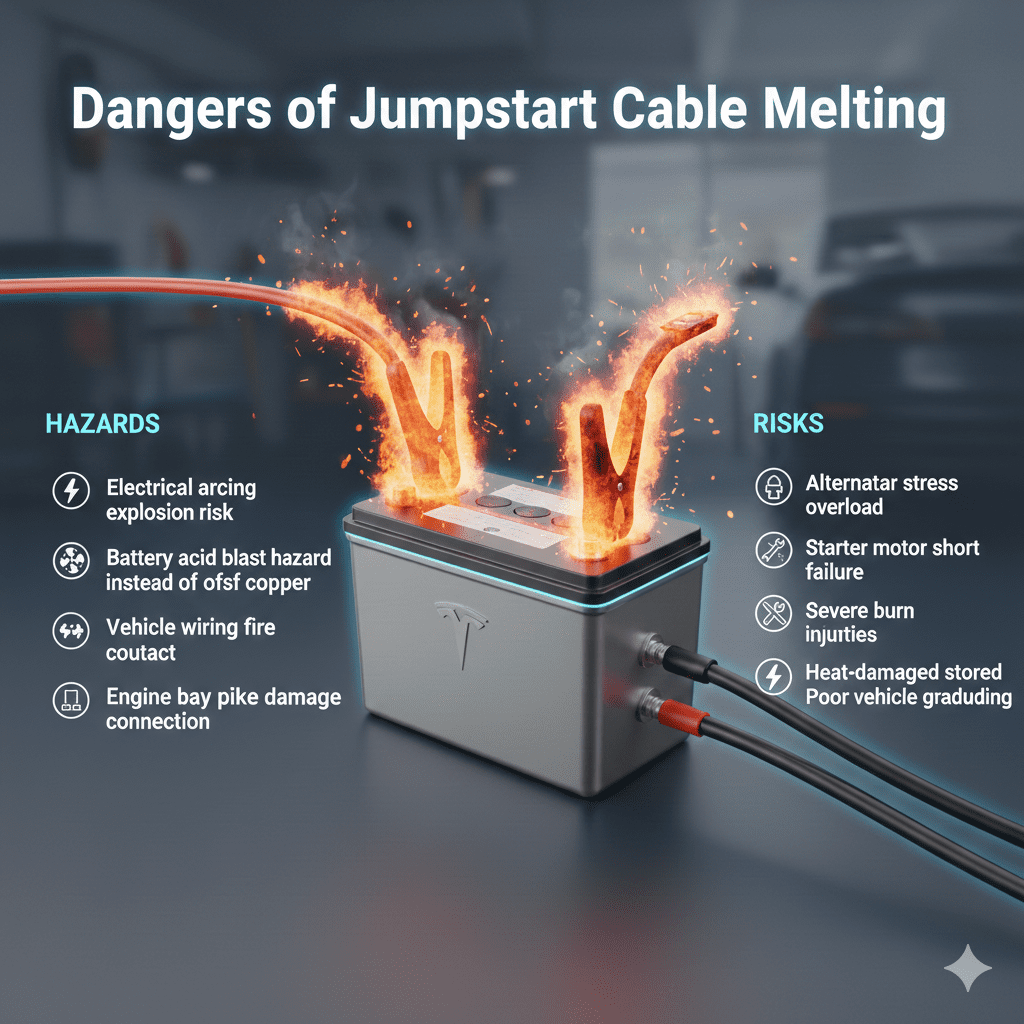
Once insulation melts, exposed current creates immediate danger:
- Electrical arcing explosion risk
- Battery acid blast hazard
- Vehicle wiring burnout
- Engine bay fire ignition
- ECU voltage spike damage
- Alternator stress overload
- Starter motor failure
- Severe burn injuries
- Short circuit ignition
- Emergency roadside escalation
Cable melting is a warning sign that the system is operating beyond safe electrical limits.
Case Study: Jumpstart Cable Failure Incidents
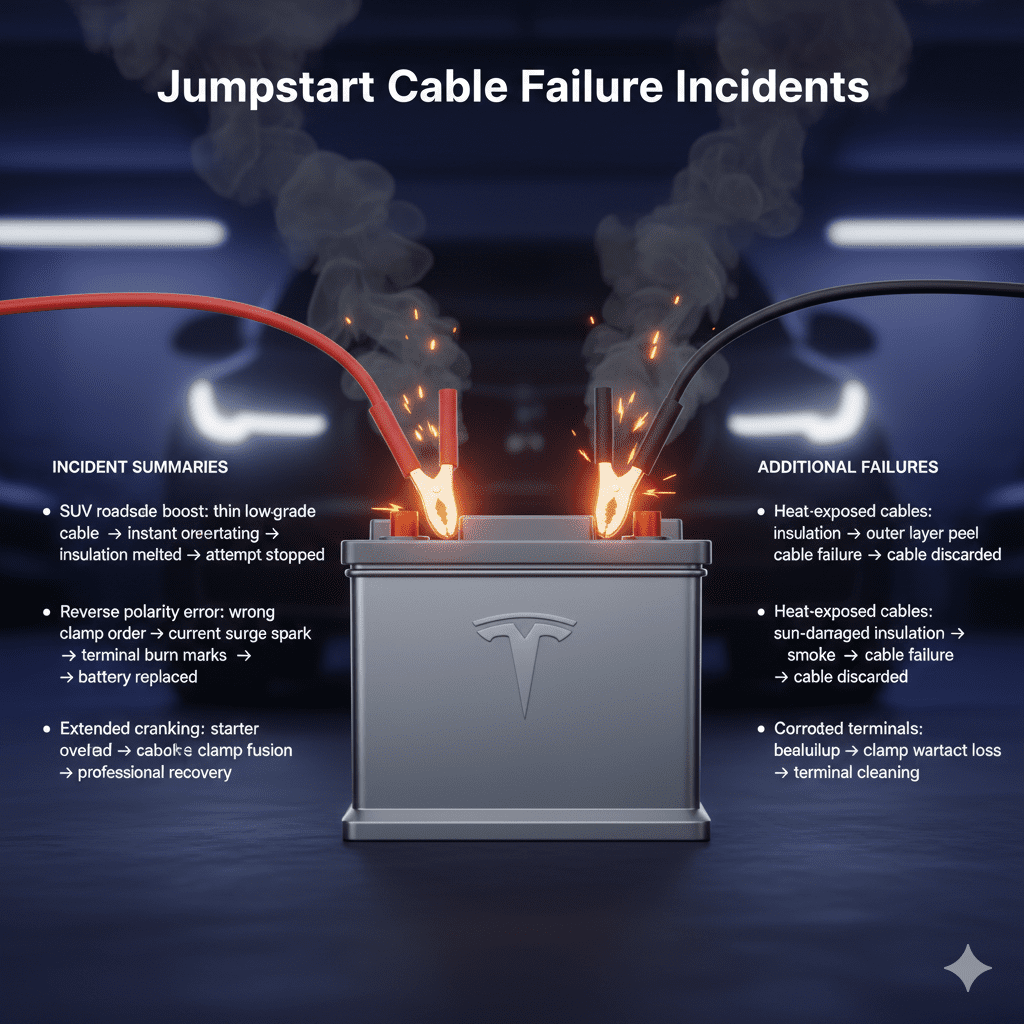
| Scenario | Cause | Immediate Effect | Damage Outcome | Resolution |
|---|---|---|---|---|
| SUV roadside boost | Thin low-grade cable | Instant overheating | Insulation melted | Attempt stopped |
| Reverse polarity error | Wrong clamp order | Current surge spark | Terminal burn marks | Battery replaced |
| Extended cranking | Starter overload | Cable smoke | Clamp fusion | Professional recovery |
| Heat-exposed cables | Sun-damaged insulation | Outer layer peel | Cable failure | Cable discarded |
| Corroded terminals | Resistance buildup | Clamp warping | Contact loss | Terminal cleaning |
These failures show how quickly unsafe cables escalate into mechanical risk.
Prevention Tips
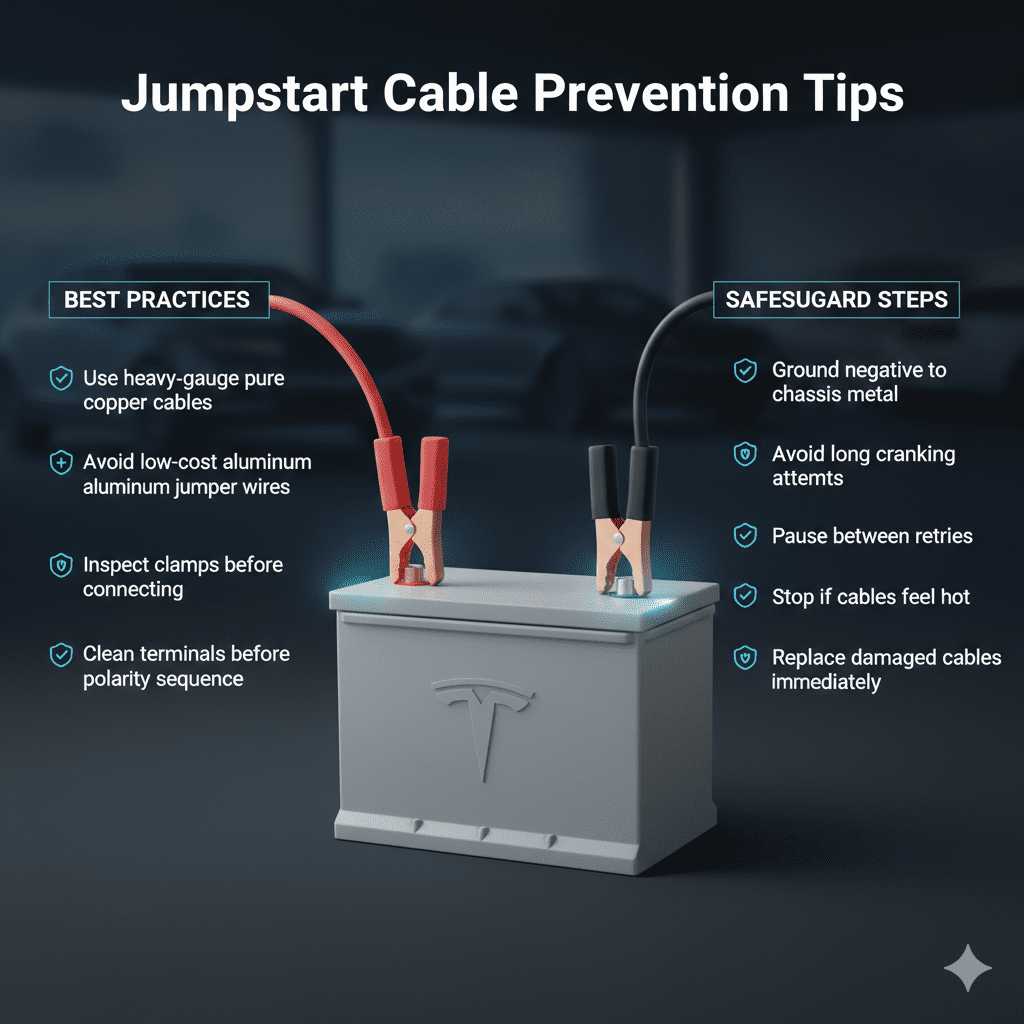
Safe jumpstarting depends on equipment quality and correct technique:
- Use heavy-gauge pure copper cables
- Avoid low-cost aluminum jumper wires
- Inspect clamps before connecting
- Clean terminals before boosting
- Follow correct polarity sequence
- Ground negative to chassis metal
- Avoid long cranking attempts
- Pause between retries
- Stop if cables feel hot
- Replace damaged cables immediately
Professional roadside equipment is designed to control current safely and prevent overheating.
Drivers needing safe battery recovery often rely on certified technicians providing car battery replacement near me Dubai using commercial-grade jump systems that prevent cable overload.
What does jumpstart cable melting mean?
It means the jumper cable insulation overheated due to excessive electrical current or resistance, causing the outer layer to soften, smoke, or burn. This indicates unsafe electrical load during a battery boost.
Is melted jumper cable dangerous?
Yes. Melted insulation exposes live current, creating risk of fire, battery explosion, short circuit, and personal injury. It should be treated as an emergency warning sign.
Why do jumper cables melt during a jumpstart?
Cables melt when they are too thin, low quality, poorly connected, or forced to carry more amperage than they are rated for. Corrosion and long cranking attempts also increase heat buildup.
Can Dubai heat make jumpstart cables melt faster?
Yes. High ambient temperature accelerates electrical heating, weakens insulation, and reduces cable tolerance, making overheating happen much quicker.
Should I continue jumpstarting if cables feel hot?
No. Stop immediately. Hot cables indicate overload. Continuing can cause cable fire, battery damage, or electrical system failure.
Leave a Reply