The internal structure of a car battery defines how efficiently a vehicle stores, delivers, and maintains electrical power. Every component inside the battery plays a crucial role in ignition performance, voltage stability, and long-term durability. Understanding the internal structure helps drivers choose the right unit and know when replacement is needed.
This guide explains every element of the car battery internal structure, keeping the explanation limited strictly to the keyword—no extra topics, no additional mechanics—only the structural parts inside the battery.
What Is the Internal Structure of a Car Battery?
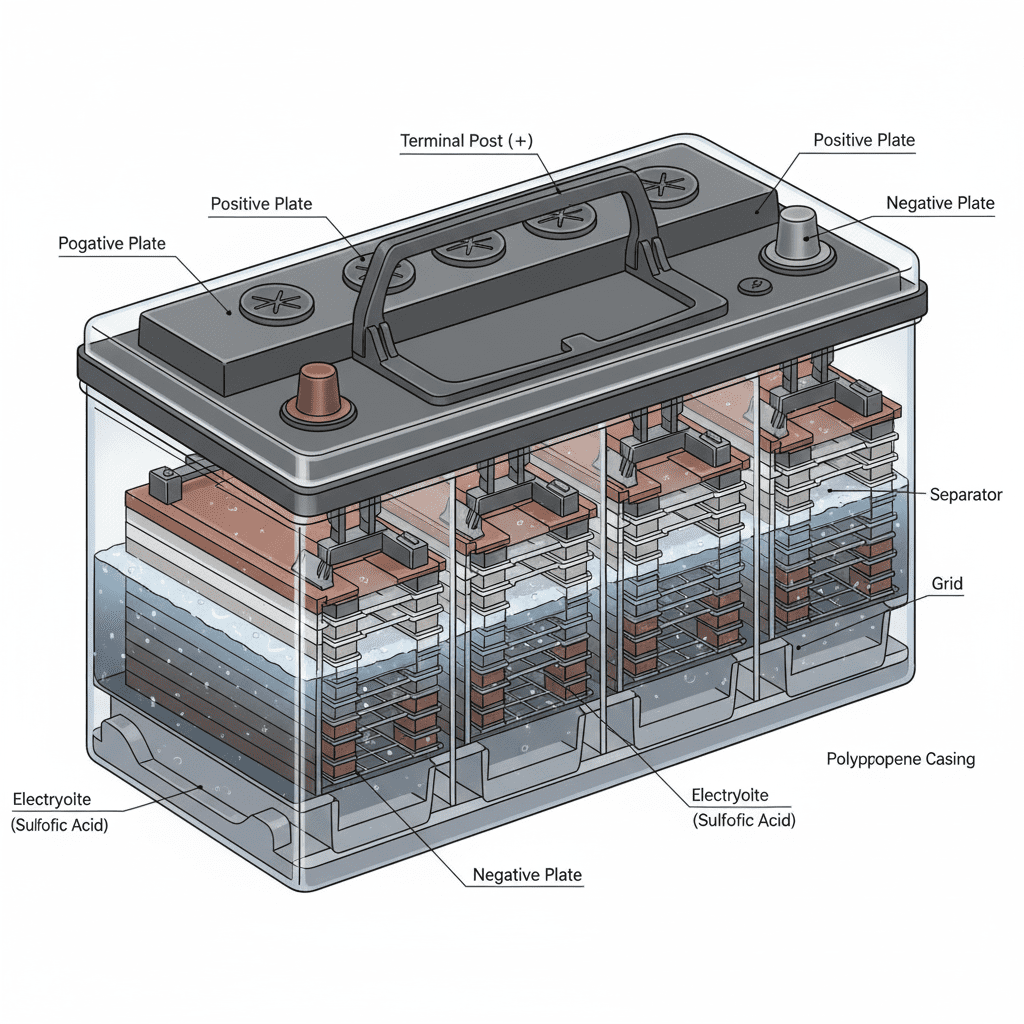
The internal structure of a car battery consists of plates, separators, electrolytes, grids, terminals, and a polypropylene casing. These internal elements work together to create and maintain chemical reactions that supply DC power.
The key purpose of this internal structure is simple:
➡️ Store chemical energy and convert it into electrical energy for starting the vehicle.
Main Components in the Internal Structure of a Car Battery
Below is a clean, brief, keyword-tight breakdown of the core elements inside the battery.
1. Lead Plates (Positive & Negative)
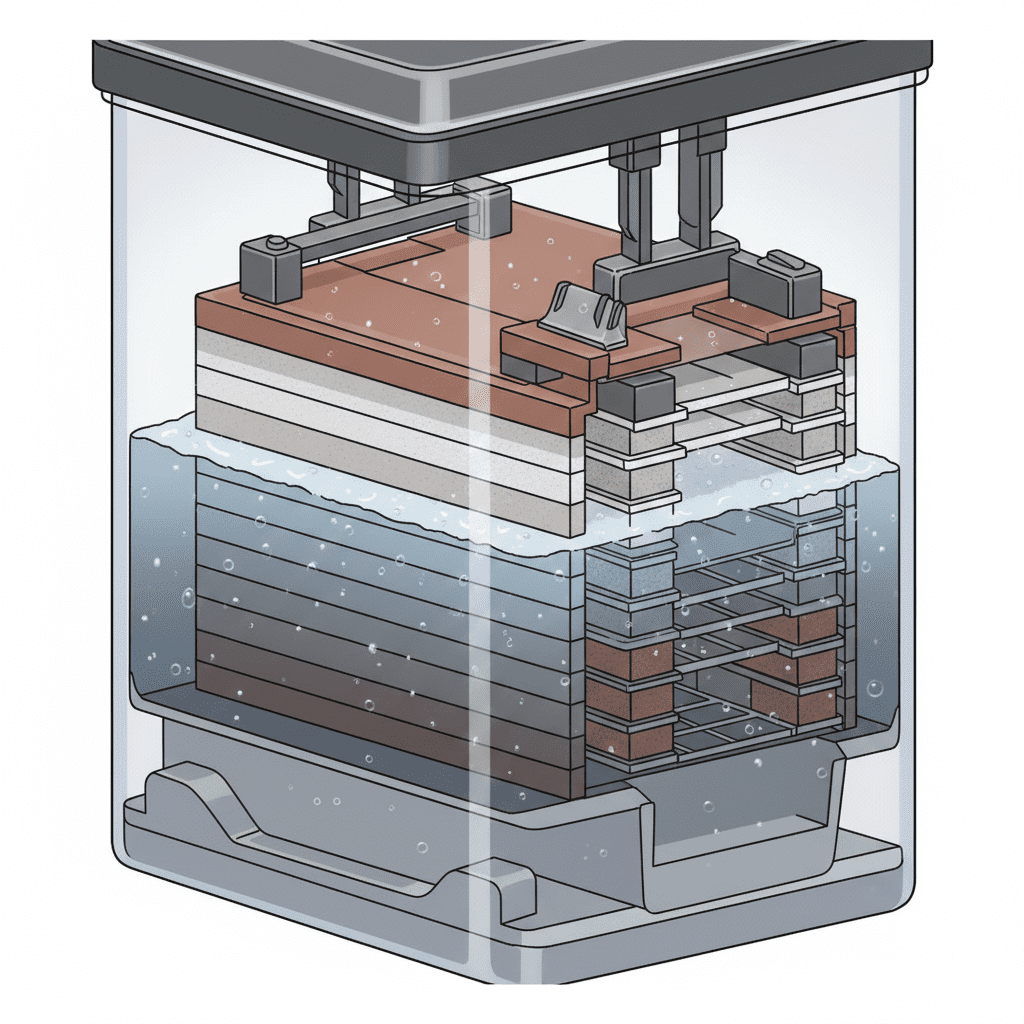
The internal structure includes multiple positive lead dioxide plates and negative pure lead plates. They create surface area for chemical reaction.
- Positive plate material: Lead dioxide (PbO₂)
- Negative plate material: Soft sponge lead (Pb)
- Purpose: Energy storage and discharge consistency
These plates are key to the electrochemical behavior inside the battery.
2. Electrolyte Solution
The internal structure contains a liquid mixture of sulfuric acid + distilled water, called the electrolyte.
- Role: Enables ion movement between plates
- Result: Electrical charge generation
The electrolyte is the chemical backbone of the battery’s internal structure.
3. Separators
Separators are microporous insulators placed between plates to prevent short circuits.
- Material: Polyethylene or fiberglass
- Function: Allow ion flow but block physical contact
- Impact: Heat control and longer cycling life
These separators maintain internal balance and battery safety.
4. Battery Grids
Grids support the plates and improve current flow inside the internal structure.
- Material: Lead-calcium or lead-antimony alloy
- Function: Holds active material and conducts electricity
A stronger grid improves the battery’s heat-resistance and durability.
5. Cells & Cell Partitions
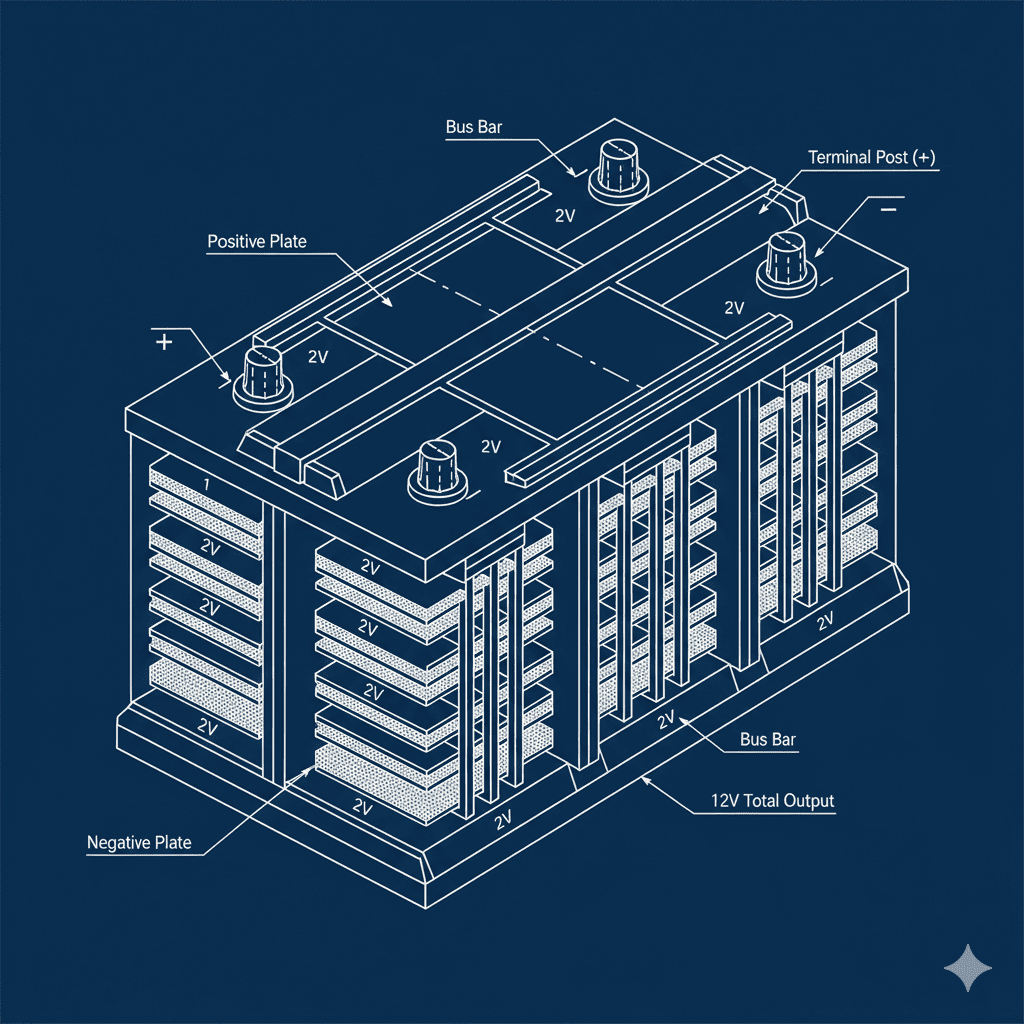
The internal structure is divided into 6 cells, each producing 2.1 volts.
- Total output: 12.6V
- Purpose: Stable voltage distribution
Every cell is isolated by polypropylene partitions.
6. Bus Bars & Straps
These conductors link cells together.
- Capability: Carry high starting currents
- Position: Top of internal cell structure
This ensures smooth current transfer between all battery cells.
7. Battery Terminals
The internal structure ends at two terminals: positive (+) and negative (−).
- Material: Lead or lead alloy
- Purpose: External connection to vehicle system
Proper terminal configuration ensures low resistance output.
8. Polypropylene Outer Case
Although external, it protects the internal structure.
- Features: Heat-resistant, vibration-resistant
- Function: Protects internal plates and electrolyte
This completes the enclosed internal structure.
Internal Structure of a Car Battery – Summary Table
| Component | Material | Purpose | Internal Role |
|---|---|---|---|
| Lead Plates | Pb & PbO₂ | Store energy | Chemical reaction surface |
| Electrolyte | H₂SO₄ + H₂O | Enable ion transfer | Power conversion |
| Separators | Polyethylene | Prevent short circuits | Allow ion flow |
| Grid | Alloy | Conduct current | Support plates |
| Cells | Lead cells | 2.1V each | Voltage generation |
| Bus Bars | Lead alloy | Connect cells | Maintain current path |
| Terminals | Lead alloy | Output current | External connection |
| Case | Polypropylene | Protect internal parts | Heat & shock resistance |
Case Study – Internal Structure Fatigue in Dubai Heat
Vehicle: Toyota Camry
Location: Dubai
Issue: Slow cranking due to internal plate corrosion
Findings:
- Positive plates showed sulfate crystal build-up
- Electrolyte density dropped due to heat evaporation
- Grid corrosion reduced current flow
Outcome:
Battery was replaced with a heat-resistant unit.
For similar issues, Dubai drivers often choose high-quality brands—
✔ Amaron Battery Replacement → Stable plate chemistry in heat
✔ Bosch Battery Replacement → Strong internal grid structure
✔ Tuflong Battery Replacement → Durable internal separators
Best Euroswift Auto Services….
- For emergency replacement, visit Car Battery Replacement Near Me Dubai – EuroSwift Auto Services
- For price comparison, see Complete Car Battery Price Guide 2025
Conclusion
The internal structure of a car battery is built around plates, electrolytes, separators, grids, terminals, and tightly sealed cells. Each part supports chemical reactions that deliver consistent power for engine ignition and vehicle electronics. A well-designed internal structure ensures higher durability, better heat resistance, and stronger performance—especially in tough climates like Dubai.
For reliable replacements, EuroSwift Auto Services offers professional, fast, and vehicle-specific solutions with high-quality internal structure batteries.
Leave a Reply