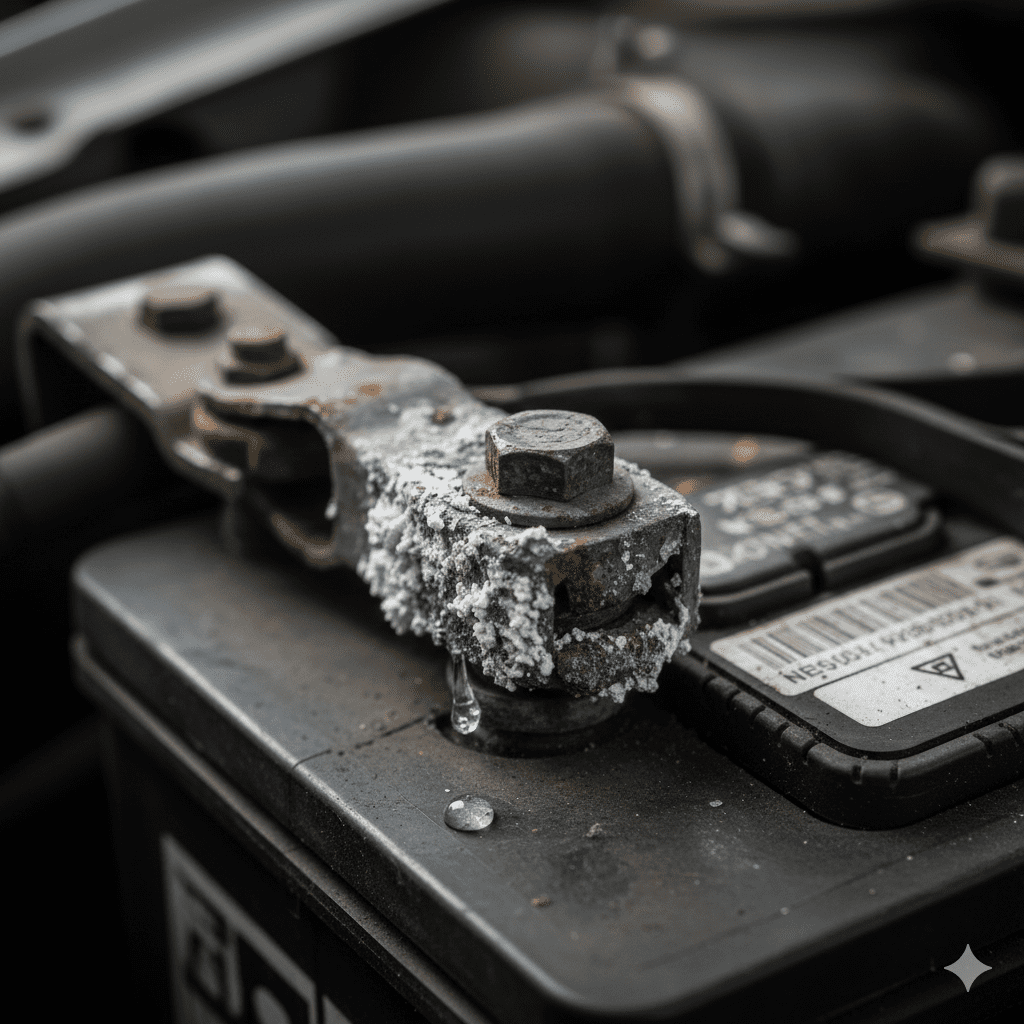
Car battery acid – mainly sulfuric acid (H₂SO₄) – is one of the most corrosive chemicals used inside vehicles. When even a small amount escapes from the battery housing, it reacts aggressively with metals, causing fast corrosion, structural weakening, discoloration, and electrical failures. This article explains how car battery acid affects metals, why corrosion spreads rapidly, and how Dubai vehicle owners can protect their cars from acid damage.
🔬 Why Battery Acid Damages Metal So Fast
Battery acid contains highly reactive hydrogen ions, which attack metal surfaces instantly. When acid touches steel, aluminum, copper, or zinc, it breaks down their protective layers and begins dissolving the metal itself.
Key reactions include:
- Oxidation (loss of electrons from metal)
- Surface corrosion (metal turns powdery or flaky)
- Electrical conductivity failure
- Structural weakening
This makes battery acid one of the strongest causes of engine bay metal damage.
🧲 Which Metals React the Most With Battery Acid?
| Metal Type | Effect of Battery Acid | Damage Speed |
|---|---|---|
| Steel | Rusting + deep corrosion | Fast |
| Aluminum | Pitting + surface holes | Medium |
| Copper | Green oxidation + conductivity loss | High |
| Zinc | White powder corrosion | Fast |
| Lead | Slow oxidation | Slow |
⚠️ How Car Battery Acid Affects Metals (Fully Explained)
1. Corrosion of Battery Terminals (Copper & Lead)
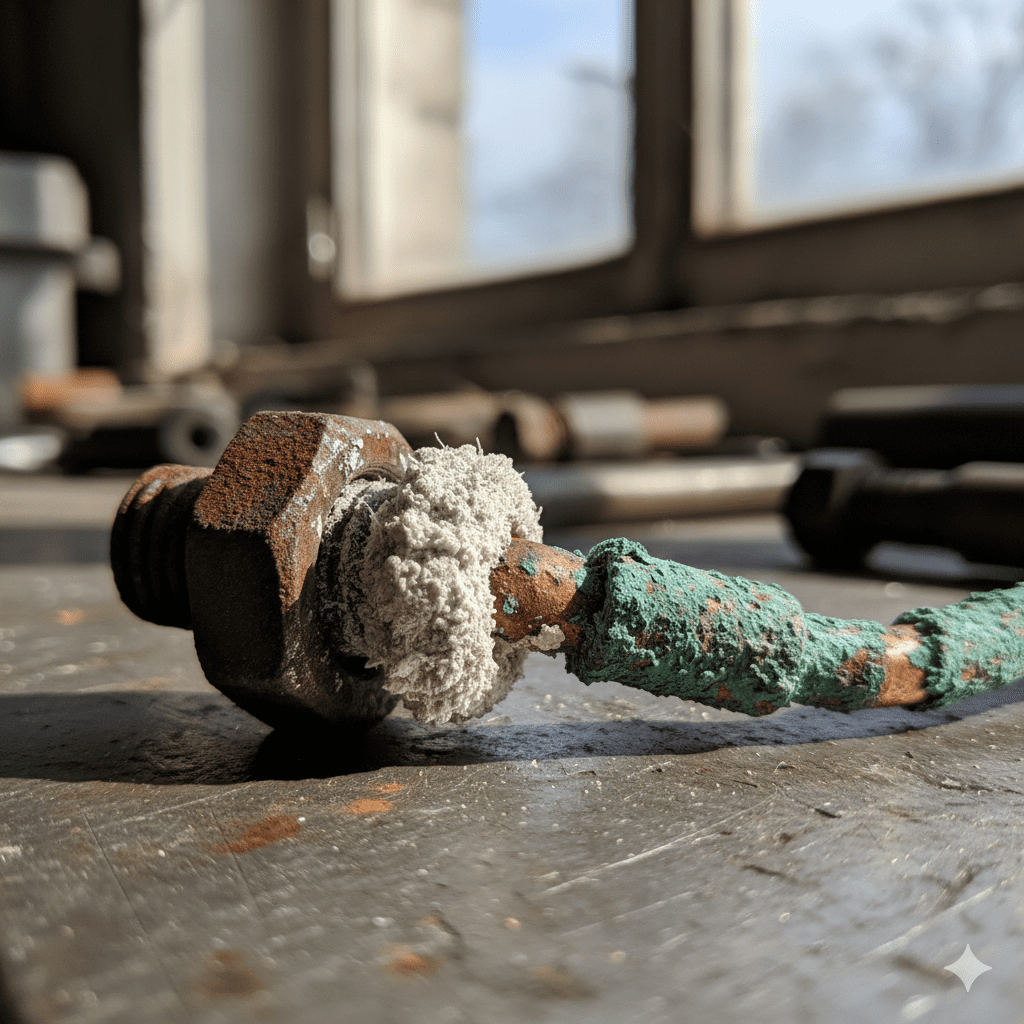
Acid vapor reacts with copper and lead, creating:
- Greenish deposit
- Powdery corrosion
- Poor electrical connection
This leads to slow cranking and charging system issues.
2. Rusting of Steel Components
When acid touches steel (battery tray, bolts, brackets), it causes:
- Deep red rust
- Weakening of structure
- Breakage of mounting parts
If this spreads, the battery may shift while driving — dangerous in Dubai traffic.
3. Pitting Damage on Aluminum Parts
Aluminum engine covers or mounting plates suffer:
- Small holes
- Surface erosion
- Loss of strength
Pitting spreads faster in hot climates.
4. Rapid Oxidation of Zinc-Coated Components
Zinc-coated nuts and mounting plates develop:
- White flaky corrosion
- Surface roughness
- Metal thinning
Once zinc coating is gone, underlying steel rusts faster.
5. Electrical Conductivity Failure
Acid corrosion breaks electrical paths, causing:
- Poor charging
- Dim headlights
- ECU miscommunication
- Faulty sensors
Electrical defects are one of the biggest outcomes of metal corrosion from battery acid.
6. Long-Term Structural Weakness
Corroded metals lose strength. Over time this can cause:
- Loose terminals
- Broken brackets
- Battery movement
- Engine vibration damage
🔍 Case Study: Battery Acid Damaging Metal Parts in Dubai
| Case Detail | Information |
|---|---|
| Vehicle | Nissan Altima – Al Quoz Dubai |
| Issue | Battery leaked acid onto steel tray |
| Result | Tray corroded 30%, bolts rusted and stuck |
| Symptoms | Burning smell + battery shaking |
| Fix by EuroSwift | Acid neutralization, tray replacement, new sealed battery installation |
| Outcome | Electrical performance restored |
| Preventive Advice | Replace leaking battery early to avoid metal loss |
This real example shows how fast acid reacts with metals in Dubai’s heat.
🧯 How to Prevent Battery Acid from Damaging Metals
Protective steps include:
- Keep battery area clean and dry
- Inspect terminals every 30–45 days
- Apply anti-corrosion spray
- Replace old or swollen batteries
- Use sealed maintenance-free batteries
For safe installation, you can check:
👉 Car Battery Replacement Near Me – EuroSwift Auto Services
🔧 Best Leak-Proof Battery Options in Dubai
To avoid acid reactions with metals, sealed batteries are best:
For pricing, you can check:
👉 Car Battery Price Guide Dubai 2025
🧼 How Technicians Remove Acid from Metal Safely
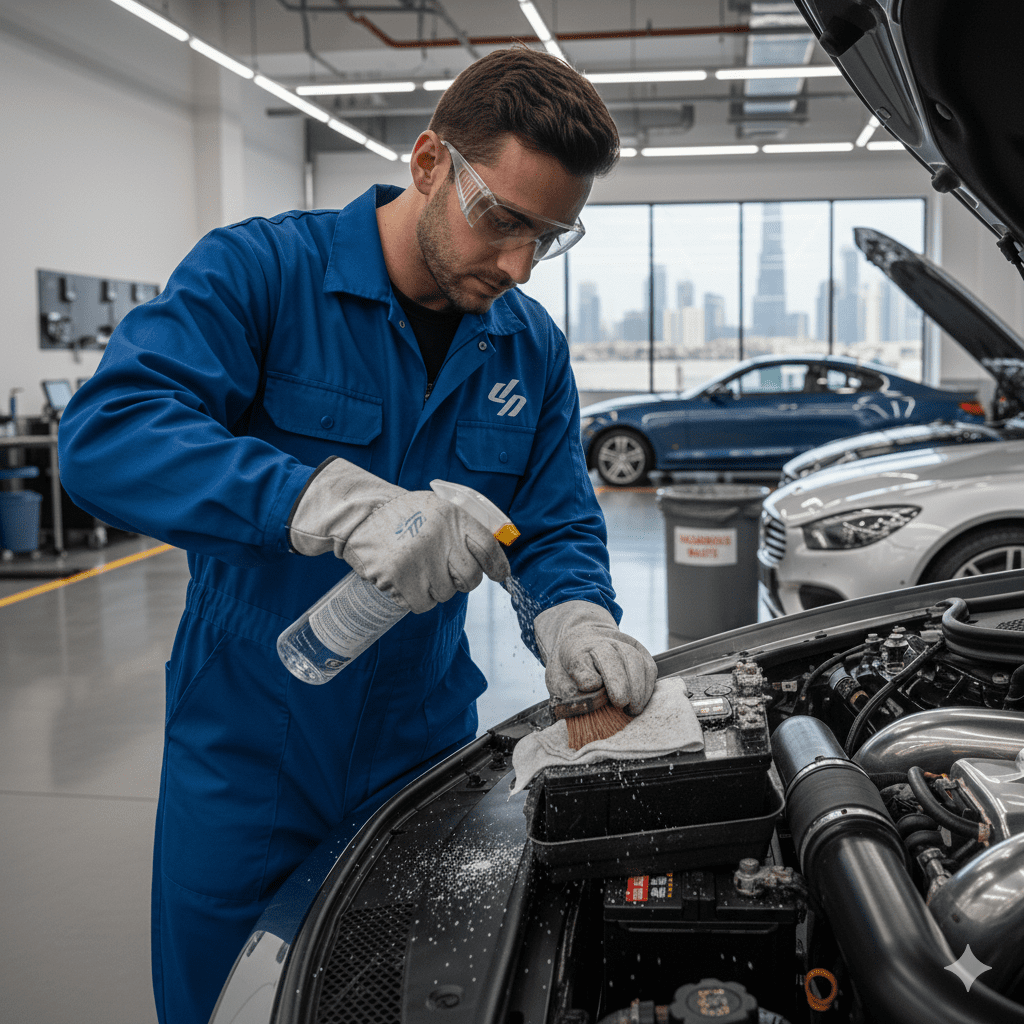
EuroSwift Auto Services uses a safety-focused process:
- Neutralize acid with alkaline solution
- Clean corroded metal
- Remove damaged bolts or trays
- Install new battery
- Protect metals with anti-corrosion gel
- Test alternator + crank performance
This reduces further damage.
How quickly does sulfuric acid start corroding metal?
Within minutes on unprotected metal. Severe corrosion can develop within hours if the acid is not neutralized.
Can battery acid cause structural damage to the car?
Yes — prolonged untreated corrosion can weaken brackets, trays, bolts, and even the chassis near the battery compartment.
Does a leaking battery mean it must be replaced?
Yes. Any acid leak indicates internal failure. A leaking battery is unsafe and should be replaced immediately to prevent corrosion, electrical issues, and metal damage.
Choose a reliable replacement option like:
Amaron battery
Bosch battery replacement
Tuflong battery replacement
📌 Conclusion
Understanding how car battery acid affects metals helps car owners prevent corrosion, electrical faults, and mechanical weakness. Acid reacts fast with steel, aluminum, copper, and zinc — leading to rust, pitting, oxidation, and complete metal breakdown. The best protection is early replacement and sealed battery installation from a trusted expert such as EuroSwift Auto Services.
Leave a Reply