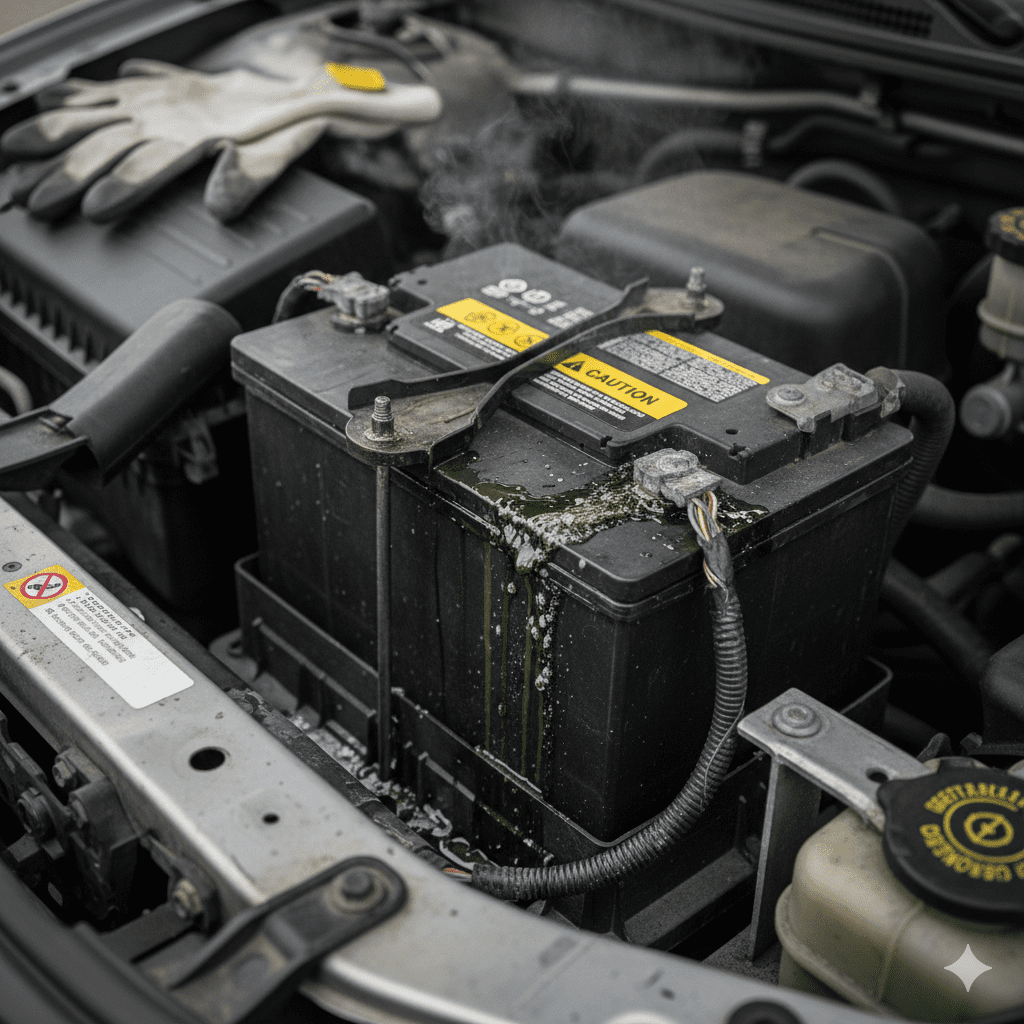
Battery chemical exposure refers to direct or indirect contact with hazardous substances released from automotive batteries. These chemicals—primarily sulfuric acid, lead compounds, and corrosive electrolytes—can cause serious health risks, vehicle damage, and environmental harm if not handled correctly. Understanding the effects of battery chemical exposure is critical for driver safety, workshop compliance, and long-term vehicle reliability.
What Causes Battery Chemical Exposure?
Battery chemical exposure usually occurs when a car battery leaks, cracks, overheats, or is improperly handled during replacement. In high-temperature environments like Dubai, chemical reactions inside batteries accelerate, increasing the risk of exposure.
Common causes include:
- Acid leakage from damaged battery casing
- Corrosion buildup around battery terminals
- Improper battery installation or removal
- Overcharging leading to gas and acid release
- Old or expired batteries breaking down chemically
Health Effects of Battery Chemical Exposure
Exposure to battery chemicals can affect the skin, eyes, respiratory system, and internal organs. Sulfuric acid is highly corrosive and can cause immediate injury.
Short-Term Health Effects
- Skin burns and irritation
- Eye damage or temporary vision loss
- Breathing difficulty from acid fumes
- Throat and nasal irritation
Long-Term Health Effects

- Chronic respiratory problems
- Nerve damage due to lead exposure
- Organ toxicity from prolonged contact
- Increased risk of chemical sensitization
Even minimal exposure, if repeated, can lead to cumulative health damage.
Effects of Battery Chemical Exposure on Vehicles
Battery chemicals do not only harm humans—they also severely impact vehicle components.
- Corrosion of battery terminals and cables
- Damage to engine bay wiring
- Paint deterioration near battery housing
- Electrical system malfunction
- Reduced battery lifespan
Unchecked chemical exposure can result in unexpected breakdowns and costly repairs.
Environmental Effects of Battery Chemical Exposure
When battery chemicals leak into soil or drainage systems, they cause:
- Soil contamination
- Water pollution
- Harm to wildlife
- Long-term environmental toxicity
This is why safe battery disposal and professional handling are essential.
Real Case Study: Battery Chemical Exposure in Dubai

| Case Factor | Details |
|---|---|
| Vehicle Type | Mid-size sedan |
| Battery Age | 3.8 years |
| Exposure Source | Acid leak due to casing crack |
| Health Impact | Mild skin burn to driver |
| Vehicle Damage | Terminal corrosion, wiring damage |
| Resolution | Immediate battery replacement by EuroSwift Auto Services |
| Outcome | No further exposure, electrical system restored |
Key Insight: Early detection and professional replacement prevented long-term health and vehicle damage.
How to Reduce the Effects of Battery Chemical Exposure
Preventive steps significantly lower exposure risks:
- Regular battery inspections
- Immediate replacement of leaking batteries
- Wearing protective gloves during handling
- Using sealed, maintenance-free batteries
- Professional installation by certified technicians
For safe and expert handling, professional battery replacement services are strongly recommended.
👉 Learn more about safe replacement through car battery replacement near me in Dubai by EuroSwift Auto Services.
Battery Type & Chemical Safety Comparison
| Battery Brand | Chemical Stability | Leak Resistance | Exposure Risk |
|---|---|---|---|
| Amaron | High | Excellent | Very Low |
| Bosch | High | Very Good | Low |
| Tuflong | Moderate | Good | Medium |
Explore safe options:
- Amaron car battery replacement Dubai
- Bosch battery replacement Dubai
- Trusted Tuflong car battery replacement Dubai
What are the main effects of battery chemical exposure?
Battery chemical exposure can cause skin burns, eye irritation, breathing problems, and long-term health risks due to sulfuric acid and lead compounds. It also leads to corrosion and electrical damage in vehicles.
Can battery chemical exposure be dangerous to health?
Yes, battery chemical exposure is dangerous. Direct contact with battery acid can cause severe burns, while inhaling fumes may damage the respiratory system and lead to long-term health complications.
What symptoms indicate battery chemical exposure?
Common symptoms include skin redness, burning sensation, eye pain, coughing, throat irritation, and unusual corrosion around the battery area. Immediate action is recommended if these signs appear.
Cost Impact of Chemical Damage
Chemical exposure often increases maintenance costs due to secondary damage.
📊 View updated pricing and prevention insights in this complete car battery price guide in Dubai 2026.
Leave a Reply