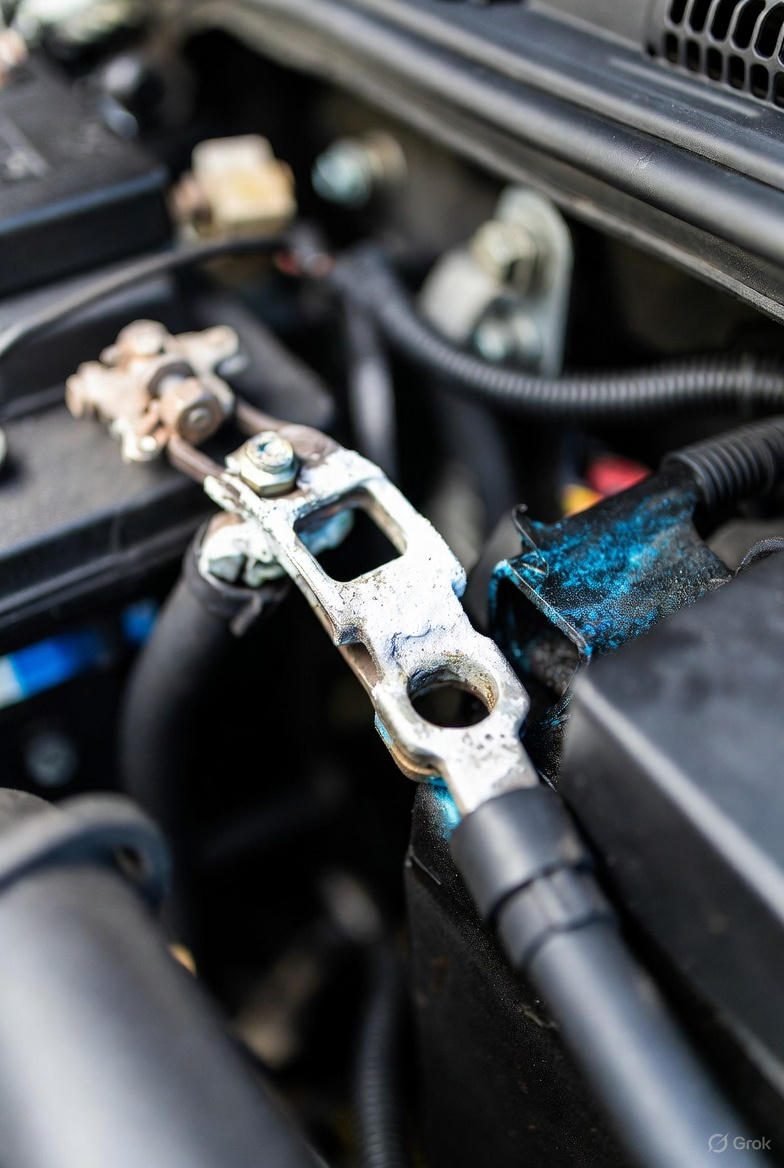
Car battery terminal corrosion issues are among the most common yet overlooked problems affecting vehicle reliability. Corrosion buildup on battery terminals disrupts electrical flow, weakens engine starting power, and accelerates battery failure. Understanding why corrosion forms, how it affects your vehicle, and when it becomes serious is essential for maintaining consistent battery performance.
What Are Car Battery Terminal Corrosion Issues?
Car battery terminal corrosion refers to the white, blue, or greenish powdery buildup that forms around battery terminals and cable connectors. This corrosion occurs due to chemical reactions between battery acid vapors, metal terminals, and environmental moisture. Over time, corrosion creates resistance that blocks proper electrical current flow.
Primary Causes of Car Battery Terminal Corrosion Issues
Battery Acid Vapor Leakage
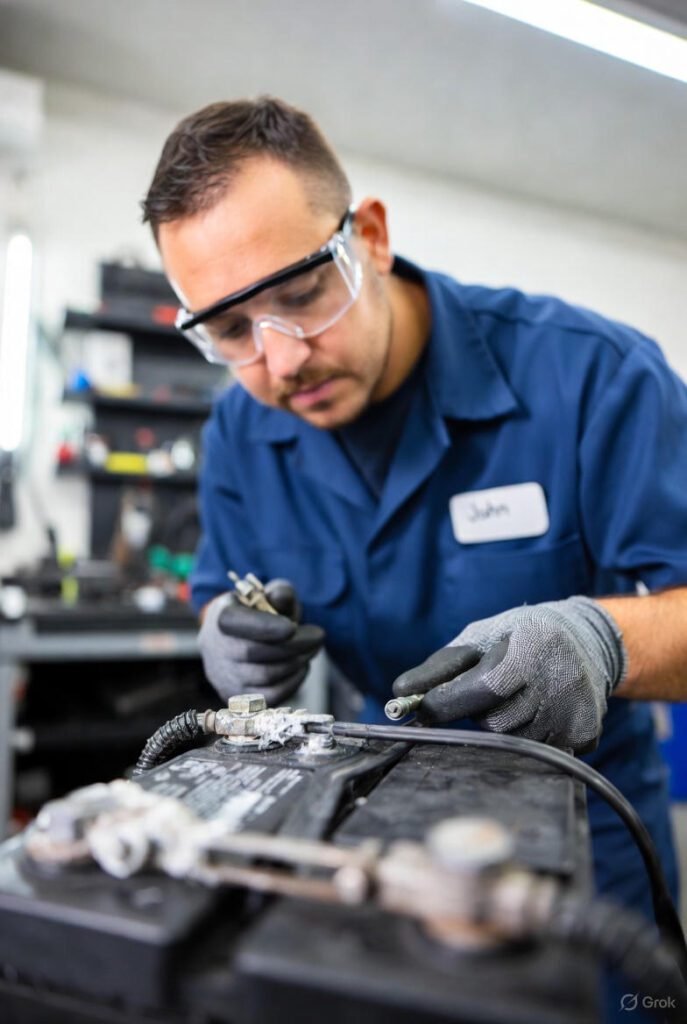
Small amounts of sulfuric acid vapor escape from the battery and react with terminal metals, causing corrosion buildup.
Overcharging the Battery
Excessive charging accelerates chemical reactions inside the battery, increasing acid release and terminal corrosion.
Poor Terminal Connection
Loose or improperly tightened battery terminals allow moisture and air intrusion, speeding up corrosion formation.
High Heat Exposure
Hot climates increase electrolyte evaporation, making terminal corrosion more aggressive and frequent.
Common Symptoms of Car Battery Terminal Corrosion Issues
- Slow or delayed engine cranking
- Intermittent electrical failures
- Dim headlights or dashboard flickering
- Clicking sound when starting
- Battery warning light activation
These symptoms often appear even when the battery itself is still functional.
How Car Battery Terminal Corrosion Affects Vehicle Performance
Corrosion increases electrical resistance, reducing voltage transfer from the battery to the starter and electrical systems. This leads to poor ignition performance, inconsistent power supply, and increased strain on the alternator. Ignoring corrosion can result in sudden breakdowns and premature battery replacement.
Comparison Table: Clean vs Corroded Battery Terminals
| Factor | Clean Terminals | Corroded Terminals |
|---|---|---|
| Electrical Flow | Stable | Restricted |
| Engine Start | Immediate | Delayed or failed |
| Battery Lifespan | Normal | Reduced |
| Voltage Loss | Minimal | High |
| Electrical Reliability | Consistent | Unstable |
Case Study: Car Battery Terminal Corrosion Issues in Dubai Climate
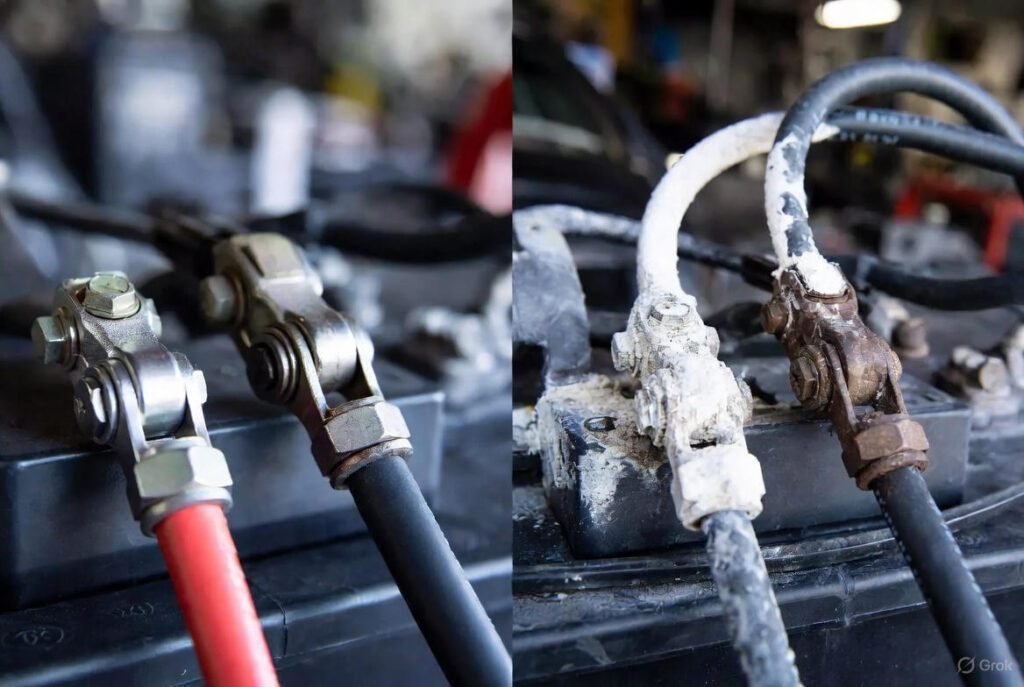
A sedan operating in Dubai experienced repeated no-start issues despite having a relatively new battery. Inspection revealed heavy terminal corrosion caused by heat-accelerated acid vaporization. After professional terminal cleaning and proper sealing, voltage stability was restored and the battery operated reliably for an additional 18 months, highlighting how terminal corrosion—not battery failure—was the root cause.
When Car Battery Terminal Corrosion Becomes a Serious Issue
Terminal corrosion becomes critical when it:
- Prevents the engine from starting
- Causes repeated electrical malfunctions
- Leads to terminal clamp damage
- Accelerates battery degradation
At this stage, professional inspection is necessary to avoid further electrical system damage.
Professional Diagnosis and Battery Services
Persistent corrosion may indicate underlying battery failure. EuroSwift Auto Services provides expert diagnostics and reliable car battery replacement services in Dubai, ensuring terminals, cables, and battery condition are properly assessed.
Trusted replacement options include:
- Amaron car battery replacement
- Bosch battery replacement
- Tuflong battery replacement
Upgrading to a quality battery reduces acid leakage and corrosion recurrence.
Cost Impact of Ignoring Car Battery Terminal Corrosion Issues
Ignoring corrosion can increase long-term costs due to:
- Frequent jump-starts
- Alternator stress
- Cable replacement
- Early battery failure
For accurate replacement cost insights, consult this Dubai car battery price guide for updated pricing.
What causes car battery terminal corrosion issues?
Car battery terminal corrosion issues are mainly caused by battery acid vapor leakage, overcharging, loose terminal connections, and high heat exposure. These factors trigger chemical reactions that create corrosive buildup on battery terminals.
Can car battery terminal corrosion prevent a car from starting?
Yes, car battery terminal corrosion can restrict electrical current flow, leading to slow cranking or complete no-start conditions. Even a healthy battery can fail to deliver power if terminal corrosion is present.
How serious are car battery terminal corrosion issues?
Car battery terminal corrosion issues become serious when they cause repeated starting problems, electrical instability, voltage loss, or damage to battery cables and terminal clamps. Ignoring corrosion can result in premature battery failure.
Conclusion: Car Battery Terminal Corrosion Issues
Car battery terminal corrosion issues directly impact electrical efficiency, starting reliability, and overall battery performance. Corrosion buildup creates resistance that disrupts power flow and places unnecessary strain on the vehicle’s electrical system. Identifying corrosion early and addressing it professionally helps prevent breakdowns, extend battery lifespan, and maintain consistent vehicle operation, making terminal inspection an essential part of battery care.
Leave a Reply