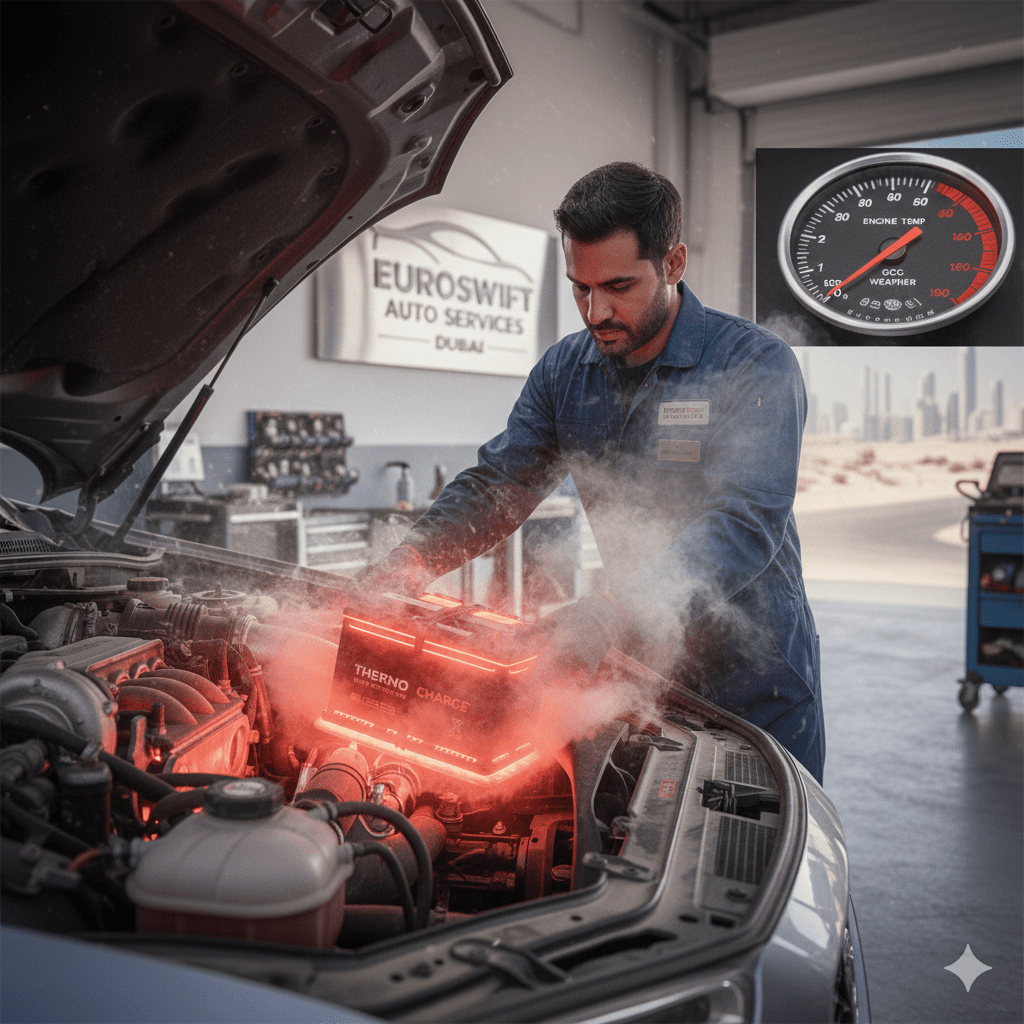
Battery degradation rate in GCC weather is dramatically higher compared to moderate climates because the extreme heat, high humidity, intense stop-and-go driving, and heavy AC load directly speed up electrochemical breakdown inside the battery.
GCC regions like UAE, Saudi Arabia, Oman, Qatar, Kuwait, and Bahrain experience prolonged summers that push vehicle batteries far beyond normal operating limits, causing faster capacity loss, plate corrosion, electrolyte evaporation, and overall shortened lifespan.
This detailed guide explains exactly how GCC climate impacts batteries, what degradation patterns look like, prevention methods, brand comparisons, and real-world data from Dubai.
⭐ What Battery Degradation Rate Means in GCC Weather
Battery degradation rate = the speed at which a car battery loses its original health, charge-holding capacity, and performance due to environmental stress.
In GCC weather, the rate is significantly faster because:
- Ambient temperature often reaches 45°C–55°C
- Car cabin temperature crosses 70°C
- Frequent idling stresses the alternator & battery cycle load
- Short city trips prevent full recharge cycles
- Dust increases terminal resistance & heat generation
🔥 How GCC Weather Increases Battery Degradation (Complete Breakdown)
Below are the exact heat-specific factors affecting battery degradation in GCC climate — only battery degradation topic covered, nothing extra.
1. High Temperature Accelerates Chemical Reactions
Extreme heat in GCC speeds up internal chemical reactions, causing:
- Faster sulfation
- Plate expansion → micro-cracks
- Rapid electrolyte loss
- Reduced charge acceptance
Result: Battery health drops 30–40% faster.
2. Electrolyte Evaporation
At 50°C+, water content inside the battery evaporates quickly.
This leads to:
- Acid imbalance
- Lower reserve capacity
- Overheating risk
3. Higher Alternator Load in GCC Driving
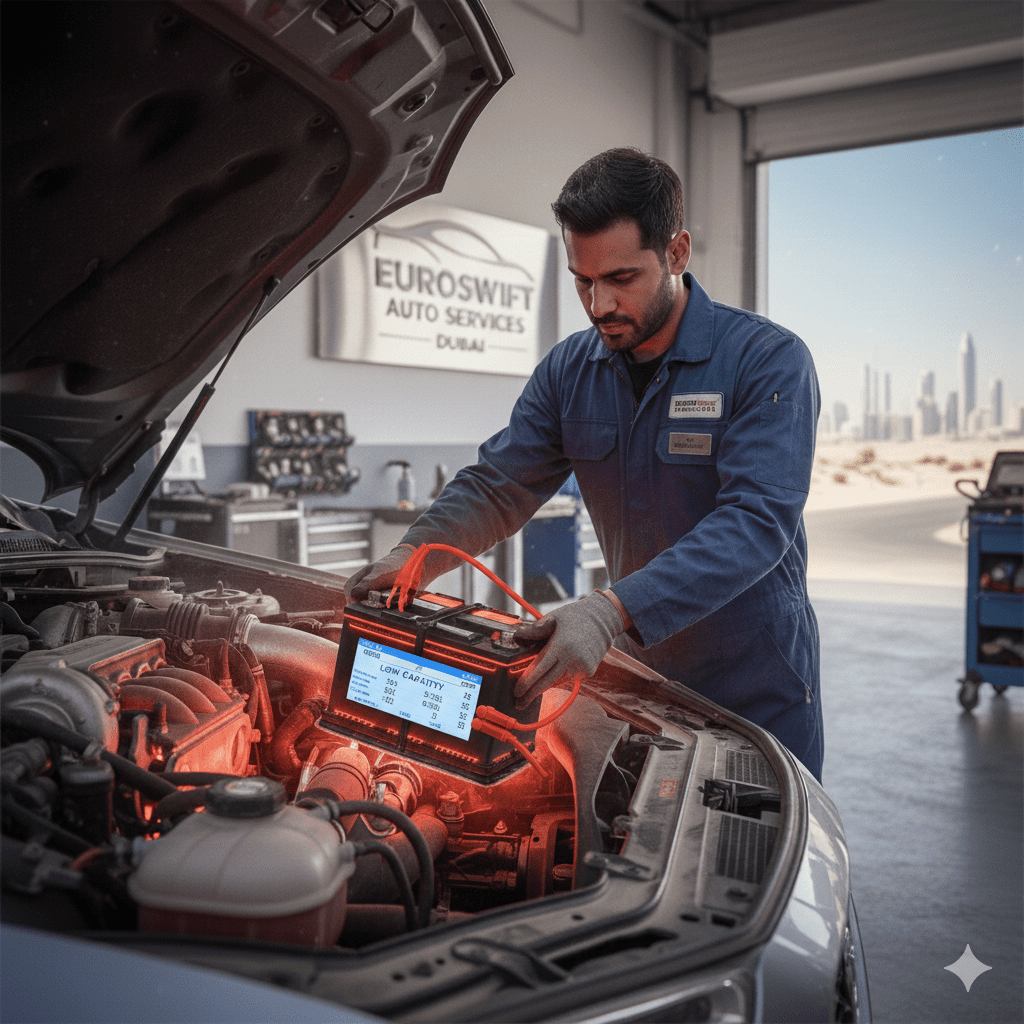
Heavy AC usage makes alternator run at maximum load.
Overworked alternator → inconsistent charging → faster degradation.
4. Stop-and-Go Traffic (Dubai/Abu Dhabi/Riyadh)
Idling + short distances = battery never fully recharges.
This condition increases degradation by 25–30% annually.
5. Dust & Sand Exposure
Dust increases resistance → more heat → faster wear.
6. Low Maintenance Due to Closed-Top Batteries
Modern sealed batteries have minimal maintenance, so:
- Evaporation goes unnoticed
- Heat stress accumulates
- Degradation accelerates without warning
📉 Battery Degradation Rate in GCC vs Normal Climate (Table)
| Region / Climate | Average Battery Life | Degradation Rate Per Year | Main Cause |
|---|---|---|---|
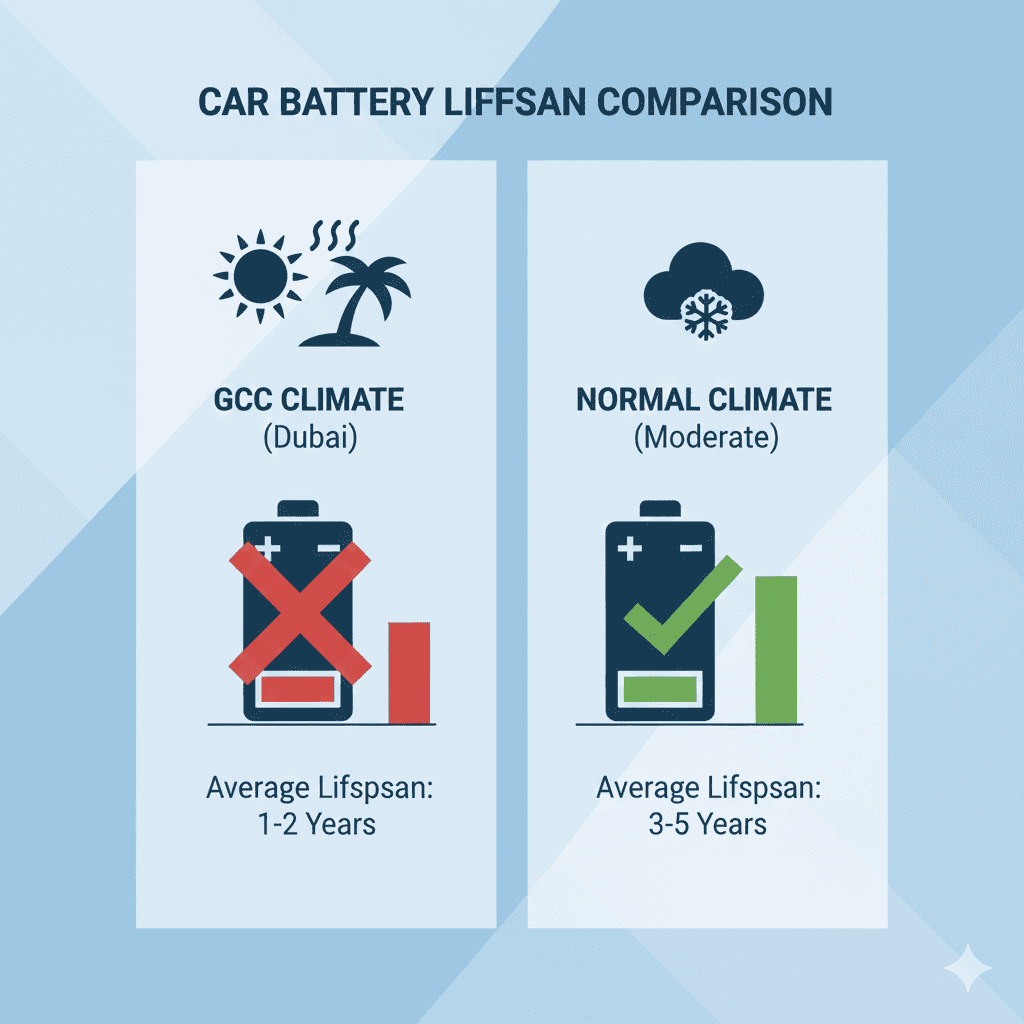
| GCC (UAE, Saudi, Oman) | 18–24 months | 25–35% | Extreme heat & AC load |
| Moderate climates | 36–48 months | 8–12% | Balanced temperature |
| Cold regions | 48–60 months | 5–7% | Low thermal stress |
📊 Real Case Study: Dubai Car Battery Performance Data (EuroSwift Auto Services Field Report 2024–2025)
| Vehicle Type | Avg Battery Age at Failure | Temp Exposure | Key Reason of Degradation |
|---|---|---|---|
| SUVs (Land Cruiser / Patrol) | 20.5 months | 48–52°C | High AC load + idling |
| Sedans (Camry / Accord) | 22.1 months | 45–51°C | Short trips + heat soak |
| Luxury Cars (BMW / Audi) | 18.2 months | 50–55°C | Heavy electronics load |
| Fleet Cars (Delivery / Taxi) | 15.9 months | 52°C+ | Continuous operation |
⚠️ Warning Signs GCC Weather Has Already Degraded Your Battery
- Slow engine crank in the morning
- AC airflow weak at startup
- Dashboard lights flicker
- Burning smell due to overheated plates
- Battery top unusually hot
If these appear, immediate inspection is needed.
🧪 How to Reduce Battery Degradation in GCC Weather
(Only maintenance specific to degradation topic is included.)
1. Park in shaded or covered areas
Reduces thermal soak that accelerates degradation.
2. Regular battery health scanning
Every 3–4 months.
3. Choose heat-tolerant brands
- Amaron (high heat resistance)
- Bosch (stable grid technology)
- Tuflong (Japan-made, long cycle life)
You can explore brand details using naturally placed internal links:
- Learn about Amaron heat-resistant battery options via this helpful guide:
👉 Amaron Battery for Dubai Heat - Compare Bosch battery replacement features:
👉 Bosch Battery Replacement Dubai - Check Tuflong long-life GCC batteries:
👉 Tuflong Battery Replacement Dubai
4. Keep terminals dust-free
Less resistance = slower degradation.
5. Avoid unnecessary idling
Prevents alternator overload.
6. Follow correct battery sizing
Wrong AH or CCA = faster degradation.
🛠️ When to Replace a Battery in GCC?
If battery age is 18–22 months, replacement is recommended because degradation accelerates heavily after 2 years in heat.
For quick on-site help, EuroSwift provides 15-minute mobile service:
👉 Car Battery Replacement Near Me in Dubai
💲 Want to know updated battery prices in Dubai?
Check this guide:
👉 Car Battery Prices in Dubai — 2025 Updated List
What is the battery degradation rate in GCC weather?
The battery degradation rate in GCC weather is significantly higher because extreme heat accelerates chemical breakdown inside the battery. In UAE, Saudi Arabia, Kuwait, Oman, Qatar, and Bahrain, car batteries lose capacity faster due to temperatures crossing 45–50°C, reducing lifespan by up to 40–60%.
What are the signs of battery degradation in extreme heat?
Common warning signs include:
Slow engine crank
Dim lights
Weak AC compressor response
Dashboard battery warning
Increased battery temperature
Frequent jump-start needs
Which battery brands perform better in GCC heat?
Heat-tolerant brands known for better performance include:
Amaron (heat-resistant plates)
Bosch (advanced grid technology)
Tuflong (thick plates designed for high heat)
You can explore brand-specific options here:
Amaron Battery Dubai – EuroSwift: heat-optimized options
Bosch Battery Replacement Dubai – high-performance levels
Tuflong Battery Replacement Dubai – long-life GCC models
🏆 Conclusion
Battery degradation rate in GCC weather is significantly higher due to extreme heat, high humidity, heavy AC usage, and continuous idling. Understanding these factors helps vehicle owners prevent premature failures and choose the right heat-tolerant battery.
Leave a Reply