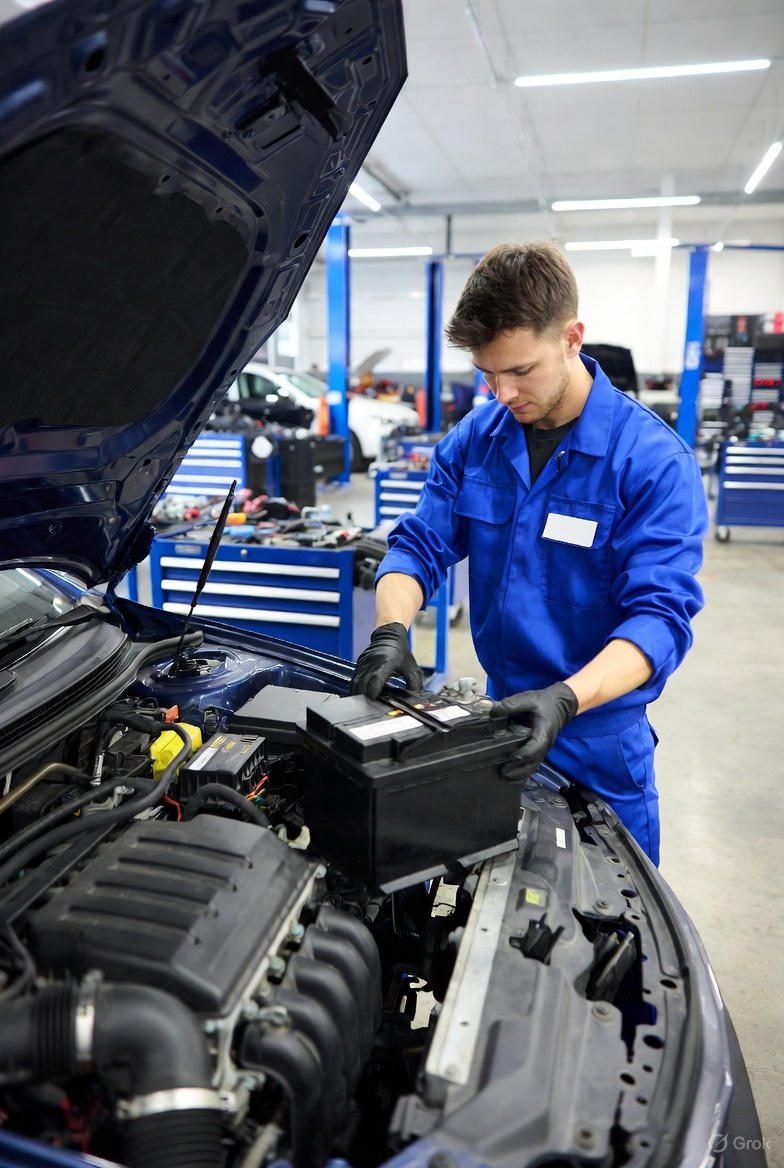
When to replace a car battery is one of the most important questions every vehicle owner should understand to avoid sudden breakdowns and costly repairs. A car battery does not usually fail instantly; instead, it weakens gradually and gives clear warning signs before complete failure. Knowing the right time to replace it helps maintain reliable performance and protects your vehicle’s electrical system.
In hot climates like Dubai, battery replacement timing becomes even more critical due to extreme heat, high electrical demand, and faster chemical degradation. This guide explains exactly when a car battery should be replaced, why timing matters, and how to recognize the warning signs early.
Average Lifespan of a Car Battery
Under normal driving conditions, most car batteries last between 3 to 5 years. However, in hot regions such as Dubai, the realistic lifespan is much shorter.
| Climate Type | Average Battery Lifespan |
|---|---|
| Cool climates | 4–5 years |
| Moderate climates | 3–4 years |
| Hot climates (Dubai) | 18–30 months |
This reduced lifespan makes proactive replacement essential rather than waiting for failure.
Why Car Batteries Need Timely Replacement
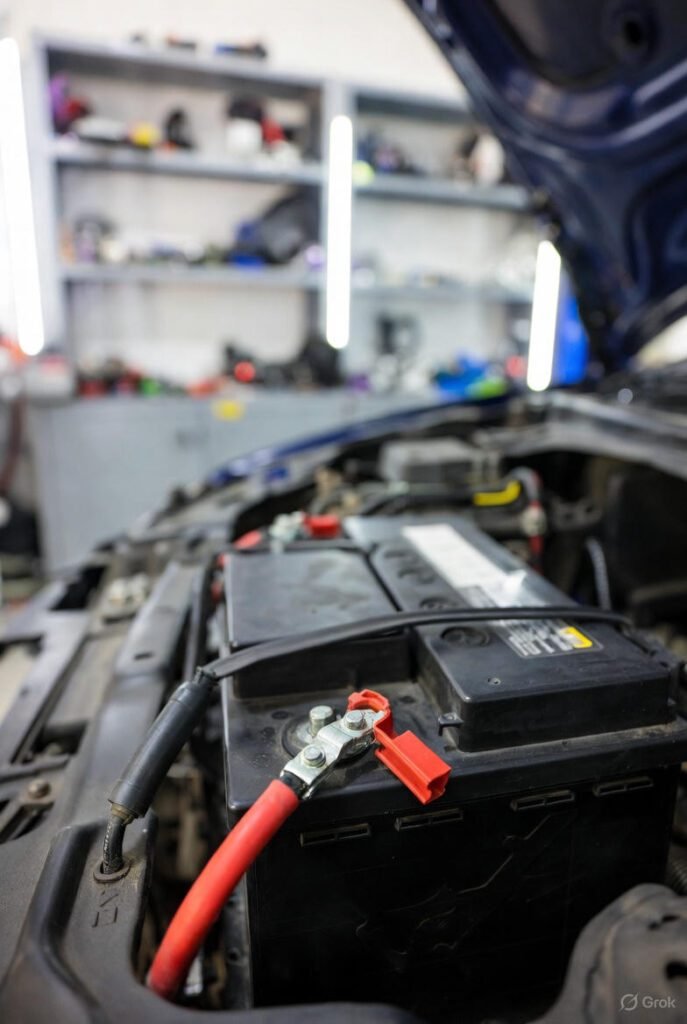
A weakening battery puts stress on other vehicle components such as the alternator, starter motor, and onboard electronics. Delaying replacement can lead to:
- Sudden no-start situations
- Electrical system instability
- Increased alternator workload
- Unexpected roadside breakdowns
Replacing the battery at the right time prevents these secondary issues.
Key Signs That Indicate It’s Time to Replace a Car Battery
Slow Engine Cranking
If the engine takes longer than usual to start, it often indicates a weakening battery that is struggling to deliver sufficient power.
Battery Warning Light
A dashboard battery warning light may signal charging or battery health issues and should not be ignored.
Frequent Jump-Starts
Needing repeated jump-starts is a strong sign that the battery is no longer holding a charge reliably.
Dim Lights and Weak Electronics
Dimming headlights, flickering dashboard lights, or malfunctioning electronics often indicate low battery output.
Swollen or Deformed Battery Case
Heat exposure can cause the battery casing to swell. A swollen battery should be replaced immediately for safety reasons.
Battery Age as a Replacement Indicator
Battery age is one of the most reliable indicators for replacement. If your car battery is:
- Over 18 months old in hot climates
- Over 3 years old in moderate climates
…it should be tested regularly and considered for preventive replacement even if it appears functional.
Seasonal Timing for Battery Replacement
Battery failures are more common during extreme weather changes. In hot regions, replacing the battery before peak summer months is highly recommended. Heat accelerates internal damage, and an already weak battery is likely to fail under additional stress.
Impact of Driving Habits on Replacement Timing
Certain driving habits shorten battery life and require earlier replacement:
- Frequent short trips
- Long idle times in traffic
- Heavy use of electronics
- Infrequent vehicle use
Vehicles exposed to these conditions often require battery replacement sooner than expected.
Case Study: When Car Batteries Required Replacement

| Vehicle Type | Battery Age | Observed Issue | Replacement Decision |
|---|---|---|---|
| Sedan | 22 months | Slow cranking | Preventive replacement |
| SUV | 18 months | Swollen casing | Immediate replacement |
| Luxury car | 16 months | Electrical warnings | Early replacement |
| Taxi | 14 months | Rapid discharge | Scheduled replacement |
This real-world data shows how replacement timing varies by usage and conditions.
Risks of Delaying Car Battery Replacement
Postponing battery replacement can result in:
- Complete battery failure without warning
- Towing and roadside assistance costs
- Electrical system errors
- Starter motor damage
Replacing a battery early is often cheaper than dealing with the consequences of failure.
Preventive Replacement vs Emergency Replacement
| Preventive Replacement | Emergency Replacement |
|---|---|
| Planned and convenient | Stressful and unexpected |
| Lower overall cost | Higher emergency charges |
| No breakdown risk | High breakdown risk |
| Protects electrical system | Possible system damage |
Preventive replacement is always the safer option.
Professional Battery Testing Before Replacement
Professional battery testing measures voltage, charge capacity, and internal resistance. This helps determine whether immediate replacement is needed or if limited time remains before failure.
Regular testing is especially important once a battery crosses the 18-month mark in hot climates.
How do I know when my car battery needs replacement?
Slow cranking, warning lights, frequent jump-starts, and battery age are key indicators.
Can a car battery fail suddenly without warning?
Yes, especially in hot climates where internal damage occurs faster.
Is it better to replace a car battery early?
Yes, preventive replacement reduces breakdown risk and protects vehicle electronics.
Conclusion
Knowing when to replace a car battery is essential for maintaining vehicle reliability and avoiding unexpected breakdowns. In hot climates, batteries age faster and often require replacement between 18 to 30 months. Warning signs such as slow starts, electrical issues, and battery age should never be ignored. Proactive replacement ensures safety, protects vehicle components, and provides peace of mind for everyday driving.
Leave a Reply